
Genenta and Anemocyte's Strategic Partnership: A Catalyst for Scalable, Cost-Effective Cell and Gene Therapy Manufacturing
A Market on the Cusp of Disruption
The global plasmid DNA manufacturing market, valued at $2.21 billion in 2024, is projected to grow at a compound annual growth rate (CAGR) of 21.51% from 2025 to 2035, reaching $18.84 billion by the latter year, according to a Metatech Insights report. This surge is fueled by the rising demand for plasmid DNA in gene therapies, DNA vaccines, and other applications, particularly in oncology and rare diseases. The off-the-shelf model, which GenentaGNTA-- and Anemocyte are pioneering, directly tackles the limitations of personalized therapies-high costs, long lead times, and complex logistics. By standardizing plasmid DNA production, the partnership enables consistent, high-quality materials for both preclinical and commercial stages, a critical enabler for scaling CGT programs, as stated in a Genenta and Anemocyte press release.
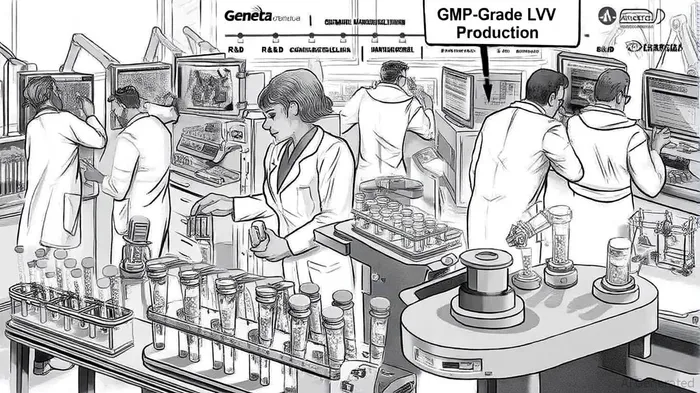
Strategic Synergies: Genenta's Technology Meets Anemocyte's Execution
Genenta's LVV plasmid DNA platform, developed from the foundational research of Professor Luigi Naldini, is a cornerstone of this collaboration. This technology has already demonstrated robustness in clinical trials, providing a validated pathway for Anemocyte to deliver materials from R&D to GMP grade, as noted in the press release. Anemocyte, in turn, brings its expertise in contract manufacturing, having previously supported Genenta's clinical trials by producing critical starting materials such as cell banks and plasmids, according to a Genenta investor release. The partnership thus creates a closed-loop ecosystem where innovation and execution reinforce each other.
For investors, the implications are clear: Genenta and Anemocyte are positioning themselves as key players in a market where scalability and reliability are paramount. The ability to produce off-the-shelf LVV plasmid DNA at commercial scale reduces dependency on bespoke manufacturing, which is both costly and prone to delays. As Marco Ferrari, Anemocyte's CEO, noted, this collaboration underscores the company's role as a "reliable and cost-effective partner" in advanced therapies, as described in Genenta's investor release.
Competitive Landscape and Investment Considerations
The plasmid DNA market is highly competitive, with established players like Aldevron, VGXI, and Thermo Fisher Scientific dominating key segments, according to the Metatech Insights report. However, Genenta and Anemocyte's focus on off-the-shelf solutions differentiates them. Unlike traditional CDMOs, which often prioritize flexibility for niche projects, this partnership emphasizes standardized, high-volume production-a model better suited to the next phase of CGT commercialization.
Moreover, the expansion of CDMOs is a tailwind for both companies. Outsourcing plasmid DNA manufacturing allows smaller biotech firms to access cutting-edge technology without the capital expenditure of in-house facilities. Genenta and Anemocyte's collaboration taps into this trend, offering a scalable solution that aligns with the industry's shift toward specialization and efficiency noted in the Metatech Insights analysis.
Regulatory and Financial Tailwinds
Regulatory validation is another critical factor. Genenta's platform has already navigated clinical trials, reducing the risk profile for Anemocyte's clients. This is particularly important in an industry where regulatory delays can derail projects. Additionally, the partnership's emphasis on GMP-grade production ensures compliance with global standards, a prerequisite for commercial success highlighted in their press release.
Financially, while direct data on Genenta and Anemocyte's 2025 performance is limited, the broader market's growth trajectory is compelling. The plasmid DNA sector's projected $18.84 billion valuation by 2035 represents a multi-decade opportunity, with early movers like Genenta and Anemocyte likely to capture significant market share.
Conclusion: A Strategic Bet on the Future of Biotech
Genenta and Anemocyte's partnership is more than a collaboration-it is a strategic response to the industry's most pressing challenges. By combining Genenta's validated technology with Anemocyte's manufacturing prowess, the two companies are laying the groundwork for a new era of scalable, cost-effective CGT production. For investors, this represents a rare convergence of technological innovation, market growth, and regulatory alignment. As the plasmid DNA market accelerates, those who recognize the strategic value of off-the-shelf solutions will be well-positioned to capitalize on the next wave of biotech disruption.





Comentarios
Aún no hay comentarios