
The FTSE 100's Structural Vulnerabilities in a Fracturing Global Economy
The global economy stands at a precarious crossroads. U.S. fiscal deficits are expanding, bond markets are oscillating like a pendulum nearing a crash, and trade wars are eroding the foundations of cross-border commerce. Against this backdrop, the FTSE 100—long a barometer of Britain’s corporate might—finds itself uniquely exposed. Its reliance on commodity-driven sectors and cross-border operations makes it a prime candidate for turbulence in a world where inflation is sticky, growth is anemic, and geopolitical fractures deepen. Investors must confront the uncomfortable truth: the FTSE 100 is not just a portfolio; it is a minefield waiting to be navigated with caution.
The Structural Weaknesses of the FTSE 100
The FTSE 100’s sector composition is a liability in today’s environment. 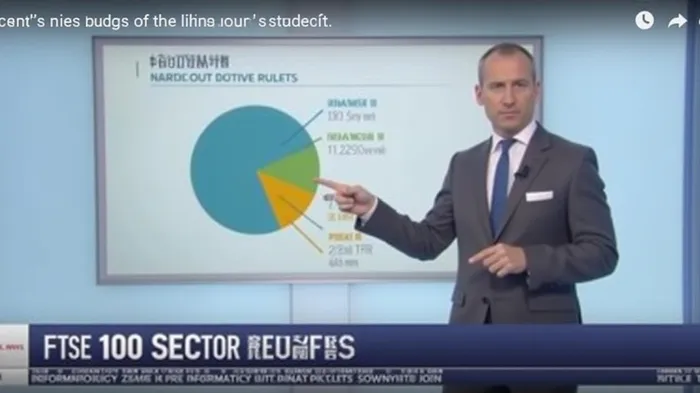 . Energy alone accounts for 12.8% of the index, with giants like ShellSHEL-- and BP dominating. These firms are acutely sensitive to oil price volatility—a risk now amplified by U.S.-Iran nuclear deal negotiations, which could flood global markets with Iranian crude. Meanwhile, Financials (19.1%) face a dual threat: rising interest rates erode loan demand, while a slowing economy increases credit risks.
Industrials (13.2%), including firms like Rolls-Royce and BAE Systems, are exposed to trade disruptions. As tariffs and geopolitical tensions rise, supply chains fray, and demand for capital goods wanes. Even the seemingly stable Consumer Staples sector (17.1%)—home to Unilever and AstraZeneca—cannot escape the shadow of inflation, which eats into profit margins as input costs soar.
The U.S. Fiscal Crisis: A Sword Hanging Over Global Markets
The U.S. fiscal imbalance is the single greatest systemic risk. With public debt exceeding 120% of GDP and the debt ceiling looming, a potential default could trigger a global liquidity crisis. . The correlation is stark: rising yields reflect fear of inflation and fiscal instability, which deters equity investment.
A U.S. default would send Treasury yields spiking, tightening financial conditions worldwide. For the FTSE 100, this would compound existing pressures. Energy stocks, already reeling from oil price declines, would face higher borrowing costs. Financials, which trade on the promise of stable interest rate margins, would see their business models upended.
The Trade War’s Toll: Cross-Border Exposure as a Liability
Trade tensions are not a distant threat but a present reality. The U.S. has imposed tariffs on £25 billion of EU goods, while China’s retaliatory measures have stifled commodity demand. The FTSE 100’s heavy commodity exposure—Energy, Materials (9.4%), and Industrials—leaves it vulnerable to supply chain bottlenecks and demand collapses.
Consider Shell and BP: their Q2 2025 ex-dividend drops (2.0% and 2.9%, respectively) signal investor nervousness. Brent crude’s slide to $63.86/barrel underscores the sector’s fragility. Meanwhile, National Grid’s 3.6% surge—a rare bright spot—owes to its defensive utility status and capital investments, not the broader economy. This divergence highlights the FTSE’s structural divide: a handful of defensive plays amid a sea of cyclicals.
Actionable Insights: Navigate, Don’t Engage
The writing is on the wall. Investors must pivot to reduce equity exposure and favor defensive assets.
- Cut Exposure to Commodity-Linked Sectors: Sell energy and industrials. The Energy sector’s 12.8% weight is a drag; its correlation with volatile oil prices makes it a risk too great to bear.
- Shift to Utilities and Healthcare: National Grid’s resilience (up 3.6% on capital plans) and AstraZeneca’s relative stability (up 1.4%) show where safety lies. Utilities and healthcare are inflation hedges with stable cash flows.
- Monitor U.S. Treasury Yields and Debt Talks: . A resolution could stabilize yields, but failure would trigger a sell-off. Stay nimble.
Conclusion: The FTSE 100’s Crossroads
The FTSE 100 is not just an index; it is a mirror reflecting the global economy’s fragility. Its structural reliance on commodity-driven sectors and cross-border operations makes it a poor bet in an era of fiscal chaos and trade wars. Investors must act now: trim equities, seek refuge in defensive sectors, and keep a wary eye on Washington’s fiscal brinkmanship. The markets are not just volatile—they are precarious. Prudence, not optimism, is the watchword.







Comentarios
Aún no hay comentarios