
Fortifying Security: Defense Sector Investments in a Tense Indo-Pacific
The Indo-Pacific region is entering a new era of strategic competition, with U.S.-South Korea military relations at the heart of efforts to balance rising geopolitical risks. As tensions over North Korea's nuclear ambitions, China's military assertiveness, and Taiwan's sovereignty intensify, defense spending is surging. For investors, this volatile landscape presents a rare opportunity to capitalize on the demand for advanced military technology, strategic alliances, and resilience-building infrastructure.
A New Geopolitical Reality: U.S.-South Korea as a Pivot Point
The U.S. military's reorientation of its forces in South Korea—from a North Korea-focused deterrent to a broader Indo-Pacific strategy—reflects a stark new reality. With approximately 28,500 U.S. troops now dual-tasked to counter China's influence and prepare for contingencies in the Taiwan Strait, the region has become a frontline for great-power competition. This shift has reignited South Korea's push for defense autonomy, including accelerated investments in missile defense systems, space-based surveillance, and indigenous strike capabilities.
The stakes are existential. South Korea's 2025 defense budget reached $46.3 billion—a 3.6% increase from 2024—with plans to grow at a 2% CAGR through 2030. This funding prioritizes cutting-edge technologies like hypersonic missiles, AI-driven logistics systems, and quantum-resistant cybersecurity. The message is clear: geopolitical uncertainty is a growth driver for the defense sector.
Key Investment Themes: Where to Deploy Capital Now
Missile Defense & Counterstrike Capabilities
South Korea's push to reduce reliance on U.S. forces has fueled domestic procurement of advanced systems. The KF-21 Boramae fighter jet (developed by Korea Aerospace Industries) and the K239 Chunmoo multiple rocket launcher exemplify this trend. Investors should look to Samsung Thales, a joint venture producing advanced radars and sonar systems, and LIG Nex1, a leader in missile defense technologies.AI & Cyber Defense as Force Multipliers
The region's militaries are racing to integrate AI into command-and-control systems. Companies like Palantir Technologies (PLTR) and Booz Allen Hamilton (BAH) are already partnering with U.S. and South Korean forces to enhance real-time threat analysis. Meanwhile, Cybersecurity firms such as FireEye (FEYE) and Palo Alto Networks (PANW) are critical to countering state-sponsored cyberattacks.Trilateral Cooperation & Supply Chain Resilience
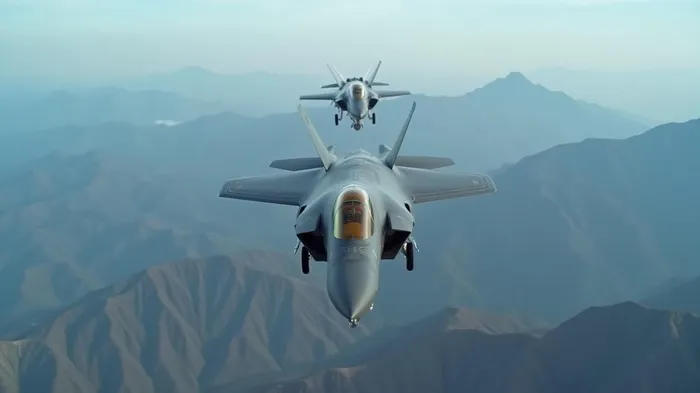
The U.S.-Japan-South Korea alliance is deepening, creating opportunities for firms supplying joint platforms. Lockheed Martin (LMT) and Northrop Grumman (NOC) dominate in fighter jets (e.g., F-35s) and surveillance systems. For investors, Mitsubishi Heavy Industries (7012.T) and KAI (047860.KS) also offer exposure to aircraft production and export deals.
Risks and the Case for Immediate Action
While the geopolitical calculus is clear, risks remain. A potential U.S.-China "grand bargain" could reduce near-term tensions, while North Korea's unpredictable leadership poses flashpoint dangers. However, the structural drivers—regional arms races, alliance cohesion, and technological arms races—are irreversible.
The data is unequivocal: defense spending in Northeast Asia is set to outpace global growth. The region's defense budget CAGR (2021–2030) is projected at 5.9%, versus 3.2% for the world. For investors, the question is not whether to act, but how to act decisively.
Conclusion: The Time to Invest in Defense Resilience is Now
The U.S.-South Korea axis is the linchpin of Indo-Pacific security. As alliances harden and technologies evolve, the defense sector offers a rare combination of high returns and defensive stability. Investors ignoring this trend risk missing a once-in-a-generation opportunity to profit from the region's escalating need for protection.
The call to action is simple: allocate capital to companies enabling interoperability, autonomy, and AI-driven defense solutions. The next decade will be defined by who bets on preparedness—and who pays the price for complacency.







Comentarios
Aún no hay comentarios