
FormFactor's $140M Texas Facility: A Strategic Bet on AI-Driven Semiconductor Testing Growth
Strategic Positioning: Strengthening the Domestic Supply Chain
FormFactor's Texas facility is more than a geographic expansion-it is a calculated response to the global semiconductor industry's evolving dynamics. , underscoring its foundational role in testing logic and memory chips critical to AI applications according to the company announcement. By anchoring a new facility in Texas, FormFactor is aligning with U.S. policy priorities under the , which incentivizes domestic production to reduce reliance on overseas manufacturing.
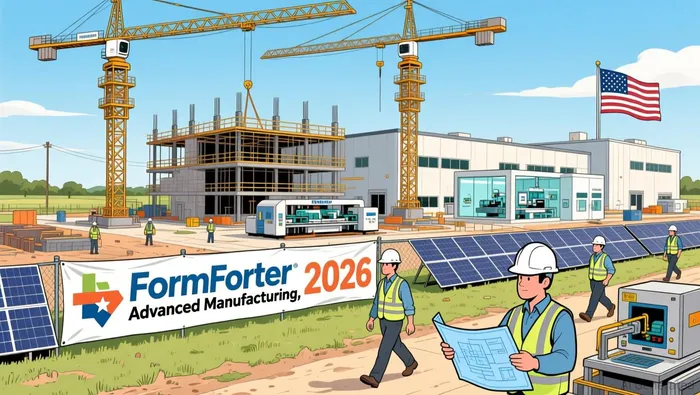
The $140 million investment, , is expected to create hundreds of highly skilled jobs and bolster Texas's position as a semiconductor hub. This aligns with broader industry trends: the AI semiconductor testing market is projected to grow , , driven by demand for advanced testing solutions for sub-5 nm process nodes and 3D-IC technologies. FormFactor's focus on probe cards .
Competitive Advantages: Innovation and Market Resilience
FormFactor's competitive edge lies in its ability to address the unique challenges of AI-driven chip manufacturing. The company's expansion in Taiwan-targeting fabless clients developing chiplet-based AI engines and high-bandwidth memory stacks-complements its Texas operations, creating a dual-axis strategy to serve both domestic and international markets. This diversification is critical, as evidenced by the recent sell-off .
Moreover, FormFactor's aggressive qualification and ramp plan for the Texas facility aims to shorten cycle times for at-speed wafer testing, a key requirement for (HPC) and AI chips. By delivering final-test coverage before assembly, the company is addressing a pain point for manufacturers seeking to reduce time-to-market in a competitive landscape.
Financial Implications: Balancing Near-Term Costs and Long-Term Gains
, . Despite margin contraction , , . highlighted , .
Analysts project that the Texas facility will drive ROI through enhanced operational efficiency and production scalability. Similar large-scale investments by industry peers, such as Intel and TSMC, have demonstrated the potential for domestic manufacturing to yield long-term cost savings and market share gains. .
Sector Tailwinds and Risk Mitigation
The AI semiconductor testing market's projected growth . As generative AI and edge-computing IC volumes surge, demand for capable of handling high-pin-count devices will intensify. FormFactor's expertise in MEMS-based probe cards .
However, risks remain. Tariff impacts and product mix shifts could pressure margins in the short term. Yet, the company's strategic focus on advanced packaging and -technologies central to next-generation AI chips-mitigates these risks by aligning with long-term industry trends according to market analysis.
Conclusion: A Calculated Bet on the Future
FormFactor's Texas facility represents a bold but calculated bet on the AI-driven semiconductor testing boom. While near-term margin pressures are evident, the company's technical leadership, strategic diversification, . For investors, the key takeaway is that FormFactor is not merely reacting to industry shifts-it is proactively shaping the future of semiconductor testing. In a market where innovation and agility are paramount, this strategic foresight could position FormFactor to outperform its peers.







Comentarios
Aún no hay comentarios