
Federal Reserve Independence: A Fragile Pillar of U.S. Economic Stability
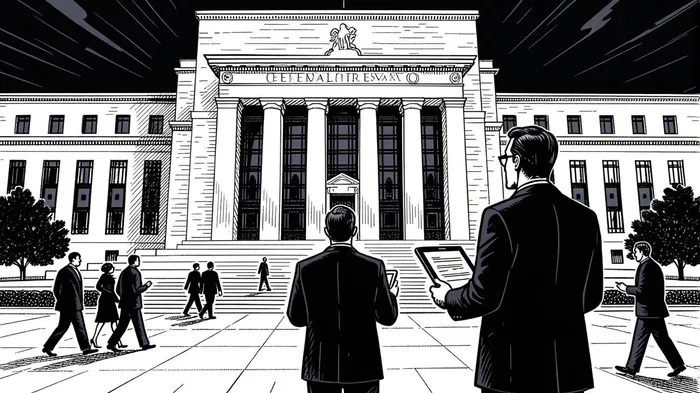
The Federal Reserve's independence has long been a cornerstone of U.S. economic governance, enabling it to insulate monetary policy from short-term political pressures. Yet, recent developments under the Trump administration have exposed vulnerabilities in this foundational principle. Political interference risks, epitomized by the contentious dismissal of Federal Reserve Governor Lisa Cook and public demands for rate cuts, threaten to erode the Fed's credibility and destabilize financial markets. This analysis explores the implications of these challenges, drawing on historical precedents, comparative central bank models, and academic insights to assess the stakes for investors and policymakers alike.
The Erosion of Autonomy: A Modern Crisis
The Federal Reserve's independence is not absolute. While the 1975 Humphrey-Hawkins Act mandates that the president nominate Fed governors “for distinguished service,” it also allows removal “for cause,” a term historically interpreted narrowly to exclude policy disagreements[1]. President Trump's attempt to fire Governor Lisa Cook, who is contesting the decision in court, has tested these boundaries. A federal court recently ruled that Cook must remain in office pending the legal challenge, reinforcing the constitutional principle that the Fed's governance structure is designed to resist political manipulation[1].
This episode is part of a broader pattern. Trump has publicly criticized Fed Chair Jerome Powell for maintaining higher interest rates, framing the central bank as an obstacle to his economic agenda[4]. Such actions mirror historical precedents, such as the “Nixon Shock” of 1971, when President Richard Nixon pressured the Fed to ease monetary policy to boost short-term growth. The result was unanchored inflation expectations, stagflation, and a 44% stock market decline from its 1973 peak[2]. Today, similar risks loom: if the Fed is perceived as politically subservient, its ability to anchor inflation expectations could falter, triggering self-fulfilling price increases[3].
Comparative Lessons: Central Bank Independence in a Global Context
The U.S. is not alone in grappling with the balance between central bank independence and political accountability. The European Central Bank (ECB), for instance, operates under a supranational framework that emphasizes price stability as its primary mandate, while also navigating political pressures from member states[5]. Christine Lagarde, the ECB's president, has warned that undermining the Fed's independence could pose a “very serious danger” to global financial stability[4]. This underscores the interconnectedness of central bank credibility: a loss of confidence in the Fed's autonomy could ripple across international markets, weakening the dollar's role as the global reserve currency[2].
In contrast, the Bank of Japan's journey toward independence—statutorily established in the late 20th century—illustrates the long-term benefits of insulating monetary policy from political cycles[5]. However, Japan's experience also highlights the challenges of addressing financial stability risks without compromising independence. Quantitative easing, while effective in stimulating growth, has faced criticism for exacerbating inequality by disproportionately benefiting asset holders[2]. These lessons suggest that central bank independence must evolve to address modern challenges, including climate risk and technological disruption, without succumbing to political interference.
Market Implications: Volatility and the Search for Safe Havens
The erosion of Fed independence has already introduced uncertainty into financial markets. Investors are increasingly favoring inflation-protected assets, such as gold and Treasury Inflation-Protected Securities (TIPS), as hedging mechanisms[3]. Defensive equities and short-duration bonds have also gained traction, reflecting a flight to quality amid heightened political risk[2].
Academic research underscores these trends. A 2025 study in the European Journal of Political Economy found that central bank independence correlates with reduced stock market volatility and higher foreign equity inflows, particularly in countries with strong institutional frameworks[1]. Conversely, the politicization of monetary policy—evident in Turkey's experience with inflation surging to 85% in 2022—demonstrates the catastrophic consequences of abandoning this principle[2]. For U.S. markets, the risk is not merely theoretical: a loss of Fed credibility could trigger a fiscal dominance scenario, where debt markets demand higher risk premiums, exacerbating inflationary pressures[2].
Strategic Considerations for Investors
Investors must navigate this uncertain landscape by prioritizing diversification and liquidity. Asset allocations should emphasize inflation-linked instruments, such as commodities and real assets, while reducing exposure to long-duration bonds, which are particularly vulnerable to inflation surprises[3]. Geopolitical diversification is equally critical: emerging markets with independent central banks, such as India and South Korea, may offer relative stability compared to regions where political interference is more entrenched[1].
Moreover, the legal battle over Lisa Cook's dismissal will serve as a pivotal test of the Fed's institutional resilience. A ruling affirming the Fed's independence could restore market confidence, while a perceived victory for political actors might accelerate capital flight from U.S. assets[1]. Investors should monitor this case closely, alongside broader trends in central bank governance.
Conclusion: A Test of Resilience
The Federal Reserve's independence is not a static institution but a dynamic principle that must be defended against evolving threats. The current political challenges echo historical episodes where short-term political gains precipitated long-term economic instability. For the Fed to maintain its role as a guardian of macroeconomic stability, it must resist politicization and reaffirm its commitment to long-term objectives. Investors, in turn, must adapt to a world where central bank credibility is increasingly fragile, building portfolios that hedge against both inflation and institutional erosion.







Comentarios
Aún no hay comentarios