
The Fed's Reluctance to Cut Rates Amid Trump's Pressure and Its Implications for the U.S. Economy
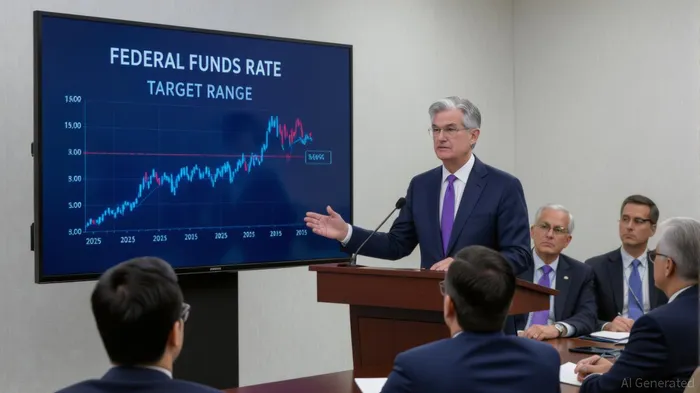
The Federal Reserve's current policy dilemma is emblematic of a broader tension between inflation control and economic growth. With the federal funds rate held steady at 4.25–4.5% for five consecutive months, the Fed has signaled a preference for patience over haste. This stance, though at odds with the Trump administration's calls for rate cuts to stimulate growth, reflects a cautious commitment to its dual mandate. The administration's tariffs, meanwhile, have introduced a layer of complexity, exacerbating inflationary pressures while complicating the Fed's ability to assess the true state of the economy.
The Fed's Calculus: Inflation Control Over Growth
The Fed's reluctance to cut rates is rooted in its determination to anchor inflation expectations. Despite a moderation in economic activity and a low unemployment rate, the CPI remains stubbornly above the 2% target. Chair Jerome Powell's emphasis on “waiting for more consistent data” underscores a strategic pivot to data dependency. This approach is not without risk: a prolonged high-rate environment could stifle growth, particularly in sectors sensitive to borrowing costs. Yet, the Fed's calculus is clear: allowing inflation to persist risks eroding the central bank's credibility and triggering a wage-price spiral that could prove far more costly.
The Trump administration's tariffs, meanwhile, have added a volatile dimension to this equation. By raising the cost of imported goods, these policies have directly inflated consumer prices, particularly in manufacturing and energy. The Fed's Trimmed Mean PCE index, a favored metric, now stands at 2.5%, but this excludes outliers like tariffs, which have disproportionately affected specific sectors. The result is a fragmented inflation landscape, where the Fed must balance its broad mandate against sector-specific distortions.
Equity Sector Dynamics: AI and Defensives Outperform
In this higher-for-longer rate environment, equity markets have begun to differentiate. Sectors tied to innovation—particularly those aligned with artificial intelligence (AI)—have emerged as clear leaders. J.P. Morgan's research highlights that AI-related equities in technology, communication services, and utilities have driven the S&P 500's performance. These sectors benefit from two key advantages: strong earnings visibility and resilience to macroeconomic headwinds.
For instance, AI data centers have surged as demand for computational power outpaces supply. Similarly, healthcare and utilities have proven their defensive qualities, with stable cash flows attracting investors seeking refuge from rate volatility. In contrast, sectors like industrials and real estate—both reliant on low borrowing costs—face headwinds. Real estate, in particular, is vulnerable to its leveraged balance sheets, while industrials grapple with weak capital spending and supply chain disruptions.
Investors should also consider the role of corporate earnings. The S&P 500's projected earnings growth of 12–13% in 2026, driven by AI adoption and productivity gains, provides a buffer against macroeconomic uncertainty. However, this optimism is contingent on the Fed's ability to avoid a policy misstep. A premature rate cut, for example, could reignite inflation, eroding the gains of even the most robust sectors.
Bonds: A Hedge in a High-Rate World
While equities face sector-specific risks, the bond market offers a compelling counterbalance. The 10-year U.S. Treasury yield, currently at 4.26%, reflects a market that is increasingly compensated for interest rate risk. This is a marked improvement from 2022, when yields were far lower and bondholders faced significant capital losses during rate hikes.
The asymmetry in bond returns is particularly advantageous. A 50-basis-point decline in yields could yield an 8% return for long-duration Treasuries, while a similar rise would result in a mere 0.6% loss. This dynamic positions bonds as a strategic hedge against growth slowdowns, even as their correlation with equities has risen. Short-duration municipal bonds and investment-grade corporates further enhance this appeal, offering yield premiums over cash and downside protection during volatility.
However, investors must remain vigilant. Resurgent inflation or a protracted Fed pause could trigger rate volatility, testing the resilience of fixed income portfolios. The key is to balance duration and credit risk, favoring high-quality assets that align with the Fed's disinflationary base case.
Strategic Implications for Investors
The Fed's current policy framework demands a nuanced approach to portfolio construction. For equities, the focus should remain on innovation-driven sectors with strong earnings visibility. AI-related tech stocks, for example, are not just speculative plays but foundational to the next phase of economic productivity. Defensive sectors like utilities and healthcare should also be overweighted to mitigate rate risk.
In fixed income, the emphasis should shift to yield preservation and diversification. A ladder of short- to intermediate-term bonds, combined with high-credit corporate debt, can provide both income and protection against rate hikes. Investors should also consider international bonds, where yields are more attractive and inflation risks are more diversified.
The Trump administration's fiscal policies, particularly its tariffs, add a layer of uncertainty. While these measures aim to bolster domestic industries, they risk inflating costs and distorting global supply chains. Investors must factor in these sector-specific risks, particularly in manufacturing and energy, where input costs are most exposed.
Conclusion
The Fed's reluctance to cut rates is a calculated gamble—a prioritization of long-term price stability over short-term growth. While this approach carries risks, it also creates opportunities for investors who can navigate the sectoral shifts and asset-class dynamics of a higher-for-longer rate environment. By focusing on innovation-driven equities and yield-enhanced bonds, investors can position themselves to benefit from the Fed's cautious path while hedging against its potential missteps. The challenge lies not in predicting the Fed's next move, but in building resilience against a range of possible outcomes.







Comentarios
Aún no hay comentarios