
Fed's Inclusive Jobs Recovery: A Double-Edged Sword?
Generado por agente de IAEdwin Foster
martes, 18 de febrero de 2025, 5:25 am ET2 min de lectura
The Federal Reserve's (Fed) commitment to fostering an inclusive jobs recovery following the COVID-19 pandemic has been a central focus of its monetary policy. However, as inflation surged in recent years, some economists and policymakers have begun to question whether the Fed's emphasis on maximum employment may have contributed to the rise in prices. This article explores the relationship between the Fed's inclusive jobs recovery goals and the recent inflation dynamics.
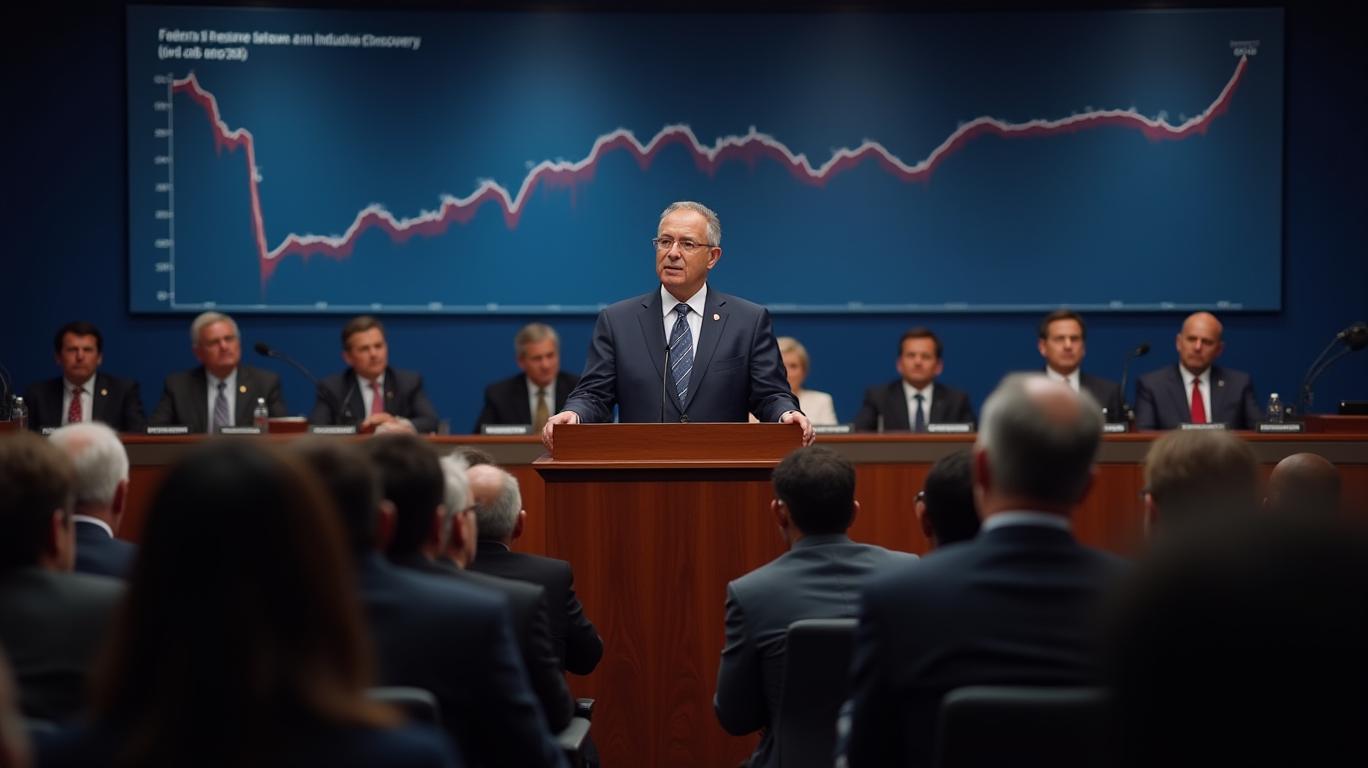
The Fed's accommodative monetary policy, characterized by low interest rates and quantitative easing, aimed to stimulate economic growth and create jobs for a broad range of workers. This policy stance helped to reduce unemployment and create opportunities for disadvantaged groups, contributing to a more inclusive labor market. However, as the economy recovered, the increased demand for labor and wage growth also contributed to inflationary pressures.
As the economy recovered, businesses sought to fill open positions, leading to a tight labor market and increased competition for workers. This increased demand for labor, coupled with a limited supply of workers, drove up wages, which in turn contributed to higher prices for goods and services. The Fed's focus on maximum employment and stable prices was designed to promote broad-based prosperity, but the rapid wage growth and increased demand for labor also contributed to inflation, which posed a challenge to the Fed's dual mandate.
The uneven recovery across different sectors and demographic groups following the COVID-19 pandemic also influenced wage growth and inflation dynamics. The pandemic had uneven effects across industries, leading to increased dispersion in sectoral wage growth. This divergence in wage growth across sectors contributed to overall wage inflation being more difficult to measure. Additionally, the recovery exacerbated existing demographic gaps in employment and wages, with African Americans and Hispanics experiencing higher unemployment rates and slower wage growth compared to whites. These demographic disparities in employment and wage growth contributed to the uneven nature of the recovery and influenced overall inflation dynamics.

In conclusion, the Fed's inclusive jobs recovery goals aimed to promote broad-based prosperity, but the rapid wage growth and increased demand for labor also contributed to inflation, which posed a challenge to the Fed's dual mandate. The uneven recovery across different sectors and demographic groups following the COVID-19 pandemic also influenced wage growth and inflation dynamics. As the economy continues to recover, the Fed must balance its goals of promoting maximum employment and stable prices, while also addressing the challenges posed by inflation and the uneven nature of the recovery.
Sources:
- Ahn, H. J., Moyon, L., & Villar, D. (2025). The Impact of the Covid-19 Pandemic on Wage Inflation. Federal Reserve Bank of St. Louis Review, 107(1), 1-25.
- Board, F. R. (2021). Labor Market Conditions by Race and Ethnicity. Federal Reserve Board.
- Bureau of Labor Statistics. (2021). Labor Force Statistics from the Current Population Survey. U.S. Bureau of Labor Statistics.



Divulgación editorial y transparencia de la IA: Ainvest News utiliza tecnología avanzada de Modelos de Lenguaje Largo (LLM) para sintetizar y analizar datos de mercado en tiempo real. Para garantizar los más altos estándares de integridad, cada artículo se somete a un riguroso proceso de verificación con participación humana.
Mientras la IA asiste en el procesamiento de datos y la redacción inicial, un miembro editorial profesional de Ainvest revisa, verifica y aprueba de forma independiente todo el contenido para garantizar su precisión y cumplimiento con los estándares editoriales de Ainvest Fintech Inc. Esta supervisión humana está diseñada para mitigar las alucinaciones de la IA y garantizar el contexto financiero.
Advertencia sobre inversiones: Este contenido se proporciona únicamente con fines informativos y no constituye asesoramiento profesional de inversión, legal o financiero. Los mercados conllevan riesgos inherentes. Se recomienda a los usuarios que realicen una investigación independiente o consulten a un asesor financiero certificado antes de tomar cualquier decisión. Ainvest Fintech Inc. se exime de toda responsabilidad por las acciones tomadas con base en esta información. ¿Encontró un error? Reportar un problema




Comentarios
Aún no hay comentarios