
The Fed's Dilemma: Strategic Asset Allocation in the Face of a Stalling Labor Market and Persistent Inflation
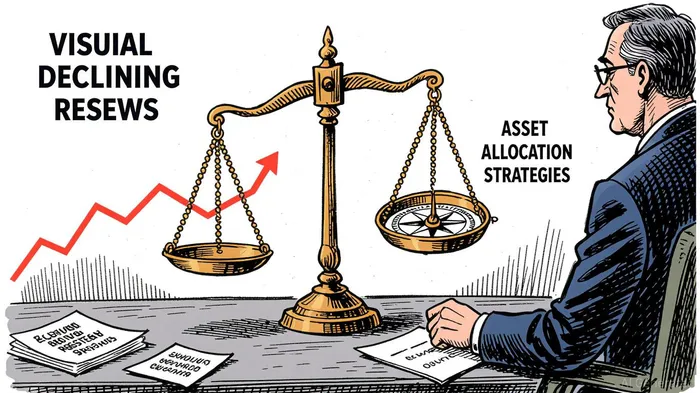
The Federal Reserve now faces its most delicate policy challenge in years. The labor market, once a pillar of resilience, has shown troubling signs of fragility. The unemployment rate rose to 4.3% in August 2025, the highest since 2021, while nonfarm payrolls added a mere 22,000 jobs—a stark contrast to the robust growth of earlier years [1]. Meanwhile, inflation, though moderated from its 2022 peak, remains stubbornly above the Fed’s 2% target. Core PCE inflation hit 2.9% in July, and projections suggest it may rise further in August, driven by tariffs and sticky service-sector costs [2]. This dual challenge forces the Fed to weigh its dual mandate: should it prioritize stabilizing employment or remain resolute in taming inflation? For investors, the answer lies in strategic asset allocation, anticipating policy shifts and their macroeconomic reverberations.
The Labor Market’s Fragile Equilibrium
The U.S. labor market is no longer the engine of growth it once was. Payroll gains have averaged just 35,000 per month since May 2025, and the number of long-term unemployed (27 weeks or more) has surged to 1.9 million, accounting for 25.7% of all jobless individuals [1]. Sectors like manufacturing and federal government are particularly vulnerable, with job losses compounding concerns about a broader slowdown. Yet, the Fed’s hands are tied. While unemployment has risen, it remains near historical lows, and companies have not yet resorted to layoffs. This “soft landing” illusion masks deeper structural strains, including reduced immigration and the drag from higher tariffs on labor-intensive industries [2].
Inflation’s Persistent Grip
Inflation, meanwhile, refuses to yield. Bank of AmericaBAC-- projects headline CPI at 2.9% year-on-year in August 2025, with core CPI steady at 3.1% [2]. The Cleveland Fed’s nowcast aligns closely, estimating core CPI at 3.05% [3]. These figures underscore the Fed’s dilemma: while goods inflation has eased—energy prices fell 1.1% in July—services inflation, particularly in housing and healthcare, remains entrenched [2]. Tariffs, initially seen as one-time shocks, have become a recurring source of price pressure, complicating the Fed’s inflation-fighting calculus.
The Fed’s Policy Tightrope
The Federal Open Market Committee (FOMC) has adopted a wait-and-see approach, maintaining its target rate at 4.25–4.50% despite growing calls for cuts. Dissenting voices, including Governors Michelle Bowman and Christopher Waller, argue that the labor market’s fragility justifies a 25-basis-point reduction [2]. However, Chair Jerome Powell has emphasized the need for “confidence” that inflation will remain anchored—a stance influenced by the Trump administration’s push for more aggressive rate cuts [2]. This political pressure, combined with the Fed’s own caution, suggests a gradualist approach: one or two modest cuts in late 2025 or early 2026, contingent on further labor market deterioration [3].
Strategic Asset Allocation: Navigating the Fed’s Dilemma
For investors, the Fed’s uncertainty demands a nuanced portfolio strategy. Traditional diversification frameworks are strained by the breakdown of the stock-bond negative correlation, a casualty of persistently high inflation and monetary tightening [4]. Here are three key positioning insights:
Short-Duration Fixed Income: With the Fed likely to cut rates gradually, shorter-duration bonds (3–7 years) offer a balance between yield and protection against rate volatility [4]. Intermediate-term Treasuries, in particular, benefit from the Fed’s potential to steepen the yield curve through quantitative easing.
Commodities and Liquid Alternatives: Inflationary pressures, especially from tariffs, justify overweighting commodities like energy and industrial metals. Liquid alternatives, including managed futures and real estate, also provide diversification in a low-correlation environment [4].
Growth Equities with Earnings Resilience: U.S. growth equities, particularly those leveraging AI-driven productivity and capital expenditures, remain a core holding. However, investors must avoid overconcentration in sectors exposed to tariff-driven cost shocks [4].
Conclusion: A Delicate Balance
The Fed’s September 2025 meeting will test its ability to balance its dual mandate. A premature pivot toward rate cuts risks reigniting inflation, while excessive restraint could tip the labor market into recession. For investors, the path forward lies in adaptive asset allocation—leveraging shorter-duration fixed income, commodities, and earnings-resilient equities to hedge against both inflation and policy missteps. As the Fed navigates this tightrope, markets will demand not just patience but a strategic rethinking of diversification in an era of persistent macroeconomic uncertainty.
**Source:[1] Employment Situation Summary - 2025 M08 Results [https://www.bls.gov/news.release/empsit.nr0.htm][2] The Fed's September dilemma | PIIE [https://www.piie.com/blogs/realtime-economics/2025/feds-september-dilemma][3] Inflation Nowcasting, https://www.clevelandfed.org/indicators-and-data/inflation-nowcasting[4] 2025 Fall Investment Directions: Rethinking diversification [https://www.blackrockBLK--.com/us/financial-professionals/insights/investment-directions-fall-2025]







Comentarios
Aún no hay comentarios