
Equity Market Volatility in Late 2025: Tactical Reallocation and Risk Management in a Fractured Landscape
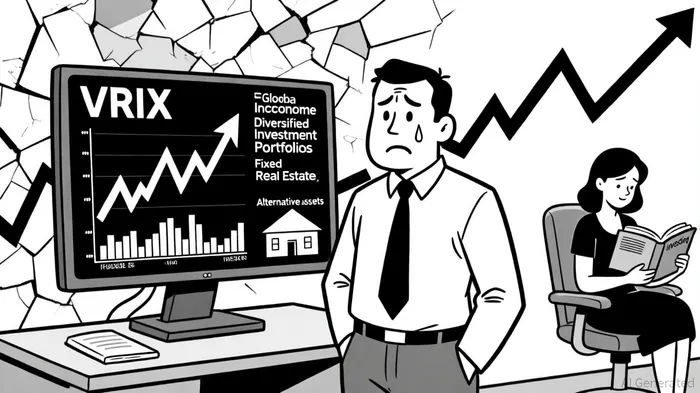
The equity markets of late 2025 are poised to navigate a treacherous terrain. Rising volatility, driven by macroeconomic fragility and policy uncertainty, has become the defining feature of this period. The VIX, long a barometer of investor sentiment, has begun to reflect this turbulence, with its trajectory influenced by fiscal policy debates, inflationary pressures, and the uneven performance of market leaders[1]. Meanwhile, the dominance of a narrow cohort of large-cap U.S. growth stocks—the so-called “Mag 7”—has created a dissonance between broad market indices and the average stock, raising questions about the sustainability of current trends[2].
Macroeconomic Signals and Structural Vulnerabilities
The Federal Reserve's latest Summary of Economic Projections underscores the fragility of the current outlook. Inflation is expected to remain above the 2.0% target until 2028, while real GDP growth has been downgraded to 1.6% for 2025, reflecting a combination of slowing global demand and domestic policy risks[3]. These signals are compounded by the steepening yield curve, which suggests market participants are pricing in heightened concerns about fiscal sustainability and inflation persistence.
Geopolitical tensions and climate-related disruptions further amplify uncertainty. The likelihood of state-based conflicts and extreme weather events has pushed volatility metrics to levels not seen since the early 2020s[1]. Against this backdrop, investors must grapple with a world where traditional correlations are breaking down, and diversification is no longer a given.
Tactical Asset Reallocation: Navigating the New Normal
Institutional investors are increasingly adopting tactical strategies to mitigate these risks. MetLife Investment Management (MIM) advocates for a “neutral stance on the back end of the yield curve” while favoring short- to mid-duration assets[4]. This approach reflects a recognition that long-duration fixed income, once a cornerstone of risk management, has become vulnerable to inflationary shocks and policy shifts. Instead, sectors tied to the U.S. yield curve's short- to mid-term segments—such as consumer discretionary and industrials—are seen as more resilient in a low-growth, high-volatility environment[4].
Equity allocations are also being rebalanced. A bi-modal view of market outcomes has led to reduced exposure to growth stocks, particularly those with high multiples and uncertain earnings trajectories[5]. This shift is not merely defensive; it is a recalibration toward sectors with stronger cash-flow visibility, such as utilities and healthcare, which are less susceptible to macroeconomic shocks.
Hedging and Diversification: Beyond Traditional Tools
Hedging strategies have evolved to address the asymmetry of risks. Options contracts, particularly put options, are being deployed to protect against downside volatility, while index futures and U.S. Treasuries serve as buffers against broader market corrections[6]. For instance, Treasury bonds—long considered a safe haven—are now being prioritized for their ability to absorb equity market shocks, even as their yields remain modest[6].
Diversification, however, is no longer confined to asset classes. Institutional investors are exploring alternatives such as digital assets, international equities, and real estate to reduce reliance on U.S.-centric markets[7]. Gold, too, has regained its role as a hedge, particularly in periods of geopolitical tension and trade policy uncertainty[7]. These strategies reflect a broader recognition that traditional diversification benefits are eroding in a world of persistent inflation and policy divergence.
The Path Forward: Patience and Prudence
The challenges of late 2025 demand a disciplined approach. As Morgan Stanley notes, the combination of fiscal uncertainty, earnings volatility, and geopolitical risks will likely keep the VIX elevated[1]. Investors must avoid overexposure to narrow market segments and instead adopt a patient, time-sensitive evaluation of risks and opportunities. This means embracing tactical flexibility—adjusting allocations in response to macroeconomic signals—and prioritizing liquidity to navigate potential shocks.
Conclusion
Equity market volatility in late 2025 is not a transient phenomenon but a structural feature of a fractured global economy. Tactical asset reallocation and risk management must be dynamic, responsive to both macroeconomic signals and policy developments. By combining hedging tools, diversified portfolios, and a nuanced understanding of sector dynamics, investors can navigate this uncertain landscape with resilience. The key lies in balancing prudence with adaptability—a lesson as timeless as it is urgent.







Comentarios
Aún no hay comentarios