
How Enduring US-EU Trade Tensions Are Reshaping Global Travel and Luxury Markets
The escalating trade tensions between the United States and the European Union in 2025 are reshaping global economic dynamics, with profound implications for the travel and luxury sectors. These tensions, driven by conditional tariffs on autos, pharmaceuticals, and luxury goods, are not merely trade disputes but catalysts for structural shifts in consumer behavior, corporate strategy, and investment opportunities. For investors, the challenge lies in identifying underappreciated stocks in European travel and U.S. tourism alternatives that can navigate—or even benefit—from this volatile landscape.
The Luxury Sector: A Tariff-Driven Reassessment
European luxury brands, long reliant on U.S. demand, now face a dual threat: a 15% tariff on European goods under the 2025 U.S.-EU trade deal and a broader economic slowdown in the U.S. market. According to a report by The Wall Street Journal, LVMH and Hermès have raised prices to offset the tariff burden, but consumer confidence remains fragile. UBSUBS-- estimates that these brands may need to increase U.S. prices by an additional 2% to maintain profitability, a move that risks alienating price-sensitive clients [1]. Meanwhile, LVMH's CEO, Bernard Arnault, has engaged directly with U.S. policymakers to advocate for a resolution, underscoring the sector's vulnerability to trade policy shifts [2].
The U.S. market accounts for 25% of LVMH's revenue, and similar dependencies exist for other European luxury houses. As stated by Forbes, the sector's resilience will depend on its ability to balance pricing power with consumer expectations, a delicate act in an era of economic uncertainty [3]. For investors, this suggests caution in overexposed luxury stocks and a focus on brands with diversified revenue streams or cost-reduction strategies.
The Travel Sector: A Transatlantic Dilemma
The U.S. travel industry is bracing for a significant contraction in international arrivals. Data from Tourism Economics projects a 12.7% decline in international visits to the U.S. under an expanded trade war scenario, with a $22 billion annual loss in inbound travel spending [4]. Key drivers include weakened travel sentiment from Canada, Mexico, and the EU, economic recessions triggered by 25% tariffs, and exchange rate shifts that make the U.S. an expensive destination.
European travel stocks, however, have shown surprising resilience. The European Travel Commission reports a 4.9% year-on-year increase in international tourist arrivals in Q1 2025, driven by off-peak travel and value-for-money destinations like Norway and Slovakia [5]. Eastern European countries, including Poland and Hungary, are rebounding from recent declines, aided by improved connectivity and Schengen Area access. Despite these gains, U.S. tariffs and geopolitical tensions remain headwinds.
Underappreciated European Travel Stocks: Resilience and Growth
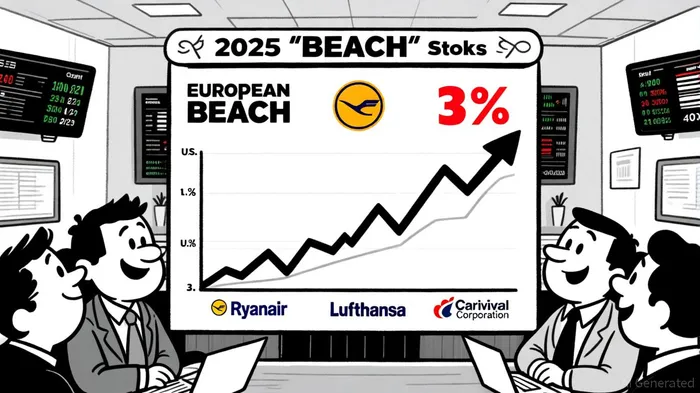
Amid these challenges, certain European travel stocks stand out for their strong fundamentals and growth potential. Ryanair, the low-cost airline, has capitalized on short-distance leisure demand and lean cost structures, outperforming U.S. peers like United and DeltaDAL-- [6]. Lufthansa, despite facing similar pressures, has leveraged its transatlantic routes and cost-cutting measures to maintain profitability. In the hotel sector, Trivago has seen gains as travelers shift toward flexible, value-driven bookings [7].
These companies benefit from Europe's broader economic stimulus, including Germany's €500 billion infrastructure fund and relaxed defense spending rules, which have bolstered investor confidence [8]. For investors, these stocks represent a hedge against U.S. market volatility and a bet on Europe's ability to adapt to trade tensions.
U.S. Tourism Alternatives: Navigating the New Normal
The U.S. tourism sector faces a dual crisis: declining international visitors and rising costs. However, alternatives exist for investors seeking exposure to the sector. Carnival Corporation and Norwegian Cruise Line have demonstrated resilience in the cruise industry, supported by robust advance ticket sales and strategic pricing [9]. These companies are also diversifying into Asian markets, where demand remains strong despite U.S. tariffs.
Meanwhile, U.S. domestic tourism is holding up, with $3 trillion in projected spending by 2034. Companies leveraging AI for customer engagement and sustainable travel experiences—such as Expedia and Airbnb—are well-positioned to capitalize on shifting preferences [10]. For investors, the key is to focus on firms with diversified revenue streams and agility in adapting to trade-related disruptions.
Conclusion: Strategic Opportunities in a Fragmented Market
The U.S.-EU trade tensions of 2025 are not merely short-term disruptions but structural forces reshaping global travel and luxury markets. For investors, the path forward lies in identifying companies that can navigate these challenges through innovation, diversification, and strategic resilience. European travel stocks like RyanairRYAAY-- and Lufthansa, along with U.S. alternatives such as CarnivalCCL-- and Norwegian CruiseNCLH-- Line, offer compelling opportunities for those willing to look beyond the headlines.







Comentarios
Aún no hay comentarios