
The Emergence of a Scalable CCS Industry in Europe: Strategic Implications for Energy and Industrial Investors
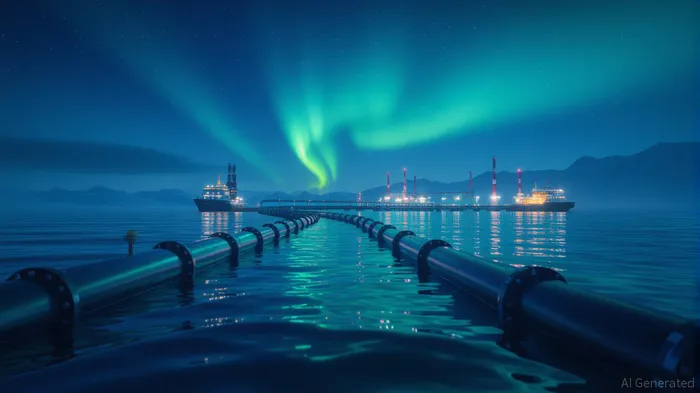
The European carbon capture and storage (CCS) industry is undergoing a transformation that could redefine the continent's energy and industrial landscape. At the heart of this shift lies the Northern Lights CCS project, a pioneering initiative that has already demonstrated the viability of large-scale, cross-border carbon storage. For investors, this project is not merely a technological milestone but a catalyst for a new era of infrastructure-driven decarbonization. Its success signals a strategic inflection pointIPCX-- for energy and industrial investors, offering a blueprint for aligning long-term capital with the urgent need to reduce emissions in hard-to-abate sectors.
A Model for Scalable CCS Infrastructure
The Northern Lights project, a joint venture between EquinorEQNR--, ShellSHEL--, and TotalEnergiesTTE--, has achieved operational status with a current capacity of 1.5 million tonnes of CO₂ per year. By 2028, it aims to expand to 5 million tonnes annually, leveraging a mix of public and private funding. Norway's Gassnova agency and the EU's Connecting Europe Facility (CEF) have provided critical financial support, while the project's ownership structure—shared among three global energy giants—reduces risk and ensures technical expertise. This model of collaboration is replicable, addressing the “chicken-and-egg” challenge of CCS deployment: without infrastructure, demand remains uncertain; without demand, infrastructure is unprofitable. Northern Lights has broken this cycle by securing long-term contracts with industrial clients such as Heidelberg Materials and Stockholm Exergi, creating a predictable revenue stream that de-risks future investments.
The project's strategic location in the North Sea further enhances its scalability. Proximity to industrial clusters in Germany, the Netherlands, and Scandinavia positions it as a regional hub for CO₂ transport and storage. This is critical for sectors like cement, steel, and chemicals, where decarbonization is technically challenging but economically vital. By 2035, the EU will need to capture and store between 300 and 640 million tonnes of CO₂ annually to meet its climate targets. Northern Lights, with its planned expansion, is poised to capture a significant share of this demand, potentially securing 25% of the European CCS market by 2035.
Policy and Market Dynamics: A Tailwind for Investors
The European CCS market is being propelled by a confluence of policy and market forces. The EU's Clean Industrial Deal and Carbon Border Adjustment Mechanism (CBAM) are reshaping the cost landscape for emissions-intensive industries. As free emissions allowances under the Emissions Trading System (ETS) are phased out post-2030, carbon prices are expected to rise sharply. This creates a compelling case for CCS as a competitive necessity rather than a regulatory burden.
Investors are already responding. Major energy companies are transitioning from traditional producers to carbon management operators, leveraging their offshore expertise to develop CCS infrastructure. For example, Equinor's stock has shown resilience amid its strategic shift toward low-carbon technologies, reflecting growing investor confidence in the sector. Similarly, Shell and TotalEnergies have allocated billions to expand their CCS portfolios, recognizing the long-term value of infrastructure that aligns with decarbonization mandates.
The EU's proposed CCUS Strategy, modeled after its successful Hydrogen Strategy, will further accelerate deployment. By setting concrete targets for storage capacity and transport infrastructure, the strategy aims to create a regulatory framework that attracts private capital. Member States like Denmark, the Netherlands, and Sweden are leading the way, integrating CCUS into their national energy plans. This policy coherence is essential for scaling up projects like Northern Lights and ensuring that Europe remains competitive in a decarbonized global economy.
Strategic Implications for Investors
For energy and industrial investors, the Northern Lights project underscores three key principles: collaboration, scalability, and alignment with regulatory trends.
- Collaboration: The project's shared ownership model demonstrates the importance of pooling resources and expertise. Investors should prioritize partnerships that reduce technical and financial risks, particularly in early-stage infrastructure projects.
- Scalability: Northern Lights' expansion to 5 million tonnes by 2028 illustrates the potential for incremental growth. Investors should focus on projects with clear pathways to scale, such as those leveraging existing infrastructure or modular technologies.
- Regulatory Alignment: The EU's ETS reforms and CBAM create a predictable cost environment for emissions. Investors must align their portfolios with these trends, favoring assets that offer long-term exposure to carbon pricing and decarbonization mandates.
Conclusion: A High-Impact Investment Horizon
The Northern Lights project is more than a technical achievement—it is a harbinger of a new industrial era. By proving the economic and environmental viability of large-scale CCS, it has set a precedent for future projects across Europe. For investors, this represents a unique opportunity to align capital with the energy transition. The EU's climate goals, combined with the project's strategic positioning and financial backing, create a compelling case for long-term, high-impact investments in carbon capture and storage infrastructure.
As the global CCS market is projected to grow from USD 6.47 billion in 2024 to USD 35 billion by 2035, Europe's role as a leader in this sector is cementing. Investors who act now—by supporting scalable projects like Northern Lights and aligning with policy-driven decarbonization—will be well-positioned to capitalize on the next decade of growth. The question is no longer whether CCS is viable, but how quickly the world can scale it. In Europe, the answer is becoming clear.







Comentarios
Aún no hay comentarios