
U.S. EIA Refinery Crude Runs Rise to 28,000, Reflecting Shifts in Energy and Industrial Sectors
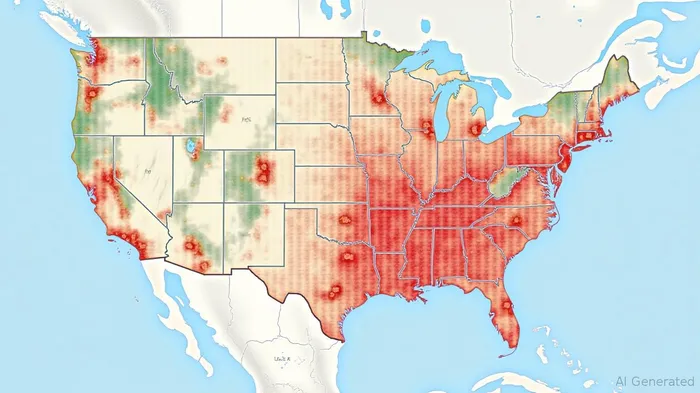
The U.S. Energy Information Administration (EIA) reported a surge in refinery crude runs to 16.9 million barrels per day in early August 2025, a 213,000-barrel increase from the prior week. This marks the highest level since early 2023 and reflects a refining sector recalibrating to decarbonization pressures, macroeconomic shifts, and evolving demand patterns. For investors, this data underscores a critical inflection point: refining activity is no longer a static indicator but a dynamic barometer of industrial resilience and energy transition momentum.
Regional Disparities and Strategic Opportunities
The Gulf Coast (PADD 3) remains the epicenter of U.S. refining strength, with utilization rates hitting 96.1%—driven by access to low-cost shale oil, robust export infrastructure, and proactive investments in retrofitting. This region's dominance is reshaping capital flows, with energy servicesESOA-- firms like SchlumbergerSLB-- (SLB) and Baker HughesBKR-- (BHGE) seeing heightened demand for decarbonization technologies and maintenance services. Logistics providers such as CMA CGM (CGM) and Hapag-Lloyd (HLAG) are also benefiting from the transportation of refined products to global markets.
In contrast, the East Coast (PADD 1) operates at just 59% of capacity, a stark underperformance driven by aging infrastructure and regulatory headwinds. This regional bifurcation signals a “refining migration,” where capital and innovation are concentrating in the Gulf while the East Coast faces existential challenges. Investors should consider underweighting traditional East Coast refiners and overinvesting in Gulf-focused energy services and logistics firms.
Energy Transition and Renewable Fuel Dynamics
The energy transition is accelerating, with California's 17% chemical capacity reduction by 2026 already driving demand for renewable diesel and biofuels. Distillate crack spreads are rising due to lower inventories and global demand, particularly from the Middle East. This trend is fueling surges in D4 and D6 RINs prices, creating opportunities for biofuel producers and refiners retrofitting for sustainable feedstocks.
Industrial conglomerates like CaterpillarCAT-- (CAT) and 3MMMM-- (MMM) are also gaining traction as refineries adopt AI-driven predictive maintenance and decarbonization tools. Meanwhile, automakers face headwinds as gasoline prices climb $0.15 per gallon since May 2025, accelerating the shift to electric vehicles (EVs). Historical data suggests that gasoline prices above $4 per gallon correlate with a 2.3% drop in internal combustion engine (ICE) vehicle sales, compounding challenges for Ford (F) and General MotorsGM-- (GM).
Macroeconomic and Geopolitical Catalysts
A 0.3% Q1 GDP contraction and Red Sea shipping disruptions have introduced volatility, but these pressures are also accelerating the energy transition. OPEC+ production decisions and geopolitical tensions are tightening refining margins, particularly for Gulf Coast operators. Investors should monitor the July 10 crude inventory report and July 23 utilization update for clues on how the Federal Reserve might respond to inflationary pressures tied to gasoline prices, which account for 8% of the CPI basket.
Strategic Investment Recommendations
- Energy Transition Technologies: Overweight investments in companies providing retrofitting solutions, carbon capture, and renewable fuel production. Schlumberger and Baker Hughes are prime candidates, while biofuel producers like Neste (NZE) and Diamond Green Diesel (DGD) offer exposure to the renewable diesel boom.
- Gulf Coast Infrastructure: Prioritize logistics firms (CMA CGM, Hapag-Lloyd) and energy services providers supporting Gulf Coast expansion.
- Industrial Conglomerates: Caterpillar and 3M are well-positioned to benefit from refinery modernization and efficiency upgrades.
- Underweight Traditional Automakers: As gasoline demand declines, automakers face margin pressures and costly EV retooling.
The U.S. refining sector is at a crossroads, with regional disparities and energy transition dynamics reshaping capital flows. For investors, the path forward lies in aligning portfolios with the Gulf's industrial momentum, the energy transition's technological demands, and the structural decline of traditional ICE-centric industries. Those who act decisively on these trends will find themselves well-positioned in a rapidly evolving energy landscape.







Comentarios
Aún no hay comentarios