
Duke Energy's Strategic Partnerships: A Catalyst for Industrial Growth in Indiana
In the evolving landscape of industrial real estate, infrastructure and strategic partnerships have emerged as critical drivers of regional economic development. Duke EnergyDUK-- Indiana's 2025 Site Readiness Program exemplifies this dynamic, positioning the state as a magnet for industrial investment. By preparing high-potential sites in Connersville and Westfield, Duke Energy is not merely facilitating land development but catalyzing a broader economic transformation.
Strategic Site Selection and Infrastructure Readiness
Duke Energy's selection of two properties-a 104-acre site in Connersville and a 169+ acre NorthPoint II site in Westfield-highlights its focus on accessibility and scalability. The Connersville site, adjacent to a former Visteon manufacturing plant and short-line rail service, offers immediate utility connections and proximity to existing industrial infrastructure, as described in Building Momentum. Meanwhile, NorthPoint II in Westfield, a greenfield site adjacent to the NorthPoint Business Park, benefits from direct access to major highways like U.S. 31 and I-465, making it ideal for advanced manufacturing and corporate campuses, according to a Duke Energy release. These locations are strategically chosen to minimize logistical bottlenecks, a key consideration for companies evaluating expansion or relocation, as noted by Inside Indiana Business.
The program's $10,000 per-site funding for preparation and marketing underscores Duke Energy's commitment to reducing barriers for developers. By collaborating with local economic development organizations, the utility ensures that these sites are not only physically ready but also marketed effectively to a national audience of industrial investors, as detailed in a Duke Energy grants announcement. This approach aligns with broader trends in industrial real estate, where pre-qualified, infrastructure-ready sites are increasingly valued in a competitive market, a point reflected in the Cayuga feasibility study.
Economic Impact: Jobs, Capital, and Long-Term Growth
Since the Site Readiness Program's inception in 2013, Duke Energy has generated over $14.7 billion in capital investment and 10,000 jobs across Indiana, as reported in Building Momentum. In 2024 alone, the program contributed $7 billion in capital investment and supported 2,800 jobs, per the Duke Energy release. These figures reflect a compounding effect: by attracting major projects, Duke Energy has not only revitalized underutilized land but also spurred ancillary economic activity, from construction to supply chain development.
The utility's broader 2025 Partnership Program further amplifies this impact. Grants awarded to economic development organizations in northern and southern Indiana have funded initiatives such as foreign direct investment outreach and digital marketing campaigns, as reported by GMIPost. Such efforts are critical in an era where global supply chains are being reconfigured for resilience and proximity to markets. For instance, the NorthPoint II site's potential to host megasite projects-facilities capable of supporting multiple tenants-positions Indiana to compete with larger industrial hubs like Texas or Georgia, as noted by The Reporter.
A Model for Regional Competitiveness
Duke Energy's strategy mirrors successful models in other regions, where public-private partnerships have accelerated industrial growth. For example, the utility's collaboration with Banning Engineering and Site Selection Group to evaluate properties ensures that site readiness is data-driven and aligned with market demands, according to MarketScreener. This level of due diligence reduces risk for investors, making Indiana a more attractive destination compared to regions with less coordinated development efforts.
Moreover, the program's emphasis on transportation infrastructure-rail, highways, and intermodal connectivity-addresses a persistent challenge in industrial real estate: the rising cost of logistics. By prioritizing sites with existing or easily upgradable infrastructure, Duke Energy mitigates a key pain point for manufacturers and logistics firms, particularly in sectors like automotive or advanced manufacturing, a dynamic previously highlighted by Inside Indiana Business.
Future Outlook and Risks
While the program's track record is impressive, its long-term success will depend on sustained investment and adaptability. For instance, the transition to renewable energy and the rise of green manufacturing could necessitate additional infrastructure upgrades, such as grid modernization or carbon capture facilities, a possibility explored by Enkiai. Duke Energy's recent feasibility study for coal units at Cayuga, alongside new gas infrastructure, suggests a cautious approach to balancing traditional and emerging energy needs, as documented in the Cayuga feasibility study.
Additionally, the effectiveness of the selected sites will hinge on their ability to attract anchor tenants. While the Connersville and Westfield sites are well-positioned, their ultimate value will be determined by whether they secure high-profile investments. This underscores the importance of Duke Energy's marketing efforts and the role of local economic development organizations in tailoring pitches to specific industries, a point made in Building Momentum.
Conclusion
Duke Energy's Site Readiness Program is more than a utility initiative; it is a blueprint for regional economic resilience. By aligning infrastructure development with market demands, the program has transformed Indiana into a competitive destination for industrial investment. For investors, the state's strategic sites and Duke Energy's long-term commitment present compelling opportunities. However, as with any industrial real estate venture, success will require continuous adaptation to technological and market shifts. In this context, Duke Energy's partnerships offer a model of how utilities can evolve from passive enablers to active architects of economic growth.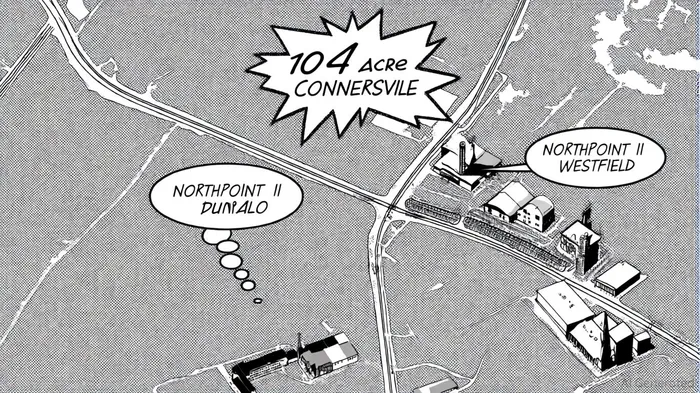





Comentarios
Aún no hay comentarios