
Detroit's Heritage Revival: Paddy Lynch's Dakota Inn and the New Frontier of Experiential Hospitality
The city of Detroit, once synonymous with industrial decline, is now a testament to urban reinvention. At the heart of this transformation is Paddy Lynch, a third-generation funeral director turned real estate visionary, whose acquisitions of Detroit's historic landmarks—The Schvitz, Dutch Girl Donuts, and now the Dakota Inn Rathskeller—signal a strategic pivot toward undervalued cultural assets. Lynch's approach blends preservation with innovation, positioning Detroit as a hub for experiential hospitality that caters to a growing appetite for authenticity. The Dakota Inn's revival, in particular, exemplifies how legacy brands with deep community roots can unlock untapped revenue streams, offering investors a compelling entry into a maturing real estate market.
Lynch's Track Record: Preserving HeritageCASK-- While Building Value
Lynch's success lies in his ability to identify overlooked assets with enduring cultural capital. Take Dutch Girl Donuts, a 77-year-old institution that Lynch rescued from decay in 2023. By restoring its terrazzo floors, natural light, and family recipes, he transformed it into a nostalgic beacon—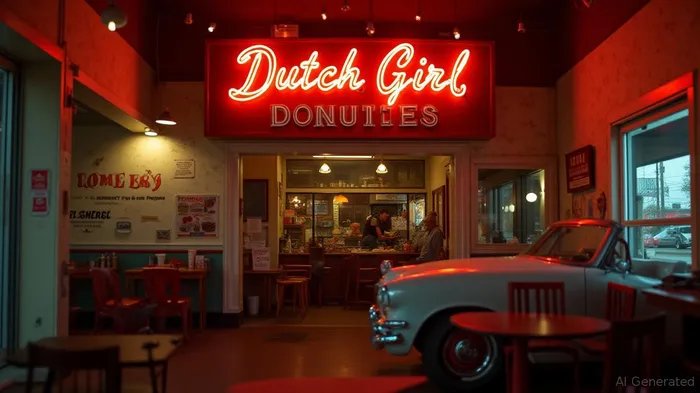 . The shop's May 2024 soft opening, paired with partnerships like Becharas Brothers Coffee, demonstrates how Lynch leverages local expertise to sustain authenticity. Similarly, The Schvitz, an Eastern European bathhouse, remains a cultural anchor under his ownership, proving that heritage can coexist with modern practicality.
These projects reveal Lynch's formula: acquire properties with irreplaceable histories, invest in their physical preservation, and capitalize on their emotional resonance. The result is a portfolio of brands that are not just buildings but storytellers—a rarity in an era of homogenized real estate development.
The Dakota Inn: A Blueprint for Experiential Expansion
The Dakota Inn Rathskeller, a German beer hall dating to 1926, represents Lynch's boldest venture yet. The acquisition targets Detroit's growing demand for immersive, heritage-driven experiences. Plans include:
- Year-round biergarten operations: Expanding beyond seasonal limitations to tap into winter tourism.
- Overnight lodging: Converting upstairs apartments into boutique rooms, diversifying revenue beyond dining.
- Gift shops and markets: Selling local products, leveraging the property's cultural cache as a destination.
These moves align with a broader trend: the experiential economy. could validate Lynch's strategy. The Dakota Inn's potential to generate steady income through lodging and retail—while maintaining its historic dining room—positions it as a multifaceted asset.
Why Detroit's Real Estate Market is Maturing—and Why Investors Should Notice
Lynch's investments underscore Detroit's shift from a “rust belt” narrative to a “revival” story. Properties like the Dakota Inn are no longer seen as relics but as engines of economic activity. Key advantages include:
1. Undervalued assets: Historic sites often trade at discounts to their cultural and experiential worth.
2. Community buy-in: Lynch's ties to Detroit's history—his family's funeral home legacy and childhood Dutch Girl memories—foster trust, ensuring projects resonate locally.
3. Scalability without losing soul: The Dakota Inn's planned biergarten and lodging add revenue without erasing its heritage—a model replicable in similar properties.
For investors, this presents a rare opportunity to profit from both tangible real estate appreciation and intangible brand equity. While risks like overvaluation or market saturation exist, Detroit's pent-up demand for unique experiences suggests Lynch's approach is defensible.
Investment Thesis: Capitalize on Detroit's Heritage Renaissance
The Dakota Inn acquisition is more than a real estate play—it's a bet on Detroit's identity as a city reborn through its past. Investors should consider three strategies:
1. Target legacy brands: Seek underappreciated properties with strong community ties, like family-owned eateries or historic venues.
2. Look beyond traditional metrics: Cultural value and experiential appeal may outweigh short-term financials.
3. Diversify revenue streams: Follow Lynch's model of adding lodging, retail, or event spaces to boost cash flow.
The market's slow recognition of these assets creates a window for early adopters. As Detroit's tourism and real estate markets grow——such investments could yield both financial and cultural dividends.
Conclusion: Detroit's Future is Written in Its Past
Paddy Lynch's acquisitions reveal a truth: Detroit's comeback is not just about numbers but narratives. The Dakota Inn, Dutch Girl, and Schvitz are more than properties; they are cultural touchstones in a city rewriting its story. For investors, this is a call to embrace heritage as a strategic asset. In a world hungry for authenticity, Detroit's undervalued historic landmarks are not relics—they are blueprints for the next chapter of urban reinvention.
The question for investors is clear: Will you bet on the past to profit from the future?







Comentarios
Aún no hay comentarios