
Decoding Q3 Earnings: Navigating a Slower S&P 500 Growth Landscape
The S&P 500's Q3 2025 earnings growth of 7.9% year-over-year, while robust, marks a moderation from the 12% surge in Q2. This slowdown reflects a maturing economic cycle and a market that has already priced in much of its optimism. Yet, within this broader context, certain sectors have demonstrated resilience, offering clues to where value creation remains concentrated. For investors, the task is to identify these outperformers and understand the fundamentals underpinning their strength.
Information Technology: The Engine of Growth
The Information Technology sector has been the standout performer, with earnings growth projected to exceed 20% YoY. This is driven by the relentless expansion of artificial intelligence (AI) infrastructure and software development. As stated by a MarketBeat report, the sector's gains are underpinned by demand for advanced computing power, cloud services, and AI-driven analytics. Applied MaterialsAMAT-- (AMAT), a key player in semiconductor manufacturing, exemplifies this trend; its Q3 FY2025 results-$7.3 billion in revenue and $2.48 in non-GAAP EPS-highlight the sector's momentum, as shown in AMAT's earnings report. However, AMAT's cautious Q4 outlook underscores lingering risks, including supply chain bottlenecks and U.S. tariff uncertainties, as noted in a CNBC article.
Utilities: Powering Through Inflation
The Utilities sector, often seen as a defensive play, has defied expectations in Q3 2025. According to a Deloitte outlook, rising electricity demand-particularly from data centers-has driven capital investment and innovation in grid technologies. With data centers now accounting for 6% to 8% of annual electricity generation, the outlook notes utilities are expanding nuclear and gas-fired capacity to meet surging demand. This sector's resilience is further supported by its low volatility and steady cash flows, making it a haven in a high-interest-rate environment.
Materials: Cyclical Revival
The Materials sector, long a laggard, is showing signs of recovery. A report by Morningstar notes that falling global interest rates and potential Chinese stimulus measures are creating a more favorable backdrop for industrial inputs. While Q3 2025 saw a modest 1.7% price increase, the sector's long-term prospects are tied to U.S. infrastructure spending and manufacturing revival. Applied Materials' investments in Arizona, part of Apple's American Manufacturing Program, illustrate the sector's pivot toward onshoring and advanced manufacturing.
Financials: Benefiting from Rate Cuts
The Financials sector has gained traction as the Federal Reserve's September rate cut signaled a shift toward accommodative monetary policy. As highlighted by LPL Financial, banks and insurers are capitalizing on narrowing credit spreads and improved loan demand. However, the sector's performance remains contingent on the Fed's ability to balance inflation control with economic growth. Delays in rate cuts could dampen momentum, particularly for mortgage lenders and asset managers.
Valuation Caution and Macroeconomic Risks
While these sectors offer compelling narratives, investors must remain wary of stretched valuations. The S&P 500's forward P/E of 22.5x exceeds both its 5-year and 10-year averages, a point also raised by LPL Financial, suggesting that much of the optimism is already priced in. Moreover, the Fed's tightening cycle, though paused in Q3, remains a wildcard. Persistent inflation or a stronger-than-expected labor market could delay rate cuts, pressuring sectors reliant on monetary easing.
Conclusion
Q3 2025 earnings underscore a market in transition. Information Technology, Utilities, Materials, and Financials have emerged as resilient sectors, each driven by distinct fundamentals-from AI adoption to energy infrastructure. Yet, the path forward is not without risks. For investors, the key lies in balancing exposure to these growth engines with a disciplined approach to valuation and macroeconomic shifts. As the year draws to a close, the focus must remain on quality and sustainability, not just momentum.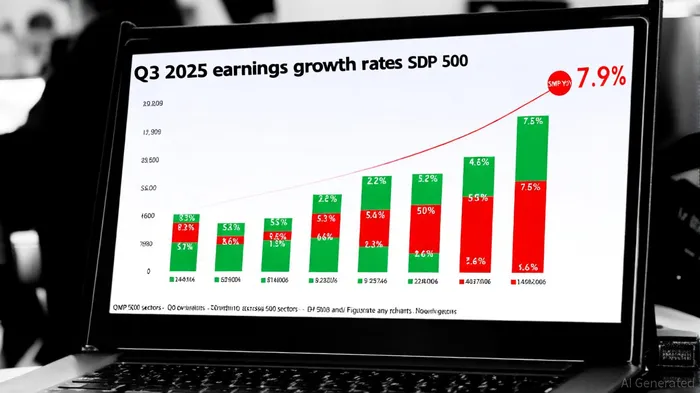





Comentarios
Aún no hay comentarios