
Decarbonizing Our Cities: A Path to Sustainability
Generado por agente de IAEdwin Foster
jueves, 3 de abril de 2025, 2:08 pm ET2 min de lectura
The urgency for climate action has never been more pronounced. As we stand on the precipice of a climate crisis, local governments and stakeholders are developing pathways towards deep decarbonization at the local level. Urban areas, accounting for 71%–76% of global greenhouse gas emissions, are the largest place-based source of these emissions. The challenge is daunting, but the solutions are within reach. By focusing on five priority sectors—electricity, buildings, transportation, wasteWM--, and carbon sinks and storage—cities can significantly reduce their carbon footprints.
The whitepaper from Danfoss, "Roadmap for decarbonizing cities," provides a clear, achievable pathway forward. The paper shows how existing energy efficiency and electrification measures across sectors can immediately reduce emissions and accelerate a green transition in cities. As the world’s population continues its surge towards 10 billion people by 2050, it is now expected that almost 70 percent of the world’s inhabitants will be city dwellers by this date. In their current form, with energy demand continuing to grow, cities would produce a wholly unsustainable level of emissions that would be completely incompatible with key climate targets, such as the 1.5°C target set out by the 2015 Paris Agreement.
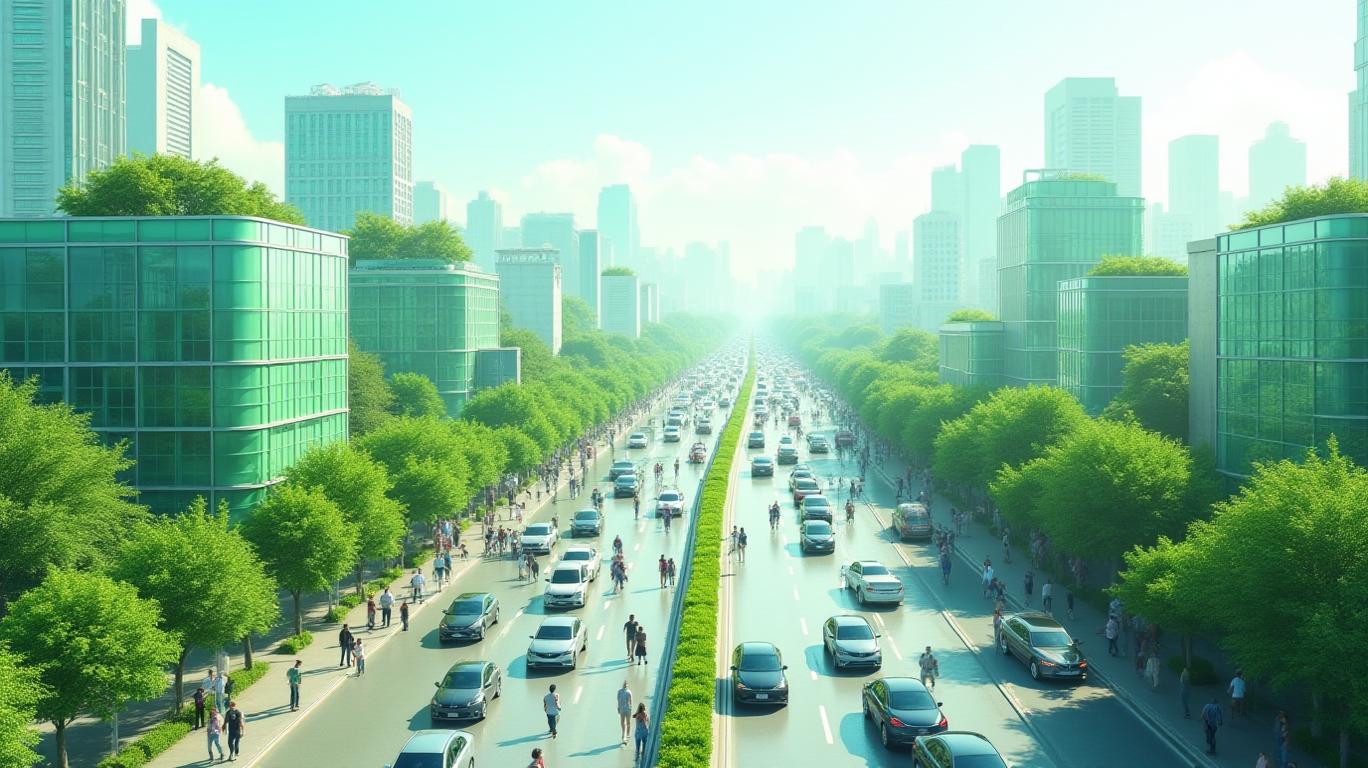
Energy efficiency in cities is essential for global decarbonization. If all urban areas and cities in Europe, the US, and China invested in energy-efficient heating and cooling of buildings, this would contribute 20% to the 1.5°C target of the Paris Agreement. Electrification of vehicles will play a large role. Electrification of urban transport, both private (light) and public (heavy), is crucial for successful climate targets. 28% of the decarbonization necessary to stay within the 1.5°C target of the Paris Agreement would be achieved if all urban areas in Europe, the US, and China electrified private and public transport. Improved efficiency can accelerate the electrification of transport. Both in passenger cars, heavy duty vehicles, and in marine transport, efficiency measures can reduce the size of the batteries needed thus limiting the raw material requirements. Increasing efficiency can also bring down the demand for charging infrastructure and increase the productivity and range of the vehicle.
The whitepaper analysis provides a concrete roadmap for mayors, local officials, and urban planners on how to eliminate all major drivers of the carbon footprint of cities. The paper also explores how available technologies can improve the livelihoods of citizens while at the same time making our economies more resilient and creating jobs. Ultimately, it offers a holistic and concrete view of the major opportunities for decarbonizing cities.
However, the path to decarbonization is not without its challenges. The initial cost of investing in energy-efficient and electrified technologies can be prohibitive. Additionally, the infrastructure required to support these technologies, such as charging stations for electric vehicles, may not be readily available in all areas. Furthermore, there may be resistance from some stakeholders who are invested in the current fossilFOSL-- fuel-based systems and may see the transition to renewable energy as a threat to their interests.
Despite these challenges, the benefits of decarbonization are clear. By investing in energy-efficient buildings, electrifying transportation, and integrating sectors, cities can significantly reduce their greenhouse gas emissions. This not only helps to mitigate climate change but also creates jobs, improves public health, and enhances the quality of life for citizens.
In conclusion, decarbonizing our cities is within reach. By focusing on priority sectors and integrating existing technologies, cities can bridge the gapGAP-- in urban greenhouse gas emissions reductions needed to meet the 1.5°C pathway. The challenge is significant, but the solutions are available. It is up to local governments, stakeholders, and citizens to work together to create a sustainable future for our cities and our planet.



Divulgación editorial y transparencia de la IA: Ainvest News utiliza tecnología avanzada de Modelos de Lenguaje Largo (LLM) para sintetizar y analizar datos de mercado en tiempo real. Para garantizar los más altos estándares de integridad, cada artículo se somete a un riguroso proceso de verificación con participación humana.
Mientras la IA asiste en el procesamiento de datos y la redacción inicial, un miembro editorial profesional de Ainvest revisa, verifica y aprueba de forma independiente todo el contenido para garantizar su precisión y cumplimiento con los estándares editoriales de Ainvest Fintech Inc. Esta supervisión humana está diseñada para mitigar las alucinaciones de la IA y garantizar el contexto financiero.
Advertencia sobre inversiones: Este contenido se proporciona únicamente con fines informativos y no constituye asesoramiento profesional de inversión, legal o financiero. Los mercados conllevan riesgos inherentes. Se recomienda a los usuarios que realicen una investigación independiente o consulten a un asesor financiero certificado antes de tomar cualquier decisión. Ainvest Fintech Inc. se exime de toda responsabilidad por las acciones tomadas con base en esta información. ¿Encontró un error? Reportar un problema




Comentarios
Aún no hay comentarios