
DAX Resilience in Geopolitical Uncertainty: Defensive Equity Positioning in European Markets Amid US-China De-escalation
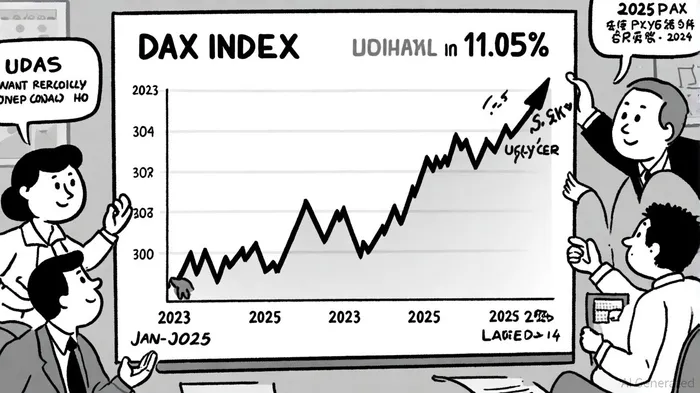
The DAX index, a barometer of Germany's industrial and financial health, has navigated a turbulent geopolitical landscape with surprising resilience in 2025. Despite persistent risks-from the war in Ukraine to potential escalations in the Middle East-the index has surged by 11.05% year-to-date, marking its strongest performance since 2023, according to a Kapitalcheck analysis. This resilience, however, is not uniform across sectors. Defensive equity positioning in European markets has emerged as a critical strategy for investors, particularly as the U.S.-China trade pause has temporarily eased some of the headwinds that once threatened global growth.
Geopolitical Volatility and the DAX's Mixed Fortunes
The DAX's performance in 2025 reflects a delicate balance between optimism and caution. By May 2025, the index had surged 19% year-to-date, outperforming U.S. markets during periods of Wall Street selloffs, according to a Shearman insight. This momentum was fueled by Germany's new coalition government, which prioritized infrastructure and defense spending, and by a 90-day pause in U.S.-China tariff escalations, which reduced trade-related anxieties, as the Shearman insight notes. Yet, the index remains vulnerable to geopolitical shocks. For instance, a four-day losing streak in late 2024 was attributed to U.S. tariff concerns and broader global uncertainties, as reported by FXEmpire. Technical indicators, such as the DAX's pullback below the lower Bollinger Band in Q3 2025, underscore its sensitivity to external shocks, even as moving averages suggest a potential for recovery, an ESMA press release warned.
Defensive Sectors: Defense, Cybersecurity, and Resilience
Amid this volatility, defensive sectors have provided a bulwark for European investors. The defense industry, in particular, has thrived. European defense M&A activity reached USD2.3 billion in H1 2025, a 35% year-on-year increase, driven by strategic acquisitions like Rheinmetall's purchase of a U.S. military vehicle component manufacturer and Safran's acquisition of a French defense AI developer, according to ActivTrades research. These moves reflect a broader shift toward advanced manufacturing and technology-driven solutions, supported by policy initiatives such as the EUR150 billion ReArm Europe Plan, the ActivTrades piece notes.
Cybersecurity has also gained prominence as a defensive sector. With rising geopolitical threats, European firms are investing heavily in digital infrastructure to protect critical systems, including financial and energy networks, as ESMA has highlighted. Meanwhile, the technology and consumer goods sectors have shown relative resilience compared to export-dependent industries, as investors favor companies with stable cash flows, the Kapitalcheck analysis found.
US-China De-escalation: A Tailwind for European Defensiveness
The temporary de-escalation of U.S.-China trade tensions has further bolstered defensive positioning in European markets. The 90-day tariff pause in early 2025 not only stabilized global supply chains but also diverted capital flows toward safer assets, the Shearman insight observed. This shift has benefited sectors like defense and cybersecurity, which are less exposed to trade wars and more aligned with long-term strategic priorities. However, the fragility of this reprieve remains a concern. Analysts caution that a resumption of U.S.-China hostilities could trigger a flight of capital back to American equities, creating headwinds for the DAX, the Shearman insight warns.
The Path Forward: Balancing Optimism and Prudence
The DAX's resilience in 2025 is a testament to Germany's industrial adaptability and the strategic reorientation of European markets toward defense and technology. Yet, the index's exposure to global trade-particularly its reliance on U.S. and Chinese markets-means that geopolitical risks remain a double-edged sword, the Kapitalcheck analysis notes. For investors, the key lies in balancing long-term growth opportunities in defensive sectors with short-term hedging against volatility.
As the year progresses, the interplay between U.S.-China relations, European defense spending, and global inflationary pressures will likely shape the DAX's trajectory. For now, the index's performance underscores a broader truth: in an era of geopolitical uncertainty, defensive equity positioning is not merely a risk-mitigation strategy but a cornerstone of sustainable growth.







Comentarios
Aún no hay comentarios