
CPKC's Low-Carbon Transition: A Comprehensive Update
Generado por agente de IAEdwin Foster
jueves, 20 de febrero de 2025, 4:20 pm ET2 min de lectura
CP--
Canadian Pacific Kansas City (CPKC) has recently published an update on its low-carbon transition, outlining key initiatives and progress made in reducing greenhouse gas (GHG) emissions. The company, formed by the merger of Canadian Pacific and Kansas City Southern, is committed to playing a leading role in the transition to a low-carbon economy. This article will provide an overview of CPKC's low-carbon transition update, highlighting the company's efforts to reduce emissions and promote sustainability.
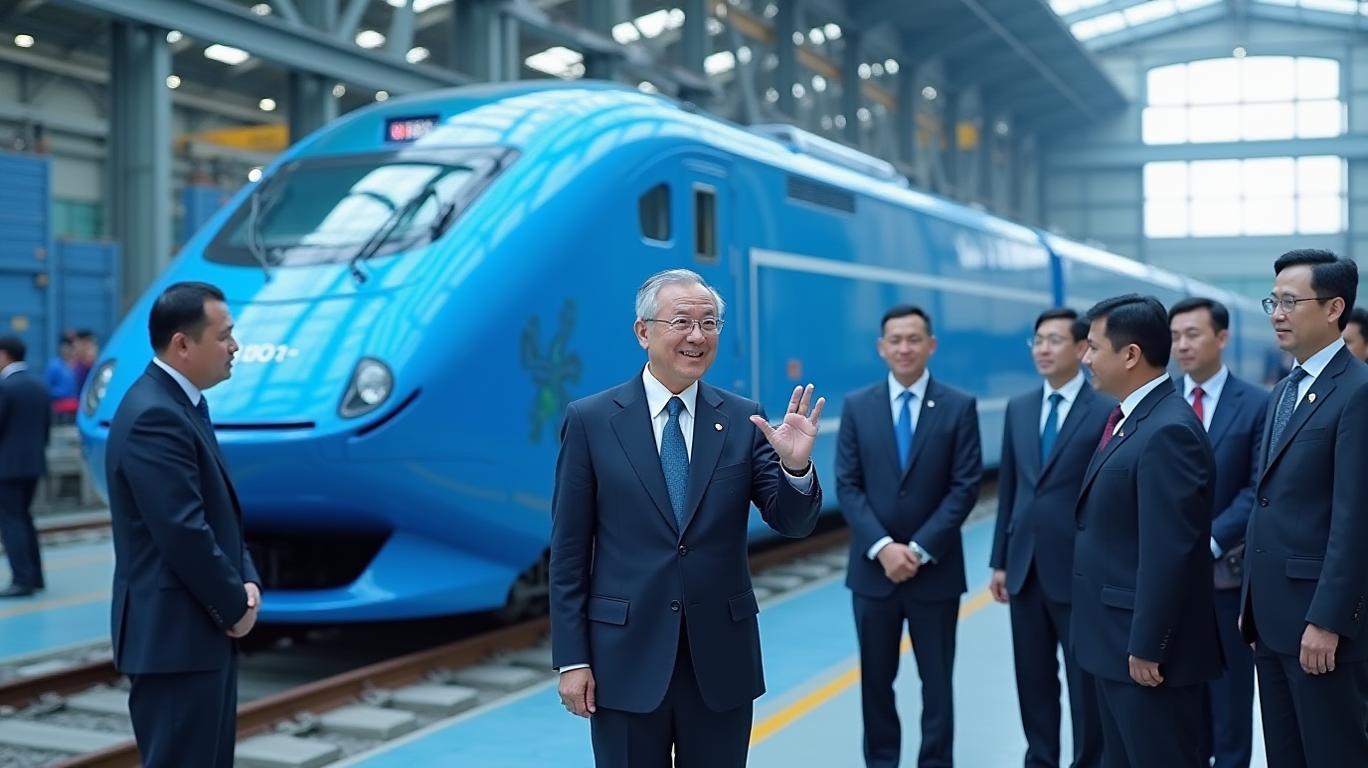
CPKC's Hydrogen Locomotive Program is a significant component of the company's low-carbon transition strategy. The program aims to reduce emissions by testing hydrogen-powered locomotives, with the goal of eventually replacing diesel locomotives with hydrogen-powered alternatives. By the end of 2024, the program had achieved over 6,000 miles in freight service testing, demonstrating the potential of hydrogen-powered locomotives to reduce emissions in the rail industry. CPKC plans to expand its hydrogen test fleet with seven additional locomotives and a tender car throughout 2025, further advancing the development and deployment of hydrogen-powered locomotives.
Another key initiative in CPKC's low-carbon transition is the B20 locomotive biofuel trial in British Columbia. The trial, which involved over 1,100 fueling events in 2024, tested advanced renewable biofuel blends in CPKC's locomotives. This trial demonstrates the company's commitment to exploring alternative fuel sources to reduce emissions and promote sustainability in the rail industry.
CPKC is also preparing to receive 100 Tier 4 diesel-electric locomotives in 2025, designed to reduce emissions and improve fuel efficiency. These locomotives meet the most stringent emissions standards, further contributing to CPKC's goal of reducing its carbon footprint. Additionally, CPKC has launched an updated carbon emissions calculator for its combined rail network in Canada, the United States, and Mexico. This tool allows customers to estimate the potential greenhouse gas (GHG) emissions reductions they may achieve using CPKC's rail services compared to long-haul trucking alternatives, encouraging more sustainable transportation choices.

CPKC's commitment to reducing GHG emissions is evident in its ongoing efforts to develop a greenhouse gas (GHG) emissions reduction target aligned with a 1.5⁰C future and supporting the global economy to achieve net-zero emissions by 2050. The company has joined the Science Based Targets initiative's (SBTi) Business Ambition for 1.5⁰C global campaign, demonstrating its dedication to ambitious climate action. While CPKC works towards developing a 1.5⁰C aligned emissions reduction target, it has established an interim consolidated locomotive emissions reduction target using SBTi's sectoral-based approach for freight railroads and a well-below 2oC global warming scenario. This target commits CPKC to reduce scope 1, 2, and 3 well-to-wheel locomotive GHG emissions 36.9 percent per gross ton-miles by 2030 from a 2020 base year.
In conclusion, CPKC's low-carbon transition update highlights the company's commitment to reducing greenhouse gas emissions and promoting sustainability in the rail industry. Through its Hydrogen Locomotive Program, B20 locomotive biofuel trial, and the launch of an updated carbon emissions calculator, CPKC is taking significant steps towards a low-carbon future. The company's dedication to developing a greenhouse gas (GHG) emissions reduction target aligned with a 1.5⁰C future further demonstrates its leadership in the transition to a low-carbon economy. As CPKC continues to integrate the operations of KCS into its own, it is well-positioned to make a meaningful impact on the global effort to address climate change.
CPK--
KC--
SBIT--
SMBC--
Canadian Pacific Kansas City (CPKC) has recently published an update on its low-carbon transition, outlining key initiatives and progress made in reducing greenhouse gas (GHG) emissions. The company, formed by the merger of Canadian Pacific and Kansas City Southern, is committed to playing a leading role in the transition to a low-carbon economy. This article will provide an overview of CPKC's low-carbon transition update, highlighting the company's efforts to reduce emissions and promote sustainability.
CPKC's Hydrogen Locomotive Program is a significant component of the company's low-carbon transition strategy. The program aims to reduce emissions by testing hydrogen-powered locomotives, with the goal of eventually replacing diesel locomotives with hydrogen-powered alternatives. By the end of 2024, the program had achieved over 6,000 miles in freight service testing, demonstrating the potential of hydrogen-powered locomotives to reduce emissions in the rail industry. CPKC plans to expand its hydrogen test fleet with seven additional locomotives and a tender car throughout 2025, further advancing the development and deployment of hydrogen-powered locomotives.
Another key initiative in CPKC's low-carbon transition is the B20 locomotive biofuel trial in British Columbia. The trial, which involved over 1,100 fueling events in 2024, tested advanced renewable biofuel blends in CPKC's locomotives. This trial demonstrates the company's commitment to exploring alternative fuel sources to reduce emissions and promote sustainability in the rail industry.
CPKC is also preparing to receive 100 Tier 4 diesel-electric locomotives in 2025, designed to reduce emissions and improve fuel efficiency. These locomotives meet the most stringent emissions standards, further contributing to CPKC's goal of reducing its carbon footprint. Additionally, CPKC has launched an updated carbon emissions calculator for its combined rail network in Canada, the United States, and Mexico. This tool allows customers to estimate the potential greenhouse gas (GHG) emissions reductions they may achieve using CPKC's rail services compared to long-haul trucking alternatives, encouraging more sustainable transportation choices.
CPKC's commitment to reducing GHG emissions is evident in its ongoing efforts to develop a greenhouse gas (GHG) emissions reduction target aligned with a 1.5⁰C future and supporting the global economy to achieve net-zero emissions by 2050. The company has joined the Science Based Targets initiative's (SBTi) Business Ambition for 1.5⁰C global campaign, demonstrating its dedication to ambitious climate action. While CPKC works towards developing a 1.5⁰C aligned emissions reduction target, it has established an interim consolidated locomotive emissions reduction target using SBTi's sectoral-based approach for freight railroads and a well-below 2oC global warming scenario. This target commits CPKC to reduce scope 1, 2, and 3 well-to-wheel locomotive GHG emissions 36.9 percent per gross ton-miles by 2030 from a 2020 base year.
In conclusion, CPKC's low-carbon transition update highlights the company's commitment to reducing greenhouse gas emissions and promoting sustainability in the rail industry. Through its Hydrogen Locomotive Program, B20 locomotive biofuel trial, and the launch of an updated carbon emissions calculator, CPKC is taking significant steps towards a low-carbon future. The company's dedication to developing a greenhouse gas (GHG) emissions reduction target aligned with a 1.5⁰C future further demonstrates its leadership in the transition to a low-carbon economy. As CPKC continues to integrate the operations of KCS into its own, it is well-positioned to make a meaningful impact on the global effort to address climate change.

Divulgación editorial y transparencia de la IA: Ainvest News utiliza tecnología avanzada de Modelos de Lenguaje Largo (LLM) para sintetizar y analizar datos de mercado en tiempo real. Para garantizar los más altos estándares de integridad, cada artículo se somete a un riguroso proceso de verificación con participación humana.
Mientras la IA asiste en el procesamiento de datos y la redacción inicial, un miembro editorial profesional de Ainvest revisa, verifica y aprueba de forma independiente todo el contenido para garantizar su precisión y cumplimiento con los estándares editoriales de Ainvest Fintech Inc. Esta supervisión humana está diseñada para mitigar las alucinaciones de la IA y garantizar el contexto financiero.
Advertencia sobre inversiones: Este contenido se proporciona únicamente con fines informativos y no constituye asesoramiento profesional de inversión, legal o financiero. Los mercados conllevan riesgos inherentes. Se recomienda a los usuarios que realicen una investigación independiente o consulten a un asesor financiero certificado antes de tomar cualquier decisión. Ainvest Fintech Inc. se exime de toda responsabilidad por las acciones tomadas con base en esta información. ¿Encontró un error? Reportar un problema




Comentarios
Aún no hay comentarios