
Comstock's Strategic Acquisition of a Multifamily Asset in Rockville: Capitalizing on D.C. Metro's High-Growth Suburbs
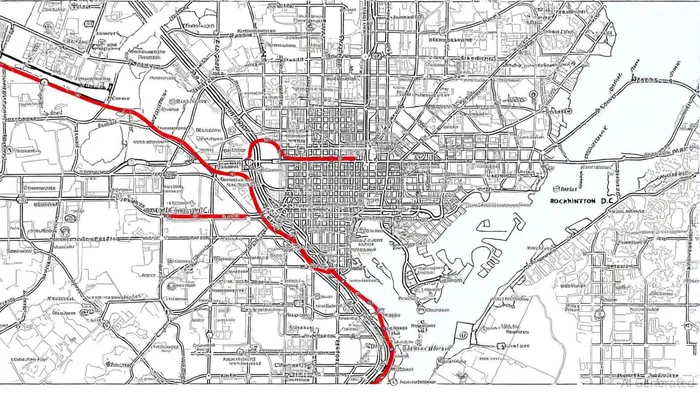
The Washington, D.C. metro area has long been a magnet for capital seeking resilient real estate markets, and its suburban corridors are now emerging as particularly compelling opportunities. Comstock HoldingCHCI-- Companies' recent acquisition of a 400+ unit multifamily property in Rockville, Maryland, epitomizes this trend. Priced at $112.25 million, the transaction underscores a strategic bet on the D.C. suburbs' ability to absorb demand amid shifting supply dynamics and regulatory constraints[1]. This analysis explores how Comstock's move aligns with broader market fundamentals and why Rockville, in particular, represents a high-conviction opportunity for investors.
Market Fundamentals: Demand Outpaces Supply
The D.C. metro's multifamily sector is being driven by two key forces: robust employment growth and a constrained single-family housing market. As of Q2 2025, the region maintained an average occupancy rate of 95.1%, with rents averaging $2,245 per unit—a 2.2% year-over-year increase, outpacing the national average of 1%[3]. High interest rates have stifled single-family home construction, pushing demand into apartments. For instance, Rockville's proximity to the Metro Red Line and its status as a hub for tech and professional services firms have made it a prime destination for renters seeking transit-oriented living[5].
Meanwhile, supply constraints are tightening. Nationally, multifamily construction pipelines have slowed, with Maryland seeing a 30% year-over-year decline in units under construction in 2025[4]. This decline, coupled with strong population growth from out-of-state companies expanding into the region, has created a favorable imbalance. In Montgomery and Prince George's Counties, where Rockville is located, nearly 4,500 units were completed in 2024—the first time the state crossed that threshold[4]. Yet, with construction activity now retreating, absorption rates remain strong, and vacancy rates are projected to stabilize.
Strategic Rationale: Comstock's Institutional Venture Platform
Comstock's acquisition is structured through its Institutional Venture Platform (IVP), a joint venture model designed to attract institutional capital while mitigating risk. By securing a minority equity partner, Comstock reduces its upfront capital outlay while leveraging the property's long-term value potential[2]. The Rockville asset, with its transit-oriented design and proximity to employment hubs, aligns with the IVP's focus on high-growth, low-volatility markets.
The property's strategic location is critical. Rockville's multifamily market benefits from dual tailwinds: a surge in workforce housing demand and a regulatory environment that, while introducing rent stabilization measures (capping annual increases at 5.7% for most units), has not dampened investor enthusiasm[4]. The property's 400+ units are expected to generate steady cash flow, supported by the region's 5.9% year-over-year rent growth in Northern Virginia—a submarket with similar dynamics[3].
Challenges and Mitigants
Despite the optimism, risks persist. Federal government cutbacks in H1 2025 created short-term uncertainty, reducing employment and contracts in the D.C. metro[1]. Additionally, high borrowing costs—though easing slightly—remain a drag on investment activity. However, Comstock's joint venture structure and the property's strong fundamentals (95.1% occupancy, $2,245 average rents) provide a buffer against these headwinds[3].
Moreover, the market's regulatory landscape, including rent caps, requires careful navigation. Yet, as seen in Prince George's County, such measures have not curtailed demand; instead, they have redirected it toward newer, higher-quality developments with modern amenities[4]. Comstock's asset, with its well-appointed features, is positioned to capitalize on this trend.
Looking Ahead: A 2026 Outlook
The D.C. metro's multifamily market is expected to stabilize and grow through 2026, with projected rent growth of 2.6% and vacancy rates averaging 4.9% nationally[5]. For Rockville, the outlook is even brighter. With construction pipelines shrinking and demand remaining resilient, the area is poised to outperform. Comstock's acquisition, timed to close in Q4 2025, positions the firm to benefit from this trajectory while leveraging institutional capital to scale its portfolio[1].
Conclusion
Comstock's Rockville acquisition is a textbook example of capitalizing on structural imbalances in high-growth suburban markets. By targeting a transit-oriented asset in a supply-constrained, demand-driven environment, the firm is aligning itself with the D.C. metro's long-term trajectory. While macroeconomic uncertainties linger, the fundamentals—robust employment, regulatory tailwinds, and a tightening supply pipeline—suggest that Rockville will remain a cornerstone of the region's multifamily renaissance. For investors, this transaction highlights the importance of strategic location, adaptive capital structures, and a focus on markets where demand outpaces supply.





Comentarios
Aún no hay comentarios