
The Collapse of iRobot and the Shifting Power in the Smart Home Robotics Sector
The bankruptcy of iRobotIRBT--, the pioneering maker of the Roomba robotic vacuum, in December 2025, marks a pivotal moment in the smart home robotics industry. Once a symbol of innovation in consumer robotics, iRobot's demise underscores the fragility of Western leadership in a sector increasingly dominated by Chinese manufacturers. The company's failure to adapt to rising costs, intensifying competition, and the collapse of a transformative acquisition deal has accelerated industry consolidation, offering critical lessons for investors navigating a commoditizing market.
The Downfall of iRobot: A Case Study in Strategic Missteps
iRobot's bankruptcy filing under Chapter 11 was driven by a confluence of factors. According to analysis, declining revenue, exacerbated by years of competition from lower-cost Chinese rivals like Ecovacs Robotics, eroded its market position. Simultaneously, U.S. tariffs on Vietnamese imports-where iRobot's vacuums are primarily produced-added $23 million in costs alone in 2025. These tariffs, part of broader trade tensions, compounded operational challenges. The collapse of Amazon's proposed $1.7 billion acquisition in 2024 further destabilized the company, triggering layoffs and a leadership overhaul.
The Amazon deal, had it succeeded, might have provided the capital and scale needed to counter Chinese competition. Instead, its failure left iRobot vulnerable to financial pressures, forcing it into a restructuring plan that sees it transition to private ownership under Shenzhen-based Picea Robotics, its primary manufacturer and creditor. This outcome highlights a critical risk for investors: the inability of Western firms to compete with the cost advantages and rapid innovation cycles of Chinese manufacturers.
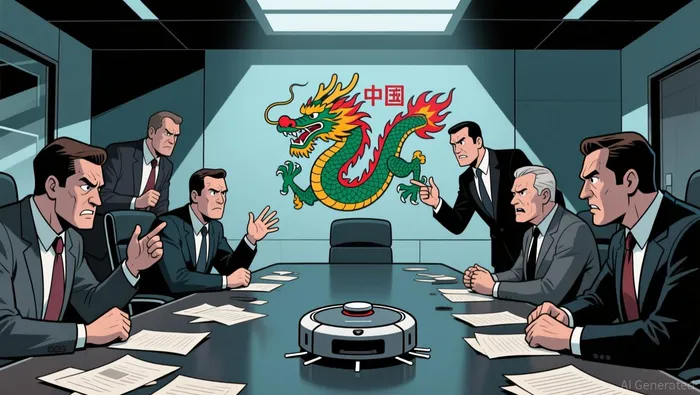
The Rise of Chinese Dominance: Commoditization and Consolidation
The smart home robotics sector is now defined by Chinese dominance, driven by aggressive commoditization strategies and state-backed industrial policies. By 2024, Chinese manufacturers captured 57% of the global industrial robotics market, up from 28% a decade earlier. This growth is underpinned by initiatives like "Made in China 2025" and "AI+", which prioritize automation, AI integration, and supply chain localization.
Chinese firms have leveraged these policies to scale rapidly, producing advanced AI-driven systems at lower costs. For instance, companies like Unitree Robotics and Fourier Intelligence are developing humanoid robots for elder care and household assistance, blurring the lines between industrial and consumer applications. The sector's commoditization-evident in the proliferation of over 150 Chinese firms producing similar robots-has intensified price competition, squeezing margins for less agile players.
Investors must also grapple with the risks of overcapacity and speculative bubbles. The Solactive China Humanoid Robotics Index surged 60% in 2025 but later fell 20% from its peak, reflecting growing skepticism about valuations. Over 70% of startups in the field remain unprofitable, and China's top economic planners have issued warnings against "anti-involution" dynamics, urging consolidation and healthier competition.
Investment Implications: Navigating a Fragmented Landscape
For investors, the iRobot case underscores two key themes: the perils of overreliance on Western innovation in a globalized sector and the opportunities in China's industrial ascendancy.
Risks:
1. Commoditization Pressures: As Chinese manufacturers drive down prices through scale and automation, premium-priced Western brands like iRobot face existential threats. The 46% tariff on Vietnamese imports exemplifies how trade policies can amplify these challenges.
2. Market Saturation: The proliferation of similar products in China has led to a "race to the bottom," with many firms failing to achieve profitability. Morgan Stanley has questioned the practicality of humanoid robots in industrial settings, noting their lower efficiency compared to human labor.
3. Policy Uncertainty: While government support has fueled growth, regulatory interventions-such as warnings against overcapacity-could disrupt momentum.
Opportunities:
1. Consolidation-Driven Growth: The top 10 industrial robotics firms now control 65% of the H1 2025 market, signaling a shift toward industry consolidation. Investors who identify firms with strong B2B traction and localized supply chains may benefit from this trend.
2. AI and Automation Synergies: China's integration of robotics with electric vehicles and renewable energy creates cross-industry opportunities. For example, Tesla and Foxconn's automation investments highlight the sector's potential to address labor shortages.
3. Robot-as-a-Service Models: Innovations like subscription-based robotics services are lowering entry barriers for SMEs, enabling rapid market penetration.
Conclusion: A New Era for Smart Home Robotics
iRobot's bankruptcy is not an isolated event but a symptom of deeper structural shifts in the smart home robotics sector. Chinese manufacturers, armed with cost advantages, AI expertise, and state support, are redefining the competitive landscape. For investors, the path forward lies in balancing caution with optimism: recognizing the risks of overvaluation and commoditization while capitalizing on the long-term potential of a sector poised for exponential growth. As Goldman Sachs notes, the success of this industry will ultimately depend on the development of tangible use cases and the ability of firms to navigate an increasingly fragmented market.





Comentarios
Aún no hay comentarios