
Citi Trends' Turnaround Momentum and Path to $45M EBITDA by 2027
The off-price retail sector, long a refuge for value-conscious consumers, is undergoing a transformation driven by demographic shifts and strategic innovation. Citi TrendsCTRN--, a key player in this space, has emerged as a compelling case study in leveraging urban demographics and operational discipline to drive profitability. With its recent financial performance and ambitious 2027 targets, the company's trajectory offers a window into the broader dynamics of the industry.
Financial Performance and Strategic Revisions
Citi Trends' third-quarter 2025 results underscore its accelerating momentum. Total sales of $197.1 million, with 10.8% comparable store sales growth, reflect its fifth consecutive quarter of positive comp performance. Year-to-date, the company has generated $589.6 million in sales, with a 10.0% comp increase. These figures have prompted a revision of full-year EBITDA guidance to a range of $10 million to $12 million, a $24 million to $26 million improvement over 2024. This progress is not accidental but the result of a deliberate strategy to optimize its store base and inventory management.
Strategic Execution: Store Optimization and Technology
Central to Citi Trends' turnaround is its three-phase plan-"repair," "execute," and "optimize"- led by CEO Ken Seipel. In 2025, the company has opened three new stores, remodeled 62 locations, and closed four underperforming ones. This approach balances expansion with efficiency, ensuring that each store contributes meaningfully to profitability.
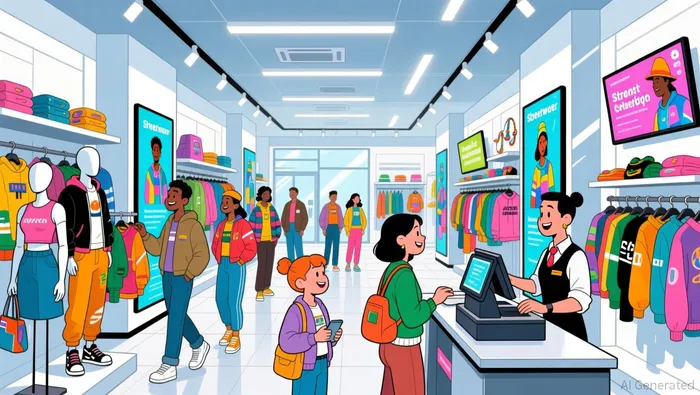
The company's investment in AI-driven inventory allocation further strengthens its competitive edge. By reducing aged inventory by 45%, Citi Trends ensures fresher, in-season product assortments, directly addressing a key pain point in off-price retail. This technology-driven strategy not only enhances gross margins but also aligns with the preferences of urban consumers, who prioritize trend-driven, affordable fashion.
Demographic-Driven Growth: Urban Markets and Multicultural Consumers
Citi Trends' success is inextricably linked to its focus on urban demographics. The company's stores, strategically located in off-mall strip centers, cater to African American and multicultural families in underserved communities. This demographic is a critical driver of growth in the off-price sector, as urban consumers increasingly seek value without sacrificing style.
The company's expansion plans for 2026-2027- targeting 650 stores-emphasize backfilling existing markets and entering new urban areas. This strategy is bolstered by broader industry trends: 67% of back-to-school shoppers began shopping in July 2025, reflecting a heightened focus on affordability. Moreover, 58% of global consumers and 60% of urban shoppers are willing to pay a premium for sustainable or branded products, a demand Citi Trends meets by offering branded items at discounted prices.
Industry Trends and Competitive Positioning
The off-price retail market is projected to grow from $372.46 billion in 2025 to $668.30 billion by 2032, with a CAGR of 8.7%. Citi Trends is well-positioned to capitalize on this growth, particularly as apparel and footwear dominate the sector with 57.3% market share in 2024. Women, who account for 62.6% of off-price retail spending, represent a core demographic for the company.
However, the company's long-term success hinges on its ability to adapt to evolving consumer preferences. For instance, 58% of U.S. consumers now prioritize experiences over material goods, a shift that could challenge traditional retail models. Citi Trends mitigates this risk by offering an omnichannel experience, blending in-store convenience with digital engagement.
The Path to $45M EBITDA by 2027
Citi Trends' long-term financial goal-$45 million in EBITDA and $900 million in revenue by FY27-is ambitious but achievable. The company's current trajectory, with a $24 million to $26 million EBITDA improvement in 2025 alone, suggests a compounding effect from its strategic initiatives. Store optimization, AI-driven inventory, and demographic alignment create a flywheel effect: higher comp sales, improved margins, and scalable growth.
Critically, the company's focus on urban markets aligns with industry-wide trends. As economic uncertainty persists, value-seeking behavior is likely to remain entrenched, and Citi Trends' ability to deliver "affordable luxury" positions it to outperform peers.
Conclusion
Citi Trends' turnaround is a testament to the power of strategic execution and demographic insight. By combining operational rigor with a deep understanding of urban consumer behavior, the company is not only stabilizing its financials but also building a durable competitive advantage. For investors, the path to $45 million in EBITDA by 2027 appears increasingly plausible, provided the company maintains its focus on execution and adapts to the evolving retail landscape.





Comentarios
Aún no hay comentarios