
Chinese Consumer Loans: A Perfect Storm of Falling Demand and Rising NPLs
The Chinese consumer lending market is confronting a dual crisis: weakening demand and surging non-performing loans (NPLs), creating a “perfect storm” that is reshaping the financial sector's asset allocation strategies. As banks pivot toward safer government bonds to offset credit risks, investors must navigate a landscape of shifting yields, policy uncertainty, and cross-border capital dynamics. This article explores the implications for fixed-income markets, the risks of capital flight, and the case for strategic positioning in Chinese sovereign bonds.
The Perfect Storm: Demand Collapse and NPL Explosions
Chinese consumer loan demand has stagnated despite aggressive monetary easing. The People's Bank of China (PBOC) cut the reserve requirement ratio (RRR) by 0.5 percentage points and reduced policy rates in early 2025, while injecting RMB 500 billion in re-lending facilities for service consumption. Yet these measures have yet to revive demand, with retail sales growth at 6.4% in May 2025—still below pre-pandemic trends.
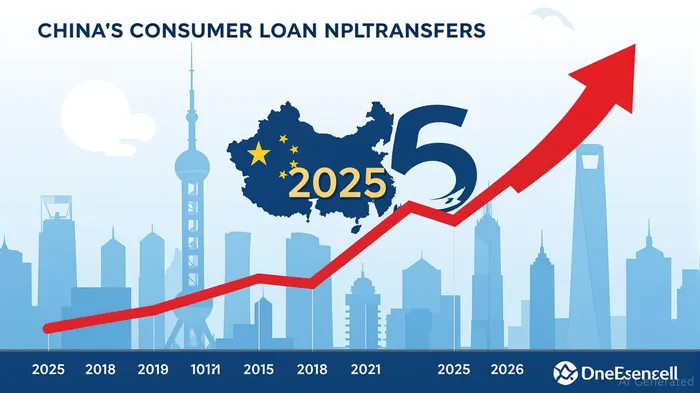
Meanwhile, NPLs are spiraling. Personal loan transfers to asset management companies surged to RMB 37.04 billion in Q1 2025, a 760% year-on-year jump. Mortgage NPLs also worsened, with regional banks like Bank of Chongqing reporting a 3.86% delinquency rate by late 2024. These figures suggest systemic stress in household credit, exacerbated by weak income growth, overleveraged households, and structural gaps in service-sector consumption infrastructure.
Banks' Flight to Safety: A Rally in Government Bonds
Faced with rising credit risks, Chinese banks are retreating from consumer lending and pouring capital into government bonds. This shift is fueling a yield-driven rally in Chinese sovereign debt. The PBOC's accommodative policies have kept bond yields low, but demand from domestic institutions is pushing prices higher. For instance, the yield on 10-year Chinese government bonds has fallen below 2.5% in recent months, reflecting strong institutional buying.
This reallocation benefits fixed-income investors seeking stability, but it also highlights a broader problem: banks' reluctance to lend to households and small businesses. The shift to government bonds is a defensive move, not a sign of economic vitality.
Risks: Capital Flight and U.S.-China Yield Divergence
The rally in Chinese bonds is vulnerable to external pressures. The U.S.-China yield gap—already over 200 basis points—could worsen as the Federal Reserve maintains high rates. This divergence risks capital flight from China's bond market, particularly if foreign investors, who hold 4% of government debt, reduce their exposure.
Moreover, PBOC stimulus may not be sufficient to stabilize credit growth. While the central bank has cut rates and expanded re-lending programs, structural issues—such as weak consumer confidence and overcapacity in real estate—persist. A prolonged period of low yields could also erode returns for long-term bond holders.
Investment Strategy: Position for Safety, Avoid Consumer Exposure
For investors, the path forward is clear:
Overweight Chinese Sovereign Bonds: Despite low yields, the safety and liquidity of government debt make it a defensive play. The PBOC's commitment to stability and the limited foreign investor exposure reduce near-term risk of a sell-off.
Underweight Consumer-Facing Financial Assets: Avoid banks with heavy exposure to consumer loans and mortgages. Institutions like Bank of Chongqing, with elevated NPLs, face heightened credit risk.
Monitor U.S.-China Policy Divergence: Use derivatives or short-term hedges to protect against capital flight risks.
Watch for PBOC Policy Shifts: If the central bank introduces deeper reforms—such as a personal bankruptcy law or asset write-offs—the NPL crisis could ease, lifting credit markets.
Conclusion
The collapse of consumer loan demand and the surge in NPLs have thrust Chinese banks into a defensive posture, driving a bond market rally that offers both opportunity and risk. While sovereign bonds remain a haven, investors must stay vigilant to external pressures and policy efficacy. The “perfect storm” underscores a critical truth: China's financial system is transitioning from growth-driven credit expansion to a phase of consolidation—and only the most cautious investors will navigate it successfully.
Final Advice: Position defensively in Chinese government bonds but avoid consumer credit exposure. Stay nimble on U.S.-China yield dynamics and PBOC policy signals.







Comentarios
Aún no hay comentarios