
US-China Trade Impasse: The Cost of Misinformation and Market Volatility
The US-China trade conflict has entered a new phase of opacity and escalation, with conflicting claims about negotiations and retaliatory tariffs reshaping global markets. While President Trump insists “active discussions” are underway, Chinese officials have repeatedly dismissed such talks as “false information,” leaving investors to navigate a landscape rife with misinformation. This article examines the stakes of this rhetorical warfare, its economic consequences, and the implications for investors.
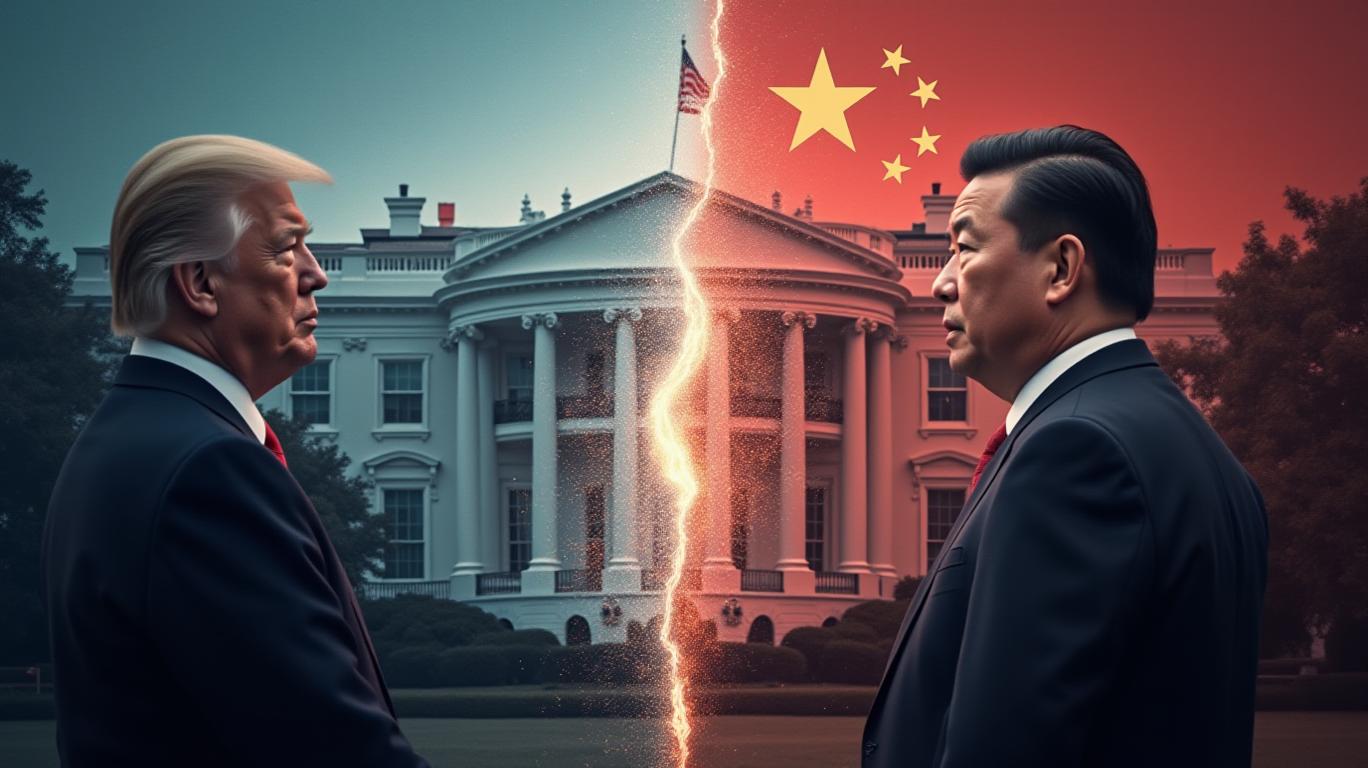
The War of Words vs. the War of Numbers
The disconnect between rhetoric and reality is stark. The Trump administration’s assertion of “daily contact” with Chinese negotiators finds no corroboration in Beijing’s official stance. Foreign Ministry spokesperson Guo Jiakun’s categorical denial—“China and the U.S. are not having consultations or negotiations on tariffs”—is echoed across state media. The Global Times, a CCP-aligned outlet, has labeled US claims as “fabrications” aimed at misleading markets. Meanwhile, show tariffs have ballooned to unsustainable levels: 145% on Chinese imports to the US, and 125% reciprocally. These figures, described by Treasury Secretary Bessent as “equivalent to an embargo,” underscore the reality behind the rhetoric.
Market Reactions: From AppleAAPL-- to Autos
Financial markets have already priced in the fallout. reveals a $640 billion collapse over three days in late 2025, as fears of retaliatory tariffs on tech exports triggered panic. The automotive sector faces even grimmer prospects: analysts estimate tariffs could add $5,000 to the cost of every imported vehicle by year-end. The IMF’s downgrade of US growth projections—from 2.7% to 1.8%—reflects broader economic damage, with trade tensions now accounting for nearly half the slowdown.
The Calculus of Chinese Resistance
Beijing’s refusal to engage stems from a strategic calculation. While exports have contracted by 12% year-on-year, the Communist Party’s non-competitive governance model allows prolonged resistance to US pressure. Yet internal vulnerabilities persist: rising middle-class expectations and slowing domestic demand create pressure to resolve the conflict. Professor Wu Xinbo’s assessment—that China “doesn’t care what Trump wants”—masks this tension. The regime’s legitimacy still depends on delivering growth, even as it prioritizes national sovereignty over short-term economic pain.
Navigating the Fog of Trade War
Investors must treat official statements as partisan claims rather than factual accounts. Key risks include:
1. Tariff Volatility: Sudden hikes or sudden retreats could trigger market swings.
2. Supply Chain Reconfigurations: Companies like Apple (AAPL) face existential threats from export bans.
3. Currency Risks: A weaker yuan could offset tariffs but destabilize global currency markets.
Strategic opportunities exist in sectors insulated from trade flows. shows healthcare and tech services outperforming by 23% year-to-date. Investors should also monitor the yuan’s exchange rate—a depreciation beyond 7.2 to the dollar signals desperation.
Conclusion: The Cost of Credibility
The IMF’s revised US growth forecast of 1.8% reveals the human toll of this impasse: slower hiring, lower wages, and deferred investments. For every $1 billion in tariffs, 14,000 American jobs are at risk, per Commerce Department data. Yet Beijing’s resolve appears unshaken—its stockpile of $3.2 trillion in foreign reserves buys time to endure pain.
Investors must prepare for prolonged volatility. Avoid sectors exposed to bilateral tariffs (autos, semiconductors) and favor domestic plays in healthcare and financial services. Most critically, treat all official claims with skepticism until verifiable evidence emerges. In a conflict where “fake news” is a weapon, the only truth lies in the numbers.
The path to resolution demands more than negotiations—it requires a restoration of trust that neither side currently possesses. Until then, markets will remain hostages to a war of words.







Comentarios
Aún no hay comentarios