
China's Factory Activity Growth Slows in January: Caixin PMI Shows
Generado por agente de IAEdwin Foster
domingo, 2 de febrero de 2025, 8:58 pm ET2 min de lectura
MASS--
China's manufacturing sector experienced a slowdown in January, as indicated by the Caixin Manufacturing Purchasing Managers' Index (PMI). The index slipped to 50.1, barely in expansion territory, from 50.5 in December. This marks the first decline in three months and raises concerns about the sustainability of the recovery in the world's second-largest economy.
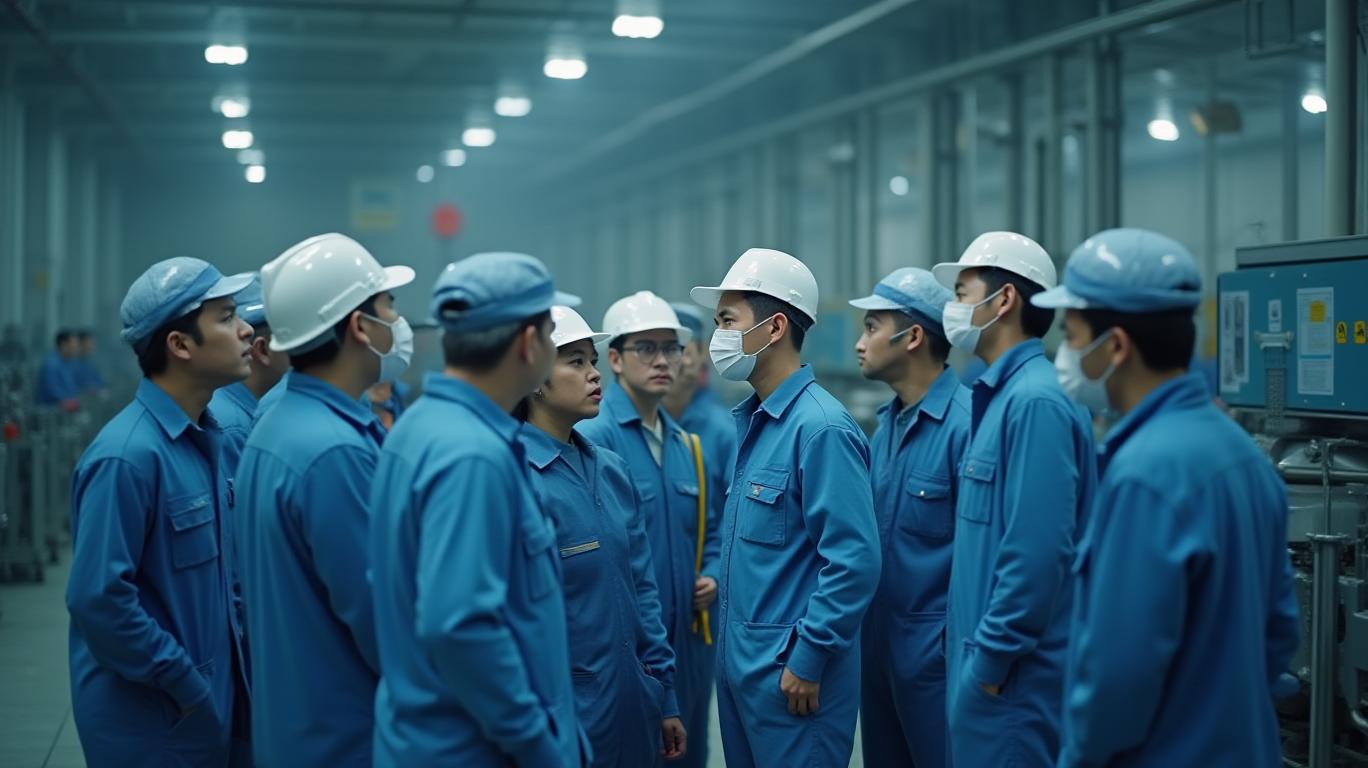
The Caixin PMI, which focuses on small and medium-sized enterprises, is often seen as a more accurate reflection of the health of the private sector. The January reading suggests that the manufacturing sector may be more vulnerable than previously thought, despite the government's efforts to boost domestic demand and stimulate growth.
The slowdown in factory activity growth can be attributed to several factors:
1. Lunar New Year holiday: The eight-day holiday, which began on January 28, led to a mass migration of workers back to their hometowns, weighing heavily on the manufacturing sector. This seasonal factor is a common reason for a dip in factory activity during this time of the year (Source: Zhao Qinghe, senior statistician at China's National Bureau of Statistics).
2. Weakening export orders: The subindex for new export orders fell to 46.4 in January, compared with 48.3 in December, indicating a contraction in export orders for the second consecutive month. This decline was partly due to concerns over potential tariffs by major trade partners, such as the US (Source: Caixin/S&P Global manufacturing PMI).
3. Slowing domestic demand: The new orders subindex stood at 49.2 in January, down from 51.0 in December, suggesting that domestic demand was also a factor contributing to the slowdown in factory activity. This could be attributed to the sluggish property market, weakening domestic demand, and fragile business confidence (Source: China's official PMI data).
4. Employment decline: The Caixin/S&P Global manufacturing PMI showed that employment levels fell at the quickest pace since February 2020 in January, reflecting the non-replacement of job leavers and redundancies due to cost concerns. This decline in employment further contributed to the slowdown in factory activity (Source: Caixin/S&P Global manufacturing PMI).
In the coming months, these factors may evolve as follows:
1. Lunar New Year holiday: The impact of the holiday should be temporary, and factory activity is expected to pick up again as workers return to their jobs after the holiday (Source: Zichun Huang, China economist at Capital Economics).
2. Export orders: The outlook for exports remains uncertain, given threats by US President Donald Trump to raise tariffs on imports from China. If these tariffs are implemented, they could further weigh on export orders and factory activity (Source: Caixin/S&P Global manufacturing PMI).
3. Domestic demand: Policymakers are likely to step up stimulus and front-load deficit spending at the start of 2025 to support domestic demand and boost economic growth (Source: Zichun Huang, China economist at Capital Economics). However, the effectiveness of these measures may fade in 2025 amid global uncertainties (Source: Caixin/S&P Global manufacturing PMI).
4. Employment: The decline in employment levels may continue to pose a challenge for the manufacturing sector, as companies focus on cost control and limit new hiring. This could further slow down factory activity growth (Source: Caixin/S&P Global manufacturing PMI).
In summary, the slowdown in China's factory activity growth in January, as indicated by the Caixin PMI, suggests that the manufacturing sector may be more vulnerable than previously thought. While the Lunar New Year holiday is a temporary factor, weakening export orders, slowing domestic demand, and declining employment may continue to pose challenges for the manufacturing sector in the coming months. Investors should closely monitor these trends and their potential impact on the overall economic outlook and investment decisions.
China's manufacturing sector experienced a slowdown in January, as indicated by the Caixin Manufacturing Purchasing Managers' Index (PMI). The index slipped to 50.1, barely in expansion territory, from 50.5 in December. This marks the first decline in three months and raises concerns about the sustainability of the recovery in the world's second-largest economy.
The Caixin PMI, which focuses on small and medium-sized enterprises, is often seen as a more accurate reflection of the health of the private sector. The January reading suggests that the manufacturing sector may be more vulnerable than previously thought, despite the government's efforts to boost domestic demand and stimulate growth.
The slowdown in factory activity growth can be attributed to several factors:
1. Lunar New Year holiday: The eight-day holiday, which began on January 28, led to a mass migration of workers back to their hometowns, weighing heavily on the manufacturing sector. This seasonal factor is a common reason for a dip in factory activity during this time of the year (Source: Zhao Qinghe, senior statistician at China's National Bureau of Statistics).
2. Weakening export orders: The subindex for new export orders fell to 46.4 in January, compared with 48.3 in December, indicating a contraction in export orders for the second consecutive month. This decline was partly due to concerns over potential tariffs by major trade partners, such as the US (Source: Caixin/S&P Global manufacturing PMI).
3. Slowing domestic demand: The new orders subindex stood at 49.2 in January, down from 51.0 in December, suggesting that domestic demand was also a factor contributing to the slowdown in factory activity. This could be attributed to the sluggish property market, weakening domestic demand, and fragile business confidence (Source: China's official PMI data).
4. Employment decline: The Caixin/S&P Global manufacturing PMI showed that employment levels fell at the quickest pace since February 2020 in January, reflecting the non-replacement of job leavers and redundancies due to cost concerns. This decline in employment further contributed to the slowdown in factory activity (Source: Caixin/S&P Global manufacturing PMI).
In the coming months, these factors may evolve as follows:
1. Lunar New Year holiday: The impact of the holiday should be temporary, and factory activity is expected to pick up again as workers return to their jobs after the holiday (Source: Zichun Huang, China economist at Capital Economics).
2. Export orders: The outlook for exports remains uncertain, given threats by US President Donald Trump to raise tariffs on imports from China. If these tariffs are implemented, they could further weigh on export orders and factory activity (Source: Caixin/S&P Global manufacturing PMI).
3. Domestic demand: Policymakers are likely to step up stimulus and front-load deficit spending at the start of 2025 to support domestic demand and boost economic growth (Source: Zichun Huang, China economist at Capital Economics). However, the effectiveness of these measures may fade in 2025 amid global uncertainties (Source: Caixin/S&P Global manufacturing PMI).
4. Employment: The decline in employment levels may continue to pose a challenge for the manufacturing sector, as companies focus on cost control and limit new hiring. This could further slow down factory activity growth (Source: Caixin/S&P Global manufacturing PMI).
In summary, the slowdown in China's factory activity growth in January, as indicated by the Caixin PMI, suggests that the manufacturing sector may be more vulnerable than previously thought. While the Lunar New Year holiday is a temporary factor, weakening export orders, slowing domestic demand, and declining employment may continue to pose challenges for the manufacturing sector in the coming months. Investors should closely monitor these trends and their potential impact on the overall economic outlook and investment decisions.

Divulgación editorial y transparencia de la IA: Ainvest News utiliza tecnología avanzada de Modelos de Lenguaje Largo (LLM) para sintetizar y analizar datos de mercado en tiempo real. Para garantizar los más altos estándares de integridad, cada artículo se somete a un riguroso proceso de verificación con participación humana.
Mientras la IA asiste en el procesamiento de datos y la redacción inicial, un miembro editorial profesional de Ainvest revisa, verifica y aprueba de forma independiente todo el contenido para garantizar su precisión y cumplimiento con los estándares editoriales de Ainvest Fintech Inc. Esta supervisión humana está diseñada para mitigar las alucinaciones de la IA y garantizar el contexto financiero.
Advertencia sobre inversiones: Este contenido se proporciona únicamente con fines informativos y no constituye asesoramiento profesional de inversión, legal o financiero. Los mercados conllevan riesgos inherentes. Se recomienda a los usuarios que realicen una investigación independiente o consulten a un asesor financiero certificado antes de tomar cualquier decisión. Ainvest Fintech Inc. se exime de toda responsabilidad por las acciones tomadas con base en esta información. ¿Encontró un error? Reportar un problema


SOBRE NOSOTROS
Nuestra historiaAutores de noticiasBase de conocimientosPolítica de privacidadTérmino de usoDescargo de responsabilidad de corretaje de tercerosTérminos de uso de AIMEDivulgaciones de riesgos de AInvest AICarrerasCONTÁCTENOS
Email: support@ainvest.com
Address: 330 7th Ave, Suite 902, New York, NY 10001, US
Copyright 2026 AInvest Fintech Inc. All rights reserved.


Comentarios
Aún no hay comentarios