
CBOT Wheat Gains Momentum Amid US Plains Weather Turbulence
The Chicago Board of Trade (CBOT) wheat futures have surged in early 2025, driven by escalating weather risks across the U.S. Plains—a region critical to global wheat production. Persistent drought, record-breaking wind speeds, and erratic precipitation patterns have created uncertainty over spring planting and winter wheat yields, pushing prices to multi-month highs. This article examines the interplay of meteorological, agronomic, and market forces shaping the commodity’s trajectory.
Weather Challenges in the US Plains
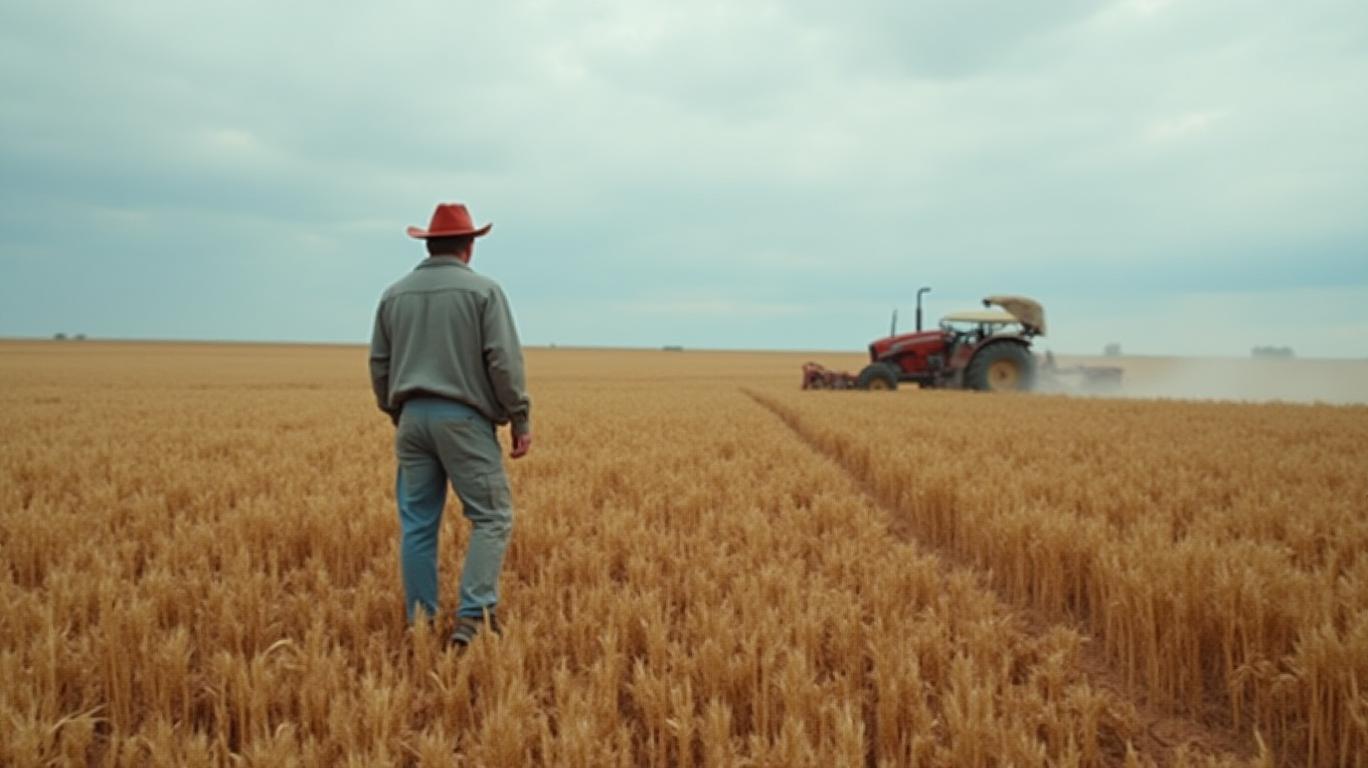
The U.S. PlainsPAGP--, including Colorado, Kansas, Nebraska, and Wyoming, have experienced one of the most volatile spring seasons on record. March and April 2025 saw historic wind speeds—peaking at 85 mph in the Colorado-Kansas border—accelerating soil drying. By late March, 50% of Colorado and Kansas topsoil moisture was rated “short” or “very short”, with Nebraska and Wyoming at 67% and 68%, respectively (USDA). These conditions, exacerbated by a collapsed polar vortex, have left the region in a deepening drought. As of April 2025, 62% of Colorado faced abnormal dryness or drought, a dramatic rise from 34% in 2024.
The April weather pattern offered fleeting relief but no systemic cure. Spotty rainfall, such as 2 inches near the Colorado-Kansas border, contrasted with regions like Kit Carson, Colorado, which received just 0.3 inches. Farmers like Nebraska’s Scott Oswald emphasized the fragile balance: “Soil moisture, precipitation, and soil temperature are critical. We’re waiting for consistent rain to proceed with planting.”
Impact on Crop Prospects
Winter wheat, a cornerstone of the Plains’ agricultural economy, faces dire conditions. Nebraska’s winter wheat was rated 40% “very poor/poor”, while Kansas reported 18% in the same category. Subsoil moisture, sustained by fall snowfall, has delayed crop failures, but topsoil deficits threaten spring planting.
Planting delays are compounding the crisis. The eastern Corn Belt (Illinois, Indiana) faced flooding from April rains, delaying corn planting by up to 10 days. Meanwhile, the central Plains’ dryness has left farmers like Kansas’s Trey Mosier shifting crops: reducing corn and soybean acreage in favor of hay crops (sudan grass, oats) due to projected corn prices of $4.20/bu for 2025–2026, down from $4.35.
Market Dynamics and Commodity Prices
CBOT wheat futures have oscillated within a narrow range since January, reflecting mixed signals. On April 14, the May contract dipped to $5.47½/bu as traders bet on April rains easing drought, but rebounded to $5.47¾/bu by April 17 on news of Algeria’s tender to purchase 600,000–630,000 tons of wheat. Analysts project prices to settle at $542.30/bu by Q2-end, with a 12-month forecast of $507.31/bu, citing ample global supplies and sluggish demand.
However, weather remains the wildcard. The polar vortex collapse has disrupted jet stream patterns, prolonging drought in the Plains and delaying planting. Traders now monitor the USDA’s weekly crop progress reports and soil moisture data closely.
Outlook and Investment Considerations
The coming weeks will determine if April rains can salvage spring planting. A National Weather Service forecast hints at improved moisture, but spatial variability persists. If dryness lingers, winter wheat yields could drop sharply, with subsoil reserves insufficient to offset losses.
Geopolitical factors also loom. Russia’s revised 2025 wheat crop estimate of 79.7 million tons (SovEcon) adds downward pressure, while U.S. corn exports benefit from a weak dollar. Investors must weigh these risks against the 47% of U.S. winter wheat rated “good/excellent”—a decline from 55% a year ago—and the Plains’ reliance on timely precipitation.
Conclusion
CBOT wheat’s trajectory hinges on the U.S. Plains’ weather, with prices likely to remain volatile until soil moisture stabilizes. While long-term fundamentals suggest a bearish bias due to global oversupply, short-term risks from drought and planting delays offer support. Traders should monitor the USDA’s May 1 Crop Production Report and precipitation forecasts closely.
With 62% of Colorado in drought and 18% of Kansas winter wheat in poor condition, the market remains poised for upward spikes on any sustained dryness. Conversely, consistent rainfall could trigger a downward correction. For now, the weather-driven uncertainty ensures wheat’s status as a high-beta commodity in 2025.
The Plains’ skies—and the traders watching them—are the ultimate arbiters of this commodity’s fate.





Comentarios
Aún no hay comentarios