
Captivision's Nasdaq Compliance Gamble: A High-Stakes Turnaround in the Making?
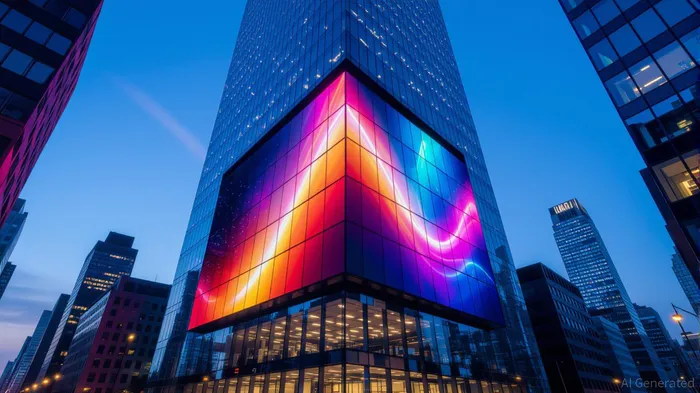
Captivision Inc. (NASDAQ: CAPT), a pioneering developer of architectural media glass, finds itself at a crossroads. The company has been granted a lifeline by Nasdaq's Hearings Panel, extending its compliance deadline to October 15, 2025, to address regulatory deficiencies and restate its 2024 financial statements. Yet, this reprieve masks a deeper crisis: a pattern of non-compliance, liquidity constraints, and operational uncertainties that threaten to derail its turnaround. For investors, the question is whether CaptivisionCAPT-- can transform its precarious position into a credible recovery story or if it is merely prolonging the inevitable.
Regulatory Uncertainty and the Clock is Ticking
Captivision's primary challenge lies in its failure to file its 2024 Annual Report on Form 20-F, a requirement for maintaining its Nasdaq listing. The company has until October 15 to submit the restated financials, but the path to compliance is fraught. It must first deliver an audit testing update to Nasdaq by August 29, a step that will likely scrutinize its internal controls and the accuracy of its restated figures. The outcome of its July 22 hearing before the Nasdaq Hearings Panel—where it seeks further extensions or a suspension of delisting—will be pivotal.
The company's recent history of regulatory missteps compounds the risk. In 2025 alone, it fell below Nasdaq's market value of listed securities threshold, violating Rule 5450(b)(2)(A), and faced a minimum bid price issue. While it has regained compliance on these fronts as of July 11, the unresolved Form 20-F delay remains a critical vulnerability. Nasdaq's leniency thus far suggests a recognition of Captivision's potential, but the Panel's patience is not infinite.
Financial Restatements and a Weakened Balance Sheet
Captivision's financial restatements, which span from 2021 to mid-2024, expose systemic weaknesses in its financial reporting. The company has admitted to material misstatements, including misclassified expenses and inconsistent revenue recognition policies. These errors not only undermine investor confidence but also raise questions about management's ability to govern effectively.
Liquidity is another red flag. As of June 30, 2024, the company held just $0.7 million in cash and equivalents, despite raising $8.3 million through equity and debt in the first half of the year. This precarious position is exacerbated by a net loss of $9.3 million during the same period—a stark contrast to its $0.5 million profit in 2023. While revenue grew 22% year-on-year, the surge in selling and administrative expenses (up 223%)—driven by legal and compliance costs—suggests a costly, rather than a sustainable, transition to a public company.
Strategic Moves Amid Turbulence
Despite these challenges, Captivision has taken steps to stabilize its operations. The restructuring of its European and Middle Eastern sales divisions, including the disposal of its European affiliate, signals a focus on core markets. Appointments of seasoned executives like Richard Clark and John Jureller to its board add credibility to its governance, though their impact remains untested.
The company's product offering—architectural media glass—remains a technological differentiator. Its installations in high-traffic venues like stadiums and airports highlight a niche demand. However, the market for such technology is nascent and highly competitive. Competitors may emerge with cheaper or more advanced solutions, eroding Captivision's margins.
Market Sentiment and Analyst Skepticism
Investor sentiment is bleak. CAPT's stock has lost over 90% of its value in the past year, trading at $0.45 with a market cap of $49.53 million. Analysts, few as they are, offer little optimism. The absence of a consensus rating or price target underscores the lack of institutional interest, while its weak financial health score (0.25/1.0) on InvestingPro reinforces concerns about solvency.
The company's forward-looking statements—ranging from international expansion to technological innovation—are ambitious but hedged with disclaimers. Risks such as raw material volatility, regulatory hurdles, and intellectual property threats loom large. For a turnaround to succeed, Captivision must not only resolve its financial restatements but also demonstrate consistent profitability and operational discipline.
A Cautious Case for Investment
Is Captivision a viable turnaround candidate? The answer hinges on three factors:
1. Regulatory Compliance: The company must meet its August 29 audit update deadline and submit a credible compliance plan by July 22. Delisting would be catastrophic, but the extension provides a critical window.
2. Financial Restatements: The accuracy and transparency of its restated 2024 financials will determine whether investors regain trust. Any further material weaknesses in internal controls could deepen skepticism.
3. Operational Execution: Captivision must prove it can sustain revenue growth while trimming costs. Its focus on architectural media glass is promising, but scaling this niche requires substantial capital and market validation.
For the risk-tolerant investor, Captivision presents a speculative opportunity. A successful compliance turnaround could unlock value in its innovative technology. However, the risks are severe: delisting, continued losses, and a cash crunch could render the stock a write-off. Investors should treat CAPT as a high-risk, high-reward bet, closely monitoring its July 22 hearing and subsequent progress toward filing its Form 20-F.
In the end, Captivision's story is one of resilience and reinvention—or reckoning. The coming months will determine whether it is a phoenix rising from the ashes or a cautionary tale of mismanagement and regulatory neglect.





Comentarios
Aún no hay comentarios