
BYD's Disruptive Expansion in Europe: Reshaping the Global Automotive Landscape
Strategic Manufacturing and Tariff Mitigation
BYD's success in Europe is underpinned by its strategic pivot to localized production. The company is investing in manufacturing facilities in Szeged, Hungary, and Izmir, Türkiye, with the Hungarian plant set to open in October 2025 and the Turkish plant in March 2026, as reported by The Driven. These facilities, producing both BEVs and plug-in hybrid electric vehicles (PHEVs), allow BYD to circumvent punitive EU tariffs on Chinese-made BEVs. The Hungarian plant will initially focus on the Atto 3 BEV SUV, while the Turkish plant will prioritize PHEVs like the Seal 05 and Seal 06, a dual approach that not only reduces costs but also aligns with evolving consumer preferences for extended-range vehicles.
Product Diversification and Retail Expansion
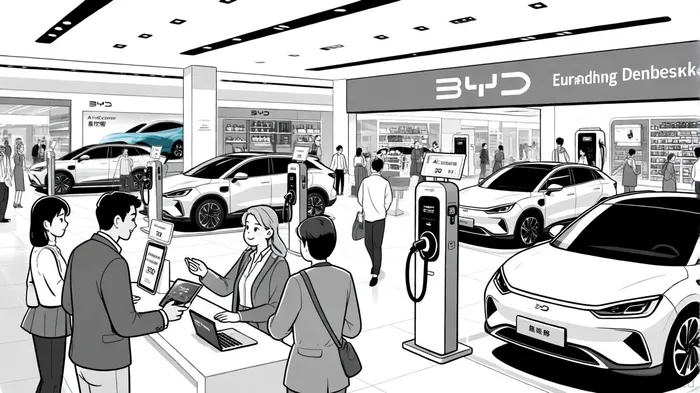
BYD's product strategy is equally transformative. The company is introducing PHEV variants of its major models six months after their BEV counterparts, ensuring affordability and flexibility for European buyers, and simultaneously targeting premium and budget segments with luxury models like the Denza D9 and Yangwang U8, alongside the budget-friendly Seagull A-segment mini car, priced at €23,000. This diversification is complemented by an aggressive retail expansion plan: BYD aims to open 1,000 new dealerships in Europe by 2026, with a focus on Germany, a key EV market.
Charging Infrastructure and Partnerships
Beyond vehicles, BYD is investing in infrastructure. The company plans to deploy 200–300 Megawatt Charging stations across Europe by 2026, addressing a critical bottleneck for EV adoption. These efforts, combined with partnerships with local distributors and a Certified Pre-Owned program unveiled at IAA Mobility 2025, underscore BYD's commitment to building a holistic ecosystem.
Implications for the Global Automotive Sector
BYD's European strategy has far-reaching implications. By leveraging localized production and PHEVs, it circumvents trade barriers that have constrained other Chinese automakers. Its ability to outpace Tesla in markets like Germany, the UK, and Spain suggests a model that could be replicated globally. For investors, this represents a compelling case study in how agility and diversification can disrupt entrenched incumbents. However, risks remain, including regulatory scrutiny and supply chain volatility.
Conclusion
BYD's expansion in Europe is not just a regional story-it is a blueprint for the future of the automotive industry. As the company challenges Tesla's dominance and reshapes consumer expectations, its success hinges on maintaining its pace of innovation and infrastructure development. For investors, the stakes are high, but the potential rewards are even higher.





Comentarios
Aún no hay comentarios