
Brazil's Orange Juice Exports: Navigating Supply Chain Risks and Investment Opportunities in the 2025/26 Harvest
The global orange juice market has long relied on Brazil as its dominant supplier, accounting for approximately 75% of world exports. The 2025/26 harvest season, however, presents a paradox: a projected 36% surge in production to 314.6 million boxes, driven by favorable weather and improved orchard management, coexists with persistent vulnerabilities from citrus greening and climate risks. For investors, this duality offers both opportunities and cautionary signals.
A Recovery in Production, But at What Cost?
According to a Fundecitrus report, Brazil's 2025/26 orange production is forecast to rise sharply, supported by increased rainfall during the critical September–December period, which bolstered the second bloom-a now-dominant contributor to 70% of total output. Productivity per hectare has climbed to 869 boxes, up from 687 in the prior season, while the number of productive trees has grown to 182.7 million, as noted in a productivity per hectare report. Yet this optimism is tempered by the reality of citrus greening (Huanglongbing or HLB), which infects 50% of trees in São Paulo and Minas Gerais, the heart of Brazil's citrus belt; the disease is projected to reduce the 2025/26 harvest by 35 million boxes, with a 20% fruit drop rate-2.2 percentage points higher than the previous season-compounding losses, according to Valor.
Supply Chain Vulnerabilities and Climate Uncertainty
The 2024/25 season exposed Brazil's supply chain to extreme weather, with drought and heat reducing yields to a 20-year low and tripling orange prices, as detailed in a ClimateAi analysis. While the 2025/26 forecast suggests a rebound, climate change is altering bloom cycles, delaying harvests, and increasing reliance on late-season moisture-a fragile foundation for stability. As noted by ClimateAi, procurement managers must now integrate advanced weather forecasting into sourcing strategies, with Spain and other Southern Hemisphere producers emerging as alternatives to mitigate Brazil's seasonal risks.
Investment in resilience is uneven. São Paulo's state government has launched an SP initiative - the Center for Applied Research in Innovation and Sustainability in Citrus Farming - to combat HLB through research and innovation. Meanwhile, private-sector efforts, such as Dr. Alessandra Alves de Souza's N-acetylcysteine inhibitor, offer promising tools to manage disease without relying solely on chemical pesticides. However, these innovations remain localized, and the citrus belt's aging orchards (over 10 years old) continue to face a 58% greening incidence, far higher than newer plantings.
Geographical Shifts and New Frontiers
To offset São Paulo's decline, Brazil is shifting investments to Mato Grosso, Paraná, and Goiás. These regions, however, face their own hurdles, including limited irrigation infrastructure and competition for arable land. As highlighted by Rabobank, such geographical diversification could stabilize long-term supply but requires sustained capital inflows to address water scarcity and logistical bottlenecks. For investors, this transition represents a high-risk, high-reward opportunity: early movers in these emerging regions may secure cost advantages, but they must navigate unproven agronomic conditions and regulatory complexities.
Global Market Dynamics and Tariff Risks
The U.S., a key export market, has imposed tariffs on Brazilian orange juice, while Florida's own struggles with HLB and Hurricane Milton create a volatile demand environment; Citrus Industry reported on the resulting market disruption. Meanwhile, Argentina and Egypt face production declines, reducing regional competition but not necessarily boosting Brazil's export volumes. The European Union, a critical consumer, has seen a 20% drop in demand, signaling broader challenges in price-sensitive markets, a trend ClimateAi also highlighted.
Investment Opportunities: Balancing Caution and Optimism
For agricultural commodities investors, Brazil's citrus sector offers three key levers:
1. Disease-Resilient Technologies: Startups and agrochemical firms developing HLB-resistant rootstocks or biocontrol agents (e.g., kaolin, caryophyllene) are well-positioned to benefit from Brazil's R$6 million "Combating Greening" credit line (previously referenced under the SP initiative).
2. Logistical Infrastructure: Investments in cold storage, processing facilities, and transportation networks in Mato Grosso and Paraná could yield outsized returns as production shifts.
3. Climate-Adaptive Sourcing: Diversifying supply chains to include Spain, South Africa, and Chile-regions with lower climate risk-can hedge against Brazil's seasonal volatility, an approach recommended by climate analysts.
Yet risks remain. The 2025/26 forecast assumes a 5-year timeline for greening mitigation-a timeline that could slip if psyllid populations rebound or climate anomalies persist. Additionally, Brazil's export-dependent model is vulnerable to U.S. trade policy shifts and currency fluctuations.
Conclusion
Brazil's 2025/26 orange harvest represents a critical inflection point. While production recovery and technological innovation offer a path to renewed stability, the industry's long-term health hinges on addressing systemic vulnerabilities-be they biological, climatic, or logistical. For investors, the citrus belt's transformation from São Paulo to Mato Grosso presents a compelling case study in agricultural resilience. But as with all high-stakes gambles, success will require not just capital, but a nuanced understanding of the forces shaping this vital commodity.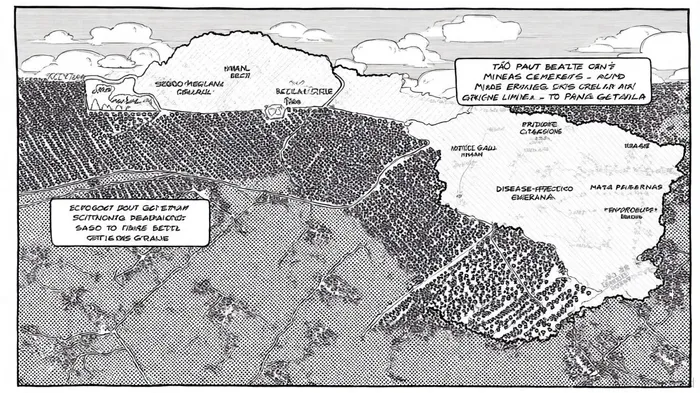







Comentarios
Aún no hay comentarios