
Boot Barn Holdings: Navigating the Premium Western Apparel Market in an Era of E-Commerce and Shifting Consumer Preferences
The premium Western apparel market is undergoing a transformation driven by e-commerce expansion, shifting consumer preferences, and the integration of Western aesthetics into mainstream fashion. For Boot Barn HoldingsBOOT-- (NYSE:BOOT), a dominant player in this niche, the challenge lies in leveraging these trends while addressing gaps in sustainability—a critical factor for long-term investor confidence.
A Market in Motion
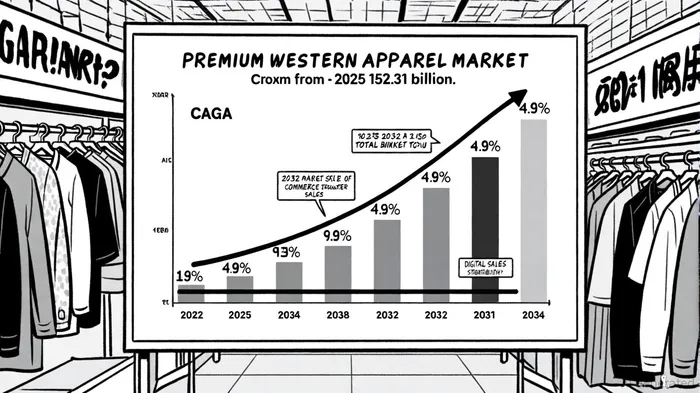
The global Western wear market, valued at USD 70,570 million in 2025, is projected to grow at a CAGR of 2.7% through 2033, fueled by the enduring appeal of cowboy boots, denim jeans, and Western shirts[1]. North America remains the largest market, with the U.S. Western wear sector alone valued at USD 27.96 billion in 2025[2]. This growth is underpinned by cultural resonance—Western wear is not merely functional but symbolic of heritage—and the rise of hybrid work environments, which have increased demand for casual yet stylish attire[3].
E-commerce has been a game-changer. Online platforms now account for 15% of BootBOOT-- Barn's total revenue, with digital sales growing at a 9.8% same-store sales rate in 2025[4]. The company's omnichannel strategy, including store fulfillment for online orders and AI-driven tools like “Cassidy” for associate training, has enhanced customer engagement[5]. Meanwhile, the broader premium apparel market—valued at USD 384.84 billion in 2025—is expected to reach USD 737.95 billion by 2034, driven by sustainability-conscious consumers in the Asia-Pacific region[6].
Boot Barn's Strategic Positioning
Boot Barn's 10.08% market share in the retail apparel industry[7] reflects its dominance in the Western wear segment. Its 2025 revenue of $1.9 billion—bolstered by 60 new store openings and 8.6% consolidated same-store sales growth—underscores its ability to scale[8]. The company's e-commerce strategy is particularly noteworthy: the Boot BarnBOOT-- App now generates 10% of online sales, while digital sales are projected to double by 2026[9]. This pivot to digital aligns with industry trends, as e-commerce accounts for 40% of global apparel sales, a figure expected to rise to 50% by 2030[10].
Boot Barn's competitive advantages extend beyond digital innovation. Its exclusive brand penetration—38.6% of total sales—has been driven by supply chain efficiencies and strategic vendor partnerships[11]. This focus on private-label brands not only enhances profit margins but also differentiates Boot Barn from competitors like Levi's and Diesel, which face margin pressures from global supply chain disruptions[12].
The Sustainability Gap
Despite these strengths, Boot Barn's sustainability initiatives remain underdeveloped. While the company acknowledges its social responsibility, it has not disclosed carbon emissions data, reduction targets, or participation in climate initiatives like the Race to Net Zero[13]. This contrasts with industry peers, where 75% of premium apparel brands have committed to science-based decarbonization goals[14]. The absence of a clear sustainability roadmap could alienate younger consumers, who prioritize ethical production and environmental stewardship[15].
Investment Implications
Boot Barn's strategic positioning in a growing market, coupled with its robust e-commerce and omnichannel execution, presents a compelling case for investors. However, the lack of sustainability transparency introduces risk. For the company to maintain its growth trajectory, it must address this gap—potentially through partnerships with eco-conscious suppliers or by adopting circular economy practices.
In the short term, Boot Barn's expansion plans (targeting 900 stores by 2030) and digital acceleration position it to outperform the industry. Yet, long-term success will depend on its ability to align with global sustainability standards—a challenge that cannot be ignored.





Comentarios
Aún no hay comentarios