
The Blue-Collar Labor Shortage and Its Implications for U.S. Manufacturing and Equity Valuation
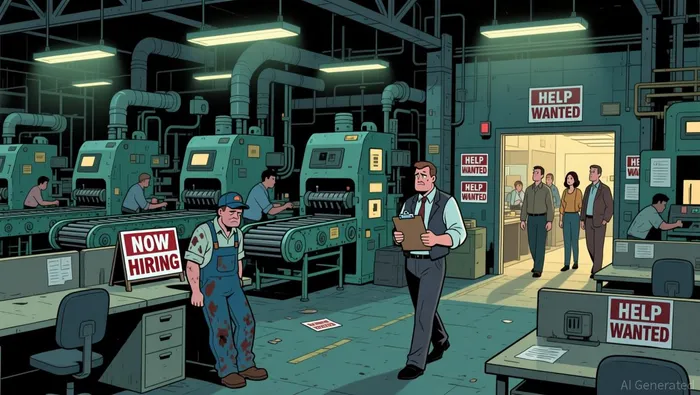
The U.S. manufacturing sector is grappling with a profound and persistent blue-collar labor shortage, a crisis that threatens to undermine both industrial competitiveness and equity valuations. As of June 2025, 415,000 manufacturing jobs remained unfilled, with projections indicating that only half of the 3.8 million positions needed between 2024 and 2033 will be filled under current conditions. This shortage, driven by an aging workforce (26% of manufacturing workers are aged 55 or older) and a decline in younger workers entering the sector, has created a structural bottleneck that reshoring initiatives and industrial stocks must confront.
The Structural Challenge of Reshoring
Reshoring, once heralded as a solution to supply chain vulnerabilities, now faces its most formidable obstacle: a lack of skilled labor. FordF-- CEO Jim Farley has warned of a "blue-collar crisis," emphasizing that the U.S. lacks the machinists, technicians, and factory workers needed to sustain domestic production. The Bureau of Labor Statistics confirms a steady decline in domestic manufacturing employment since 2022, with 400,000 unfilled vacancies as of late 2025. For companies like Ford, this shortage has translated into direct financial harm. A fire at Novelis' Oswego aluminum plant, for instance, forced Ford to cut its 2025 earnings forecast by $1 billion, as it scrambled to add 1,000 jobs at Michigan and Kentucky plants to offset lost production.
 The problem is not confined to automotive manufacturing. Caterpillar, a bellwether for industrial machinery, faces similar challenges. While its third-quarter 2025 sales rose to $17.6 billion, operating profit fell by 3% year-over-year, partly due to higher labor and manufacturing costs linked to the shortage. Analysts caution that infrastructure spending, a key growth driver for Caterpillar, may slow as labor costs rise and returns on capital expenditures diminish.
Equity Valuation Risks and Strategic Vulnerabilities
The labor shortage has introduced significant strategic risks for reshoring-driven industrial stocks. For Ford, the crisis has forced a reevaluation of its reshoring strategy. Despite Trump-era tariffs costing the company $2 billion in 2025, Ford has maintained overseas operations, which remain more financially viable than domestic alternatives. This duality-reshoring as a political imperative but not an economic one- has led to downgraded analyst forecasts for Ford's earnings, reflecting uncertainty over its ability to balance production costs and labor availability.





Comentarios
Aún no hay comentarios