
Big Tech's Supply Chain Resilience: Navigating Trade Uncertainty for Long-Term Gains
The recent U.S. Court of International Trade ruling striking down key Trump-era tariffs has created a pivotal moment for Big Tech. While the decision temporarily eased trade tensions, the ongoing legal battle—now escalated to the Federal Circuit Court—has underscored the sector's vulnerability to policy shifts. Yet, beneath the volatility lies a critical opportunity: firms with diversified manufacturing footprints and AI-driven innovation are poised to thrive, even as tariffs remain a wild card. For investors, now is the time to prioritize structural resilience over short-term noise.
The Court Ruling's Immediate Impact—and Lingering Uncertainty
The May 2025 ruling invalidated tariffs imposed under the International Emergency Economic Powers Act (IEEPA), including a 10% universalUVV-- tariff and higher levies on China, Canada, and Mexico. This decision triggered an initial rally: Nasdaq futures surged 1.3%, while Nvidia's shares jumped 5% on lowered input costs for its AI chips. Yet, uncertainty persists. The Trump administration has already appealed the ruling, with officials vowing to reinstate tariffs via alternative statutes like Section 122. Even if tariffs remain at the current 6.5% effective rate—down from 15%—Big Tech must contend with a prolonged legal stalemate.
Why Supply Chain Diversification is the New Safety Net
The ruling's most profound effect is its acceleration of strategic reshoring and diversification. Companies like Apple, which has pledged a $500 billion U.S. supply chain initiative, are already reaping benefits. By shifting manufacturing to Mexico and the U.S., Apple has sidestepped retaliatory tariffs and reduced reliance on China. This proactive approach has insulated it from the worst of tariff headwinds: despite a 25% threat on unreshored goods, Apple's stock has outperformed the Nasdaq by 8% year-to-date.
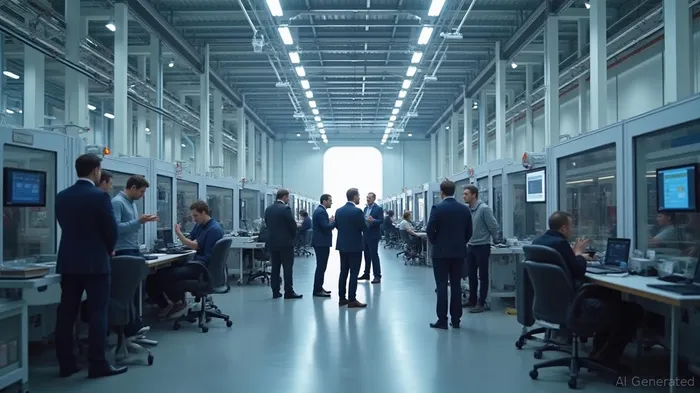
Meanwhile, Nvidia's AI dominance offers a different shield. Its chips power 70% of enterprise AI systems, a position that allows it to dictate pricing even as input costs fluctuate. The recent tariff cut has already reduced expenses for its next-gen AI hardware, fueling a 22% earnings beat in Q1 2025.
The Structural Shift: Tariffs Can't Halt AI's Momentum
While trade policy remains unpredictable, the AI revolution is a certainty. Firms like Nvidia, AMD, and Intel are building moats through hardware-software ecosystems, making their products less susceptible to isolated tariff spikes. Take Nvidia's H100 chip: its unique architecture for generative AI means no direct substitute exists, giving the company pricing power regardless of trade friction.
The sector's valuation resilience is evident in multiples: while the broader tech sector trades at 24x forward earnings, AI leaders like NVIDIA and AMD trade at 30–35x, reflecting investor faith in their secular growth. Even with tariffs lingering at 6.5%, the AI tailwinds are too strong to ignore.
The Investment Play: Focus on Structural Winners
The court ruling has created a critical juncture. Investors should:
1. Buy the dip in supply-chain diversified names: Apple's reshoring progress and cash reserves ($200 billion+) make it a defensive play.
2. Double down on AI leaders: NVIDIA's AI data center revenue grew 57% YoY in Q1, even amid macro uncertainty.
- Avoid pure-play hardware firms: Companies reliant on single markets (e.g., semiconductor firms without U.S. fabs) face outsized risk.
Conclusion: Uncertainty is the New Normal—But Resilience is Rewarding
The Trump administration's appeal and potential Section 122 tariffs ensure volatility will persist. However, firms like Apple and NVIDIA are not just surviving—they're redefining the rules. Their supply chain flexibility and innovation leadership create a compound advantage: lower exposure to tariffs, higher pricing power, and access to AI's trillion-dollar market.
For investors, the message is clear: now is the time to position for resilience. While near-term tariff headlines may spook markets, the long-term winners are already making their moves. The next 12 months will separate the adaptable from the obsolete—and the former will deliver outsized returns.
Act now. The future of tech—and its winners—is being written.







Comentarios
Aún no hay comentarios