
Australia's Strategic Pivot: Geopolitical Risk and the Rise of Security Infrastructure Investment Opportunities
In an era of escalating global instability, Australia's strategic recalibration toward security infrastructure and anti-terrorism technology presents a compelling case for investors. The nation's 2023–2025 defense budget and the 2023–2030 Cyber Security Strategy signal a paradigm shift, driven by a confluence of geopolitical tensions, hybrid threats, and the urgent need to secure critical infrastructure. For those attuned to the interplay of policy and innovation, these developments herald not just a defensive imperative but a fertile ground for capitalizing on emerging technological frontiers.
A Defense Budget Aligned with Global Realities
Australia's defense expenditure has surged to $59 billion in 2025–26, representing 2.05% of GDP-a figure set to rise to 2.4% by 2033–34 according to the Australian Department of Foreign Affairs and Trade. This trajectory mirrors a global trend of defense spending normalization, as nations like the United States, China, and Russia ramp up investments to counter hybrid warfare and cyber-enabled threats according to the Parliamentary Library. The 2024 National Defence Strategy underscores a "whole-of-government" approach, prioritizing resilience, preparedness, and long-term capabilities. Crucially, this strategy extends beyond traditional military readiness to encompass cybersecurity, critical infrastructure protection, and counter-terrorism financing-a triad of focus areas now central to Australia's national security architecture.
The Cybersecurity Pillar: A Blueprint for Sovereign Resilience
The 2023–2030 Australian Cyber Security Strategy, with its three "horizons" and six "cyber shields," provides a roadmap for fortifying the nation's digital and physical infrastructure. Horizon 1 (2023–2025) has already allocated $290.8 million to initiatives such as mandatory ransomware reporting, secure-by-design IoT standards, and public-private partnerships according to public sector analysis. These measures are not merely regulatory but catalytic, fostering a domestic ecosystem where companies can innovate in AI-driven threat detection, secure operational technology (OT) systems, and real-time cyber incident response.
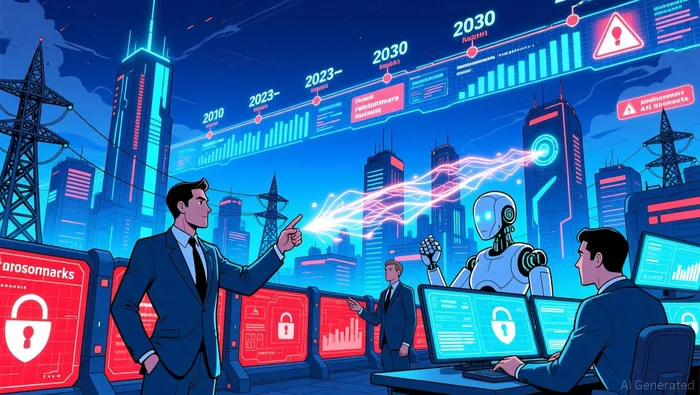 A pivotal innovation lies in the secure integration of artificial intelligence into OT environments. In late 2025, the Australian Signals Directorate (ASD), alongside the U.S. Cybersecurity and Infrastructure Security Agency (CISA), published joint guidance on AI governance for critical infrastructure. This document, emphasizing principles like "understanding AI risks" and "embedding safety practices," reflects a global consensus on balancing AI's transformative potential with its inherent vulnerabilities. For Australian firms, this signals a demand for technologies that address model drift, supply chain transparency, and human-in-the-loop oversight-areas where early movers could dominate.
Anti-Terrorism Financing: A Regulatory and Technological Convergence
Parallel to cybersecurity advancements, Australia's 2024 Anti-Money Laundering and Counter-Terrorism Financing Amendment Bill has modernized its AML/CTF regime. By expanding oversight to "tranche two entities" and digitizing compliance frameworks, the legislation aligns with FATF standards while addressing the rise of crypto-facilitated terrorism. The Australian Transaction Reports and Analysis Centre (AUSTRAC) now plays a central role in monitoring illicit financial flows, a mandate that creates opportunities for fintech firms specializing in blockchain analytics.
Investment Opportunities: Sovereignty and Scalability
While specific companies remain unnamed in official documents, the policy landscape reveals three investment vectors:
1. Critical Infrastructure Protection: The Security of Critical Infrastructure Act 2018, now extended to telecommunications, mandates robust security measures for energy, transport, and data networks. Firms offering AI-enhanced intrusion detection systems or OT-specific firewalls are poised to benefit.
- Public-Private Partnerships: The government's emphasis on co-designing regulatory frameworks with industry suggests a shift from top-down compliance to collaborative innovation. Startups with expertise in secure AI governance or quantum-resistant encryption could secure lucrative contracts.
- Sovereign Capabilities: With ASIO's 2025 Annual Threat Assessment warning of espionage and foreign interference, there is a clear push for homegrown technologies. This includes not only hardware but also software solutions for disinformation mitigation and secure communication platforms.
Conclusion: A Strategic Inflection Point
Australia's strategic pivot is not merely a reaction to immediate threats but a proactive reimagining of national security in the digital age. For investors, the interplay of policy, regulation, and technological innovation creates a unique window to engage with sectors that are both mission-critical and economically scalable. As the 2025–26 budget and subsequent policy reviews unfold, the focus on sovereign resilience and AI-driven security will likely accelerate, offering returns that align with Australia's long-term strategic interests.







Comentarios
Aún no hay comentarios