
Australia’s Manufacturing Sector: Navigating Challenges and Unlocking Strategic Investment Opportunities
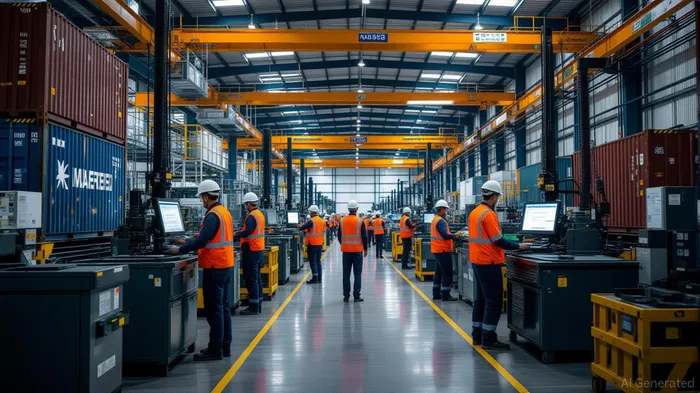
Australia’s manufacturing sector stands at a crossroads in 2025, grappling with structural challenges while simultaneously embracing innovation and resilience. Despite a modest 1.6% increase in Industry Value Added to $134.8 billion, the sector remains a critical pillar of the economy, contributing 6% to GDP and employing 902,000 workers [1]. However, profitability is under pressure, with earnings before interest, tax, depreciation, and amortisation (EBITDA) declining by $3.6 billion in the 2023–24 financial year [2]. This duality—of growth and fragility—raises pressing questions about the sector’s long-term viability and its implications for industrial and export-focused stocks.
Structural Challenges and Cost Pressures
The sector’s struggles are rooted in a confluence of factors. Energy costs, particularly gas prices, have surged by nearly 50% since 2022, outpacing inflation in consumer goods and eroding margins for energy-intensive industries like metals and petrochemicals [3]. Supply chain disruptions, with over 60% of manufacturers reporting severe delays, compound these pressures [4]. Workforce shortages, especially in technical and trades roles, further hinder productivity, as 61% of businesses struggle to fill critical positions [5]. These challenges are not insurmountable but demand strategic interventions.
Innovation and Government Support: A Path Forward
Amid these headwinds, the sector is pivoting toward advanced technologies and sustainability. Investments in robotics, artificial intelligence, and 3D printing are accelerating, while green manufacturing initiatives gain traction [6]. The Australian government has committed $22.7 billion over ten years to support these transitions, signaling a long-term commitment to modernization [7]. Such efforts are critical, as the OECD projects GDP growth of 1.8% in 2025 and 2.2% in 2026, albeit with risks from global trade tensions and China’s economic slowdown [8].
Sectoral Momentum and Investment Timing
For investors, the interplay of these dynamics shapes the outlook for industrial and export-focused stocks. The S&P Global Manufacturing PMI rose to 53.4 in August 2025, indicating expansion for the second consecutive month [9]. This growth, driven by rebounding new orders and production, suggests improving business conditions. However, the sector’s forward price-to-earnings (PE) ratio of 24.3x—32% above its 20-year average—raises concerns about overvaluation [10].
Mid-sized manufacturers, however, offer a more compelling narrative. The top 100 mid-sized firms reported 18% sales growth in 2025, outpacing the industry average of 3%, thanks to automation and digital infrastructure investments [11]. Conversely, smaller manufacturers with revenue below $75 million face margin contractions, with EBITDA multiples declining to 8.3x [12]. This divergence underscores the importance of selective investing.
Export Dynamics and Global Risks
Export-focused stocks face a mixed landscape. Australia’s manufacturing sector accounts for 12.4% of exports, but global trade uncertainties—such as U.S. tariffs—have disrupted flows. For instance, exports to the U.S. surged before tariffs took effect in April 2025, only to contract sharply afterward [13]. Meanwhile, China’s reduced demand for Australian goods, particularly in machinery and equipment, adds another layer of complexity [14]. Yet, opportunities persist in niche markets, such as green manufacturing and high-value-added exports, where Australia’s technological investments could yield competitive advantages.
Strategic Considerations for Investors
The timing for investment hinges on navigating these dichotomies. Defensive subsectors, such as energy and utilities, offer attractive valuations despite geopolitical tensions, while advanced manufacturing and green technologies present growth potential [15]. However, investors must remain cautious about sectoral overvaluations and macroeconomic risks, including the Reserve Bank of Australia’s interest rate policy and global inflationary trends.
Conclusion
Australia’s manufacturing sector is a microcosm of global industrial861072-- challenges and opportunities. While cost pressures and workforce shortages persist, innovation and government support are laying the groundwork for a resilient future. For investors, the key lies in balancing short-term risks with long-term potential, prioritizing companies that leverage technology and sustainability to navigate the sector’s crossroads. As the OECD and domestic analysts project cautious optimism, strategic timing and sectoral selectivity will be paramount in unlocking value in this pivotal industry.
Source:
[1] Australian manufacturing 2025–2026: A sector at the crossroads [https://www.rsm.global/australia/insights/australian-manufacturing-2025-2026-sector-crossroads-innovation-pressure-and-promise]
[2] Research Note: Hard times in Australian manufacturing [https://www.aigroup.com.au/resourcecentre/research-economics/economics-intelligence/2025/hard-times-in-australian-manufacturing]
[3] Key Australian industry indicators - June 2025 [https://www.aigroup.com.au/resourcecentre/research-economics/economics-intelligence/2025/key-australian-industry-indicators-june-2025]
[4] Manufacturing Sector Of Australia In 2025: Challenges [https://pattens.com/insights/manufacturing-sector-of-australia-in-2025/]
[5] Australia's Manufacturing Sector Sees Rapid Growth in August [https://www.ainvest.com/news/australia-manufacturing-sector-sees-rapid-growth-august-global-data-2509/]
[6] Australian manufacturing 2025–2026: A sector at the crossroads [https://www.rsm.global/australia/insights/australian-manufacturing-2025-2026-sector-crossroads-innovation-pressure-and-promise]
[7] Manufacturing Sector Of Australia In 2025: Challenges [https://pattens.com/insights/manufacturing-sector-of-australia-in-2025/]
[8] OECD Economic Outlook, Volume 2025 Issue 1: Australia [https://www.oecd.org/en/publications/2025/06/oecd-economic-outlook-volume-2025-issue-1_1fd979a8/full-report/australia_b563f928.html]
[9] Australia's Manufacturing PMI Surges, Boosting Market Sentiment [https://www.tipranks.com/news/company-announcements/australias-manufacturing-pmi-surges-boosting-market-sentiment]
[10] 2024 Review and 2025 Outlook for Australian Equities [https://maple-brownabbott.com/2024-review-and-2025-outlook-for-australian-equities/]
[11] Grant Thornton's 2025 Manufacturing Benchmarks Report [https://www.grantthornton.com.au/news-centre/grant-thorntons-2025-manufacturing-benchmarks-report-shows-adaptability-and-innovation-key-to-success/]
[12] Grant Thornton's 2025 Manufacturing Benchmarks Report [https://www.grantthornton.com.au/news-centre/grant-thorntons-2025-manufacturing-benchmarks-report-shows-adaptability-and-innovation-key-to-success/]
[13] Key Australian industry indicators - June 2025 [https://www.aigroup.com.au/resourcecentre/research-economics/economics-intelligence/2025/key-australian-industry-indicators-june-2025]
[14] Research Note: Hard times in Australian manufacturing [https://www.aigroup.com.au/resourcecentre/research-economics/economics-intelligence/2025/hard-times-in-australian-manufacturing]
[15] 2024 Review and 2025 Outlook for Australian Equities [https://maple-brownabbott.com/2024-review-and-2025-outlook-for-australian-equities/]







Comentarios
Aún no hay comentarios