
Aura Minerals' Inclusion in the S&P Global BMI Index: A Catalyst for Institutional Demand and Share Price Momentum?
The re-inclusion of Aura MineralsAUGO-- Inc. (AUGO) in the S&P Global BMI Index in July 2025 marks a pivotal moment for the mid-cap gold producer, offering a compelling case study in the interplay between index inclusion, institutional demand, and equity valuation. This development, coupled with a credit rating upgrade from S&P Global Ratings, underscores the strategic significance of index membership for smaller miners seeking to scale operations in a capital-intensive sector.
Strategic Index Inclusion and Institutional Demand
Aura's removal from the S&P Global BMI Index in September 2022[1] initially limited its exposure to passive investment vehicles, which often mirror index composition. However, the company's subsequent U.S. listing in July 2025—raising $196 million through an IPO[2]—provided the liquidity and visibility necessary to re-enter the index. This re-inclusion[3] is not merely symbolic; it compels institutional investors, particularly those managing index-tracking funds, to rebalance portfolios by purchasing Aura's shares. Such demand can amplify trading volumes and reduce bid-ask spreads, enhancing market efficiency.
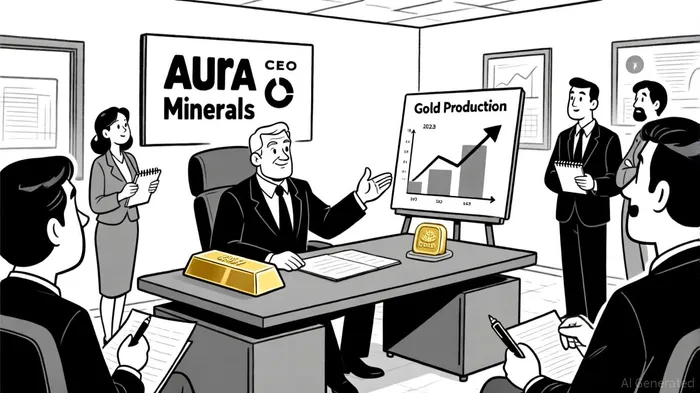
The re-inclusion also aligns with broader trends in the mining sector. As global demand for critical minerals intensifies, index providers increasingly prioritize companies with scalable projects and robust financial metrics. Aura's projected gold production, expected to rise from 300,000 ounces in 2025 to 500,000 ounces by 2027[4], positions it as a growth candidate in a sector where ESG criteria and operational discipline are gaining prominence.
Credit Rating Upgrade and Operational Momentum
S&P Global Ratings' upgrade of Aura's outlook to “positive” from “stable” in July 2025[5] reinforces the case for institutional interest. The rating agency cited the company's ability to execute low-cost expansions, such as the Borborema mine ramp-up and Serra Grande integration[6], as well as its prudent leverage management (gross debt to EBITDA near 1.0x[7]). These factors, combined with gold prices averaging $3,100 per ounce in 2025[8], have bolstered free operating cash flow to $90 million in 2025, with further gains anticipated[9].
The credit upgrade also signals reduced perceived risk, potentially lowering the cost of capital for AuraAURA--. This is critical for a mid-cap miner reliant on external financing for growth. S&P's conditional forecast of a further rating upgrade within 12 months, contingent on operational milestones[10], adds a layer of forward-looking optimism that could attract both passive and active institutional investors.
Share Price Momentum and Market Sentiment
Aura's share price has surged 161.72% year-to-date as of September 19, 2025[11], outperforming broader mining indices. While this rally predates the July 2025 re-inclusion, the timing of the index addition and credit upgrade has likely accelerated momentum. Institutional demand, driven by index rebalancing and thematic allocations to gold (a hedge against inflation and currency volatility), has amplified short-term gains.
However, the stock's valuation remains anchored to fundamentals. At a price-to-EBITDA multiple of 8.5x (as of September 2025), Aura trades at a discount to peers with similar growth profiles, suggesting room for appreciation if production targets are met[12].
Conclusion: A Model for Mid-Cap Mining Equities
Aura Minerals' re-inclusion in the S&P Global BMI Index exemplifies how strategic index membership can catalyze institutional demand and equity performance for mid-cap miners. By leveraging its U.S. listing to fund high-margin expansions and demonstrating operational resilience amid volatile gold prices, Aura has positioned itself as a compelling candidate for both index-linked and discretionary investments. For investors, the company's trajectory highlights the importance of aligning with firms that can navigate regulatory, financial, and operational challenges in a sector poised for long-term growth.





Comentarios
Aún no hay comentarios