
Assessing the Sustainability of Silver's Rally: Overbought Conditions and Structural Demand Dynamics
The recent surge in silver prices has ignited a critical question for investors: Is this rally sustainable, or does it signal an overextended market poised for correction? To answer this, one must navigate both technical indicators and fundamental dynamics. While the Relative Strength Index (RSI) suggests overbought conditions, the structural forces underpinning silver's demand-spanning industrial innovation and investment flows-paint a more nuanced picture.
Technical Indicators: A Cautionary Signal
As of November 2025, the 14-day RSI for silver (XAG/USD) has exceeded 70, a threshold traditionally signaling overbought territory and raising the risk of a short-term pullback. This technical signal aligns with historical patterns, where such levels often precede corrections as traders lock in profits. However, technical analysis alone cannot fully explain silver's trajectory. The RSI's warning must be contextualized within the broader framework of supply and demand imbalances, which continue to defy conventional market expectations.
Fundamental Dynamics: A Perfect Storm of Scarcity and Demand
The silver market is experiencing a structural deficit that shows no sign of abating. According to a report by , global silver supply has contracted by 7% since 2016, with 2025 projected to see a shortfall of 820 million ounces-equivalent to an entire year of average mine output. This deficit is driven by two key factors: the lagging response of mine production to price signals and the explosive growth of industrial demand.
Over 70% of silver is produced as a 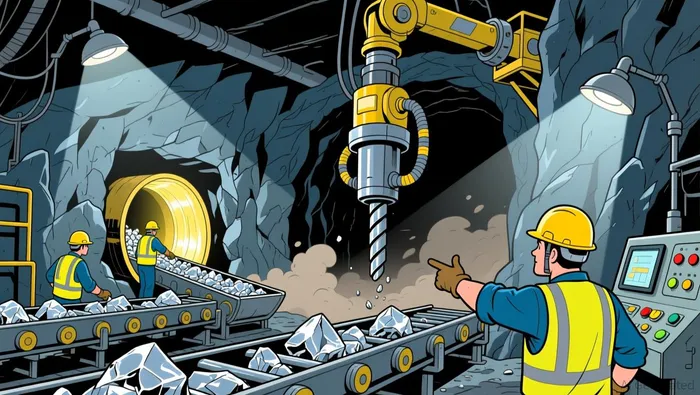 byproduct of copper, lead, and zinc mining, limiting the ability of producers to scale up quickly. Meanwhile, new projects face regulatory and environmental hurdles, with development timelines stretching over a decade. The result is a supply chain that cannot keep pace with demand, particularly in the green energy sector. Solar panel deployment far outstripping initial forecasts now accounts for a significant share of industrial consumption, with solar photovoltaic applications alone now accounting for a significant share of industrial consumption. Silver is also indispensable in electric vehicles, electronics, and AI infrastructure, sectors where substitution is either technically infeasible or economically unviable according to analysis.
Investment demand has further exacerbated the imbalance. Silver-backed ETFs and exchange-traded products have absorbed vast quantities of the metal, reducing the physical inventory available for industrial use. This has driven lease rates for silver to nearly 40% in October 2025-a level unseen in decades-and widened premiums on physical silver coins according to market analysis. The gold-silver ratio, currently at historically high levels, suggests that silver may be undervalued relative to gold, offering additional upside potential as demand pressures persist.
Investor Implications: Navigating the Divergence
For investors, the interplay between technical and fundamental factors creates a strategic dilemma. The overbought RSI reading implies a possible short-term correction, presenting opportunities to accumulate at lower prices. However, the structural supply constraints and surging demand from both industrial and investment channels suggest that any pullback is likely to be shallow and short-lived.
Those with a longer-term horizon should focus on the macroeconomic tailwinds. Silver's role in decarbonization and technological advancement ensures its relevance in a world increasingly defined by resource scarcity. The physical tightness in the market-evidenced by soaring lease rates and premiums-further reinforces the idea that silver's fundamentals are not merely resilient but transformative.
Conclusion: A Market in Transition
Silver's rally is not a fleeting technical anomaly but a reflection of deeper structural shifts. While the RSI warns of overbought conditions, the underlying forces driving demand-green energy, electrification, and investment flows-suggest that the metal's ascent is far from over. Investors who recognize this divergence between short-term volatility and long-term fundamentals may find themselves well-positioned to capitalize on a market in transition.







Comentarios
Aún no hay comentarios