
Assessing the Strategic and Financial Implications of North Dakota's Roughrider Coin
The Bank of North Dakota's proposed "Roughrider coin" represents a bold experiment in digital fiat currency innovation, with the potential to redefine regional banking in the United States. As the first state-backed stablecoin in the country, it combines the stability of traditional finance with the efficiency of blockchain technology. This initiative, developed in partnership with FiservFI--, a leading financial technology firm, aims to streamline interbank transactions, reduce costs, and position North Dakota as a regulatory leader in the evolving digital currency landscape.
Financial Implications: Cost Efficiency and Risk Mitigation
The Roughrider coin's primary financial promise lies in its ability to cut transaction costs and settlement times. According to a North Dakota Monitor report, the stablecoin will reduce interbank transfer costs from $20–50 per transaction to under $1, while enabling near-instant settlements. This efficiency stems from its blockchain-based infrastructure, which eliminates intermediaries and automates processes through smart contracts. For regional banks and credit unions, which often operate with tighter margins than national institutions, such savings could significantly enhance profitability.
Moreover, the coin's dollar-backed structure mitigates risks associated with volatility, a critical concern for institutions unaccustomed to cryptocurrency's price swings. By anchoring the Roughrider coin to U.S. dollars and leveraging Fiserv's digital asset platform, the Bank of North Dakota ensures transparency and regulatory compliance, according to a Fox Business analysis. This stability aligns with the state's historical role as a financial safety net, particularly during crises like the 2008 banking collapse, when the state-owned institution provided critical support to local banks.
Strategic Advantages: Regulatory Leadership and Competitive Positioning
The Roughrider coin also positions North Dakota as a pioneer in blockchain banking. By aligning with the federal Genius Act-a regulatory framework for stablecoins-the state is navigating the complex legal landscape of digital currencies proactively. This approach not only reduces uncertainty for local institutions but also sets a precedent for other states. As stated by Governor Kelly Armstrong, the initiative reflects a "cutting-edge approach to modernizing financial infrastructure," potentially attracting fintech investment and talent to the region.
Strategically, the coin could enhance North Dakota's competitive edge in the Midwest. By offering faster, cheaper transactions, local banks may gain an advantage over larger institutions reliant on legacy systems. Furthermore, the state's control over the coin's governance-unlike decentralized cryptocurrencies-allows it to tailor rules to local economic needs, such as supporting agriculture and energy sectors. This flexibility could foster innovation in niche markets, such as supply chain finance for farmers or cross-border trade settlements.
Broader Implications: A Model for Regional Banking?
The Roughrider coin's success could inspire a wave of state-level digital currency experiments. Wyoming, for instance, has already launched its Frontier Stable Token, signaling a growing trend of subnational innovation in digital dollars, as noted in CoinDesk coverage. If North Dakota's pilot demonstrates scalability, other states with strong public banking traditions-such as California or New York-might follow suit, creating a patchwork of regional digital currencies. While this could complicate national monetary policy, it also offers a laboratory for testing blockchain's potential to democratize financial services.
However, challenges remain. The coin's expansion into retail transactions, for example, will depend on consumer adoption and merchant incentives. Lower fees for merchants compared to traditional card networks could drive uptake, but public trust in state-backed digital currencies remains untested. Additionally, the project's reliance on Fiserv's infrastructure raises questions about long-term sustainability if the partnership evolves.
Conclusion
The Roughrider coin is more than a technological novelty; it is a strategic investment in North Dakota's financial future. By reducing costs, enhancing efficiency, and asserting regulatory leadership, the state is positioning itself at the forefront of a digital banking revolution. For investors, the project underscores the growing importance of regional innovation in an era of decentralized finance. While risks persist, the potential rewards-both financial and strategic-are substantial. As the pilot program launches in 2026, the world will be watching to see whether North Dakota's Roughrider can gallop ahead of the pack.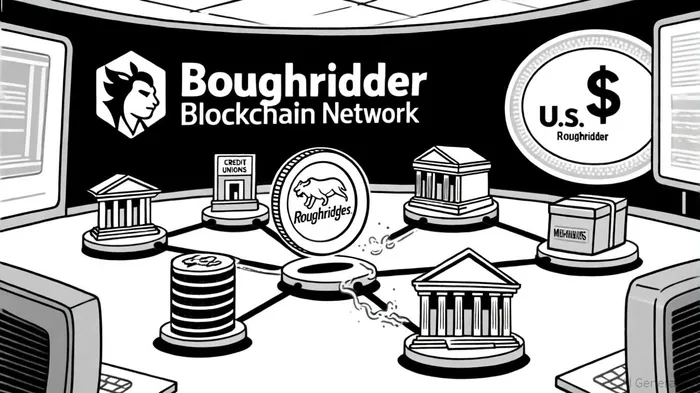





Comentarios
Aún no hay comentarios