
Assessing Sectoral Impacts of New Pharmaceutical and Truck Tariffs on Global Markets
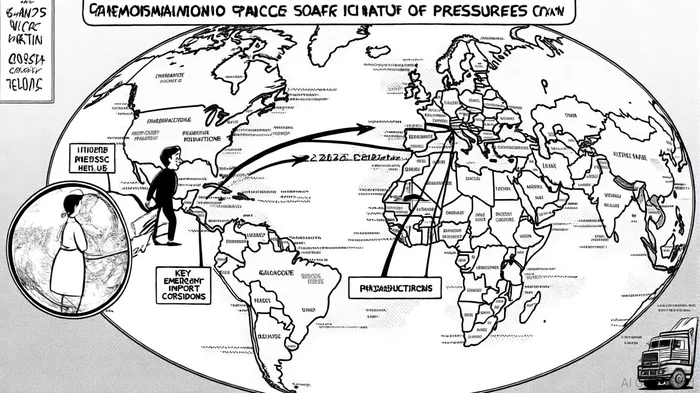
The imposition of sweeping tariffs on pharmaceuticals and trucks by the Trump administration in 2025 has triggered profound sectoral shifts, reshaping global supply chains and investor strategies. These policies, framed as measures to protect domestic industries, have instead exposed the fragility of interconnected markets and accelerated a fragmented economic landscape. For investors, the challenge lies in navigating the dual forces of protectionism and innovation, where strategic sector rotation and risk mitigation are no longer optional but imperative.
Pharmaceuticals: A Tariff-Driven Reconfiguration
The 100% tariff on branded pharmaceuticals—conditional on domestic manufacturing investments—has forced a reevaluation of global sourcing and production strategies. According to a report by Mordor Intelligence, tariffs ranging from 10% to 240% on pharmaceutical imports have compelled firms like Johnson & Johnson and NovartisNVS-- to commit billions to U.S.-based active pharmaceutical ingredient (API) facilities[1]. This reshoring trend, while politically expedient, masks deeper structural challenges. Generic drug manufacturers, reliant on low-cost APIs from India and China, now face margin compression and potential shortages, as highlighted by Delve Insight[2].
Investors are responding with sector rotation, favoring firms that demonstrate agility in supply chain reconfiguration. For instance, companies leveraging AI-driven predictive analytics and digital twins to optimize logistics are gaining traction[3]. The EY 2025 Biotech Beyond Borders Report underscores how biopharma firms are decentralizing clinical trials and shifting manufacturing to low-tariff jurisdictions like Ireland and South Korea[4]. These adaptations, however, come at a cost: increased capital expenditures and compliance burdens under stricter rules of origin[5].
Trucking: Disruptions and Diverging Strategies
The 25% tariff on heavy-duty trucks, targeting imports from Mexico and other competitors, exemplifies the administration's protectionist agenda. While intended to bolster domestic truck manufacturers, this policy risks inflating transportation costs and disrupting just-in-time supply chains. A Deloitte analysis notes that such tariffs could ripple through industries reliant on trucking, from retail to manufacturing[6].
For investors, the trucking sector's vulnerability highlights the need for diversification. Companies that have already localized production or diversified supplier bases—such as those nearshoring to Mexico's northern states—are better positioned to absorb shocks[7]. However, the long-term viability of these strategies remains uncertain, as global trade tensions persist and alternative routes (e.g., via Canada or Southeast Asia) emerge[8].
Investor Behavior and Portfolio Adjustments
The 2025 tariff regime has catalyzed a shift in investor priorities. As stated by a CNN analysis, firms like Eli LillyLLY-- are committing to domestic manufacturing to avoid the 100% drug tariff, signaling a broader trend toward “risk-centric” capital allocation[9]. This has led to a reallocation of portfolios away from global supply chain-dependent sectors and toward domestic or low-risk international markets.
Sector rotation is particularly evident in the biopharma space, where firms are prioritizing R&D in high-margin, tariff-resistant therapies. Meanwhile, generic drugmakers face existential pressures, prompting mergers and acquisitions as smaller players exit the market[10]. For the trucking sector, investors are hedging against volatility by favoring firms with diversified geographic footprints and hybrid production models.
Risk Mitigation in a Fragmented World
The path forward demands robust risk mitigation frameworks. HalloranCG's guidance emphasizes diversifying supplier bases, stockpiling critical materials, and leveraging technology to enhance supply chain visibility. For pharmaceuticals, this includes importing drug substances at lower tariffs and completing final manufacturing domestically—a strategy adopted by firms like Celltrion.
Regulatory compliance, too, has become a strategic asset. As tariffs evolve, firms must invest in real-time compliance tools and scenario planning to navigate shifting trade policies. Deloitte's insights stress the importance of cross-functional teams—spanning tax, legal, and supply chain—to manage tariff uncertainty.
Conclusion
The 2025 pharmaceutical and truck tariffs epitomize the tension between protectionism and globalization. While these policies aim to fortify domestic industries, they have instead accelerated market fragmentation and operational complexity. For investors, the key lies in strategic sector rotation—favoring firms that balance resilience with innovation—and adopting dynamic risk mitigation strategies. In this new era, adaptability is the ultimate competitive advantage.





Comentarios
Aún no hay comentarios