
Assessing the Geopolitical and Market Implications of U.S. Military Escalation in Venezuela
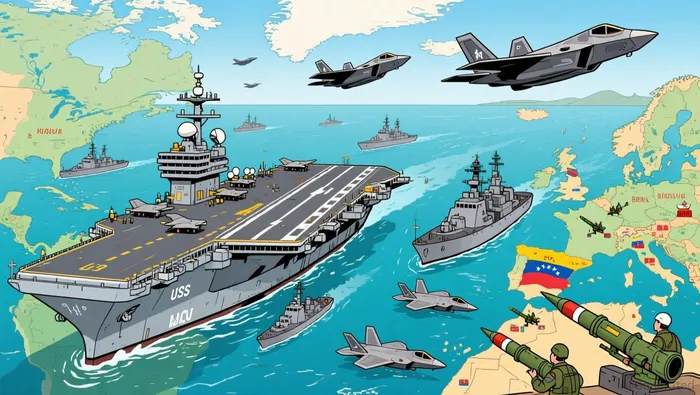
Defense Sector: A Surge in Geopolitical Risk Premiums
The U.S. military buildup has directly elevated demand for defense sector assets. Analysts highlight companies like Lockheed Martin (LMT) and Raytheon (RTX) as beneficiaries of heightened conflict readiness, given their roles in missile systems and air defense. Northrop GrummanNOC-- (NOC) and BoeingBA-- (BA) are also positioned to gain from increased naval and logistics support contracts. This trend reflects a broader shift in institutional portfolios toward "geopolitical risk premiums," where investors hedge against instability through exposure to defense contractors.
However, the sector's performance is not without caveats. Critics argue that the U.S. actions lack credible evidence of drug trafficking and risk violating international law, as noted by the Community of Latin American and Caribbean States (CELAC). Such controversies could dampen long-term investor sentiment if diplomatic tensions escalate into broader regional conflicts.
Energy Sector: A Delicate Balancing Act
Venezuela's energy sector remains a linchpin of global heavy crude markets. Despite U.S. military posturing, the country's oil exports have surged to 1.09 million barrels per day in September 2025-the highest level since early 2020-driven by demand from Chinese and Indian refiners according to Global Guardian. This resilience, however, is precarious. U.S. naval patrols and potential blockades threaten to disrupt supply chains, forcing refiners to seek alternatives like Guyana's Stabroek field or Middle Eastern sour crude, which are either logistically complex or more expensive as reported by Global Guardian.
The situation is further complicated by Venezuela's maritime disputes with Guyana, particularly over ExxonMobil's Stabroek block. Any deterioration in regional stability could delay energy projects and inflate insurance costs, analysts. For institutional investors, this volatility underscores the need for diversified crude sourcing and strategic inventory management.
Strategic Asset Allocation: Hedging a Multipolar Crisis
Institutional investors are adopting multifaceted strategies to navigate the crisis. In the energy sector, ETFs like the iShares U.S. Oil & Gas Exploration & Production ETF (IEO) and Utilities Select Sector SPDR Fund (XLU) are being used to hedge against price swings and grid strains. Meanwhile, commodities derivatives and political risk insurance are gaining traction as tools to mitigate supply chain disruptions.
The defense sector, meanwhile, sees a focus on ETFs such as the Vanguard Utilities Index Fund ETF (VPU), which offers stability amid energy sector volatility according to Benzinga. Additionally, platforms like FY Energy's renewable-powered BTC Asset Management Plan are attracting attention for their blend of digital assets and green infrastructure, offering a novel hedge against traditional market risks.
Conclusion: A Precarious Equilibrium
The U.S.-Venezuela standoff exemplifies the interplay between geopolitics and markets. While defense and energy sectors present opportunities for strategic allocation, the risks of military escalation-ranging from oil price surges to prolonged instability-demand cautious, diversified approaches. As Venezuela's oil infrastructure and regional alliances complicate U.S. objectives, investors must remain agile, balancing short-term gains with long-term resilience.







Comentarios
Aún no hay comentarios