
Antitrust Enforcement and Market Dynamics in Turkey's Poultry Sector: Assessing Regulatory Risk and Investment Resilience in Emerging Market Agriculture Sectors
The poultry sector in Turkey has emerged as a focal point for antitrust enforcement, reflecting broader global trends in regulatory scrutiny of agricultural markets. Over the past five years, the Turkish Competition Authority (TCA) has intensified its investigations into alleged price-fixing and anticompetitive practices, imposing fines totaling 1.35 billion liras ($42 million) on poultry firms by mid-2024[1]. These actions, coupled with updated administrative fine regulations that grant the TCA greater discretion in penalty determination[2], underscore a shift toward stricter enforcement. For investors, this raises critical questions: How do these regulatory changes affect market dynamics? And what does this mean for the resilience of investments in Turkey's agriculture sector?
Regulatory Risk and Market Dynamics
The TCA's 2024-2025 enforcement actions have directly influenced market dynamics. For instance, Cargill Inc. settled a $32.5 million lawsuit over allegations of colluding to inflate turkey prices[3], a case emblematic of the sector's vulnerability to antitrust violations. Such settlements signal to market participants that regulatory oversight is tightening, potentially deterring anti-competitive behavior but also increasing compliance costs for firms. The TCA's revised administrative fine framework, which bases penalties on the severity and duration of violations, introduces a layer of predictability for investors. However, the same framework could amplify financial risks for companies found in breach, particularly smaller players with limited resources[4].
Market concentration in the poultry sector remains a concern. While the TCA cleared nine beef and lamb producers of anti-competitive practices in 2024[5], poultry firms face a medium level of concentration[6]. This duality—fragmentation in livestock production versus concentration in processing—highlights the sector's structural complexities. For investors, the risk lies in balancing the benefits of a competitive market (lower prices, innovation) against the potential for regulatory overreach or inconsistent enforcement.
Investment Resilience Amid Regulatory Shifts
Despite regulatory headwinds, Turkey's poultry sector has shown resilience. By Q1 2025, the industry demonstrated growth driven by technological advancements in feed efficiency and disease management[7]. Export strategies, including 10 economic cooperation agreements with Saudi Arabia, have also offset domestic economic pressures like inflation and currency depreciation[8]. These developments suggest that regulatory enforcement, while imposing short-term costs, may ultimately foster a more transparent and competitive environment.
Foreign Direct Investment (FDI) trends further illustrate this resilience. Turkey attracted $6.7 billion in FDI equity inflows in 2024, up from $5.9 billion in 2023[9], despite macroeconomic instability. The government's FDI Strategy (2024-2028) emphasizes modernization and global competitiveness, aligning with investor priorities[10]. Yet challenges persist: avian influenza outbreaks in 2024 led to the culling of 14.2 million turkeys[11], while export restrictions on poultry products—imposed to stabilize domestic prices—introduced uncertainty for foreign investors[12].
Balancing Act: Regulatory Certainty vs. Economic Volatility
The TCA's enforcement actions have created a dual-edged sword. On one hand, they reinforce consumer welfare and market fairness, which are critical for long-term investment confidence. On the other, the sector's exposure to external shocks—such as disease outbreaks and geopolitical tensions—complicates risk assessments. For example, the 2024 export restrictions on chicken meat, while aimed at curbing inflation, signaled policy volatility that could deter FDI[13].
Investors must also navigate the TCA's evolving focus on digital markets. The authority's scrutiny of algorithmic pricing and self-preferencing practices in e-commerce platforms[14] suggests a broader regulatory agenda that could extend to poultry companies leveraging online sales channels. This expansion of oversight, while promoting fair competition, may require firms to allocate additional resources to compliance, further straining margins.
Conclusion: A Cautious Optimism
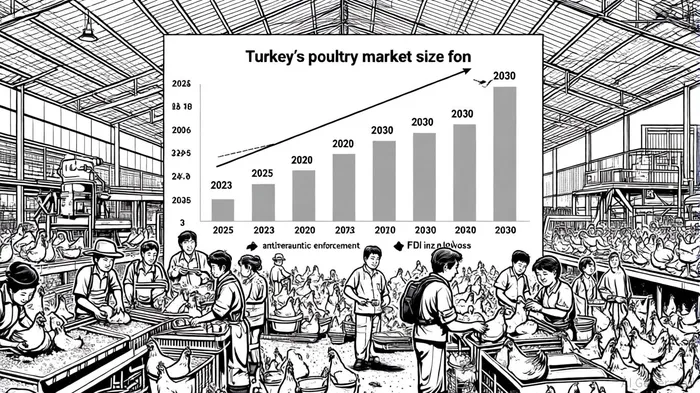
Turkey's poultry sector stands at a crossroads. Antitrust enforcement has introduced regulatory risks but also laid the groundwork for a more competitive market. For investors, the key lies in assessing how firms adapt to these changes. Those that invest in compliance, innovation, and diversification—particularly in export markets—may find opportunities in a sector projected to grow at a 5.95% CAGR through 2030[15]. However, the path to resilience will require navigating a complex interplay of regulatory, economic, and health-related challenges.







Comentarios
Aún no hay comentarios