
American Water CEO Urges Urgent Investment in Water Infrastructure
Generado por agente de IAEdwin Foster
martes, 25 de marzo de 2025, 9:59 am ET2 min de lectura
The American Society of Civil Engineers (ASCE) recently released its 2021 Report Card for America’s Infrastructure, assigning an overall grade of C-. This assessment, while an improvement from the D+ grade in 2017, underscores the urgent need for investment in our nation’s water infrastructure. The report highlights that the long-term infrastructure investment gapGAP-- has risen to $2.59 trillion over 10 years, translating to a funding gap of nearly $260 billion per year. This stark reality has prompted American Water CEO to call for immediate and sustained investment in our critical water infrastructure.
The ASCE Report Card provides a comprehensive evaluation of the current state of America’s infrastructure, with a particular focus on water systems. The drinking water category received a grade of D, indicating a significant need for improvement. The report reveals that there is a water main break every two minutes and an estimated 6 billion gallons of treated water lost each day in the U.S., enough to fill over 9,000 swimming pools. This alarming data underscores the urgent need for investment in repairing and replacing aging pipes to ensure safe and reliable drinking water.
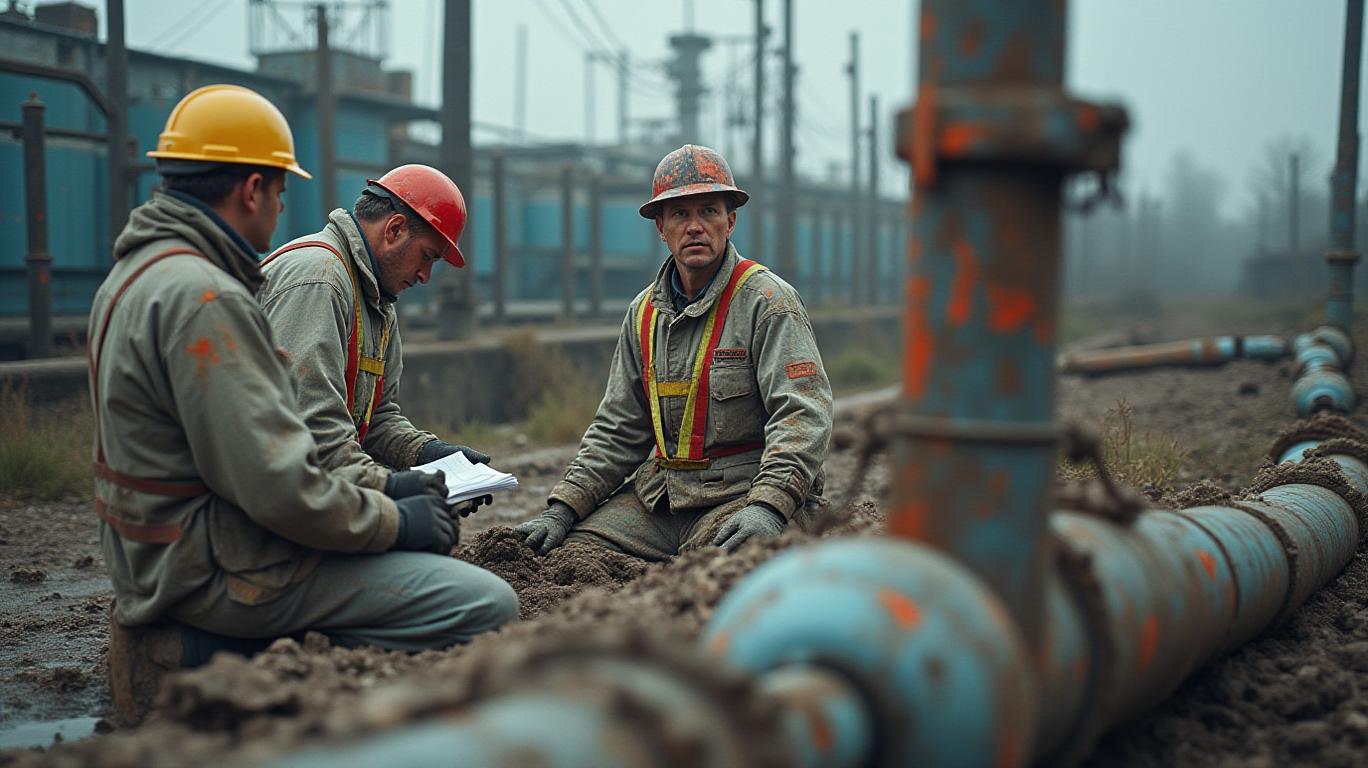
The report also highlights the need for investment in wastewater infrastructure, which received a grade of D+. The aging wastewater infrastructure poses significant risks to public health and the environment. Investing in wastewater treatment facilities and sewer systems can help prevent waterborne diseases and protect local water bodies from pollution. The Bipartisan Infrastructure Law includes funding for wastewater infrastructure, which can be used to upgrade and modernize these systems.
The ASCE Report Card also emphasizes the importance of asset management in prioritizing limited funding. The report notes that by 2019, about a third of all utilities had a robust asset management program in place, an increase from 20% in 2016. This data-driven approach helps utilities better allocate resources to replace and repair pipes, which is essential given that the average replacement rate of pipes has increased from 0.5% per year in 2015 to between 1% and 4.8% per year by 2019. This acceleration in replacement rates is crucial for addressing the estimated 250,000 to 300,000 water main breaks per year, which equates to a break every two minutes.
The report also highlights the positive impact of federal investments, such as those made through the 2021 Infrastructure Investment and Jobs Act (IIJA). These investments have improved the grades for categories like inland waterways, ports, and drinking water, demonstrating that sustained federal funding can significantly enhance infrastructure conditions. This encourages utilities to advocate for continued federal support and to leverage these funds to address their specific infrastructure needs. For example, the Bipartisan Infrastructure Law delivers over $50 billion to the EPA to improve drinking water, wastewater, and stormwater infrastructure, which includes $15 billion for lead service line replacement and $4 billion for emerging contaminants. This funding can be instrumental for utilities in planning and executing large-scale infrastructure projects.
The ASCE Report Card's assessment influences investment strategies by providing a clear picture of the infrastructure's condition, the urgency of the investment needs, and the effectiveness of federal funding. This data-driven approach helps utilities like American Water to make informed decisions, prioritize their investments, and advocate for the necessary funding to ensure the resilience and reliability of the nation's water infrastructure.
In conclusion, the ASCE Report Card for America’s Infrastructure serves as a wake-up call for policymakers and investors alike. The urgent need for investment in our water infrastructure is clear, and the benefits of doing so are manifold. By prioritizing investment in drinking water, wastewater, and stormwater infrastructure, as well as lead service line replacement and emerging contaminants, we can achieve significant improvements in public health and economic stability. The time for action is now, and the stakes could not be higher. The world must choose: cooperation or collapse.



Divulgación editorial y transparencia de la IA: Ainvest News utiliza tecnología avanzada de Modelos de Lenguaje Largo (LLM) para sintetizar y analizar datos de mercado en tiempo real. Para garantizar los más altos estándares de integridad, cada artículo se somete a un riguroso proceso de verificación con participación humana.
Mientras la IA asiste en el procesamiento de datos y la redacción inicial, un miembro editorial profesional de Ainvest revisa, verifica y aprueba de forma independiente todo el contenido para garantizar su precisión y cumplimiento con los estándares editoriales de Ainvest Fintech Inc. Esta supervisión humana está diseñada para mitigar las alucinaciones de la IA y garantizar el contexto financiero.
Advertencia sobre inversiones: Este contenido se proporciona únicamente con fines informativos y no constituye asesoramiento profesional de inversión, legal o financiero. Los mercados conllevan riesgos inherentes. Se recomienda a los usuarios que realicen una investigación independiente o consulten a un asesor financiero certificado antes de tomar cualquier decisión. Ainvest Fintech Inc. se exime de toda responsabilidad por las acciones tomadas con base en esta información. ¿Encontró un error? Reportar un problema


SOBRE NOSOTROS
Nuestra historiaAutores de noticiasBase de conocimientosPolítica de privacidadTérmino de usoDescargo de responsabilidad de corretaje de tercerosTérminos de uso de AIMEDivulgaciones de riesgos de AInvest AICarrerasCONTÁCTENOS
Email: support@ainvest.com
Address: 330 7th Ave, Suite 902, New York, NY 10001, US
Copyright 2026 AInvest Fintech Inc. All rights reserved.


Comentarios
Aún no hay comentarios