
Aktis Oncology's Strategic Position in the Radiopharma Revolution
The radiopharmaceuticals sector is undergoing a seismic shift, driven by breakthroughs in precision medicine and a reimagining of oncology treatment paradigms. As the global market for these therapies accelerates toward a projected $35 billion valuation by 2034, with a compound annual growth rate (CAGR) of 11.45%, companies like Aktis OncologyAKTS-- are emerging as pivotal players. Aktis, a clinical-stage biotech firm, has positioned itself at the intersection of innovation and commercial viability, leveraging proprietary technology, strategic partnerships, and a robust capital base to capitalize on the radiopharma revolution.
The Radiopharma Revolution: A New Frontier in Oncology
Radiopharmaceuticals are no longer niche therapies but are increasingly recognized as transformative tools in oncology. Recent advancements in radiochemistry, isotope availability, and conjugation technologies have enabled therapies like Pluvicto and Lutathera to achieve durable responses in previously untreatable cancers. Regulatory frameworks are also evolving to support these innovations. The FDA's 2025 guidance on radiopharmaceutical dosage optimization emphasizes adaptive trials using imaging and biomarker data, prioritizing mechanistic reasoning and real-time dosimetry. These developments are not only streamlining drug approvals but also expanding the therapeutic reach of radiopharmaceuticals, particularly through alpha-emitters, which offer high anti-tumor efficacy with minimal toxicity to healthy cells.
Aktis Oncology: Proprietary Technology and Clinical Pipeline
Aktis Oncology's core innovation lies in its proprietary "miniprotein radioconjugates," a platform designed to access tumor targets beyond the reach of existing radiopharmaceutical approaches. This technology enables the company to develop highly specific therapies for solid tumors, with its lead candidate, AKY-1189, targeting Nectin-4-a protein overexpressed in bladder and other cancers. AKY-1189 is currently in early-stage clinical trials, with a second candidate, AKY-2519, targeting B7-H3, also in development. 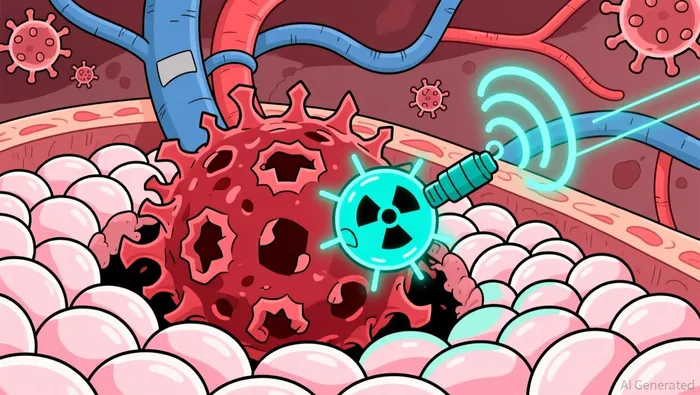
The company's approach is underpinned by a focus on precision and scalability. By leveraging patient-derived xenograft (PDX) models, Aktis can test radioligand behavior across diverse tumor microenvironments, generating data to refine clinical designs and improve preclinical predictions. This co-clinical feedback loop enhances the likelihood of success in later-stage trials, a critical advantage in a sector where attrition rates remain high.
Strategic Collaborations and Financial Strength
Aktis's strategic partnerships underscore its ambition to dominate the radiopharma landscape. In May 2024, the company entered a landmark collaboration with Eli Lilly, securing a $60 million upfront payment and potential milestone payments totaling $1.1 billion. This agreement allows Lilly to develop and commercialize radiopharmaceuticals derived from Aktis's miniprotein platform, a move that aligns with Lilly's broader strategy to expand its oncology portfolio. Additionally, Aktis has secured isotope supply agreements with NorthStar Medical Technologies, TerraPower Isotopes, and Niowave, ensuring access to critical materials for its pipeline.
Financially, Aktis has demonstrated resilience and foresight. In January 2026, the company raised $318 million in its initial public offering, with Eli Lilly purchasing $100 million worth of shares as an anchor investor. This follows a $175 million Series B financing round in 2024, led by RA Capital Management and co-led by RTW Investments and Janus Henderson Investors. The proceeds from these financings are being allocated to advance clinical trials, expand manufacturing capabilities, and strengthen supply chain infrastructure.
Manufacturing and Supply Chain: A Foundation for Growth
Aktis is also investing heavily in its internal infrastructure. The company is constructing a current Good Manufacturing Practice facility, expected to be operational by mid-2026. This facility will enhance its ability to produce radiopharmaceuticals at scale, reducing reliance on third-party manufacturers and ensuring consistent supply-a critical factor in a sector where isotope availability and production complexity pose significant challenges.
Market Position and Competitive Landscape
With the radiopharmaceuticals market projected to reach $26 billion by 2032, Aktis is well-positioned to capture a substantial share. Its proprietary platform, coupled with strategic alliances and a focus on next-generation alpha-emitting therapies, differentiates it from competitors. The company's emphasis on partnerships-such as its collaboration with Lilly-also aligns with industry trends, where cross-sector collaborations are increasingly vital for navigating the complexities of radiopharma development.
However, challenges remain. The sector is highly competitive, with major players like Novartis and Bayer investing heavily in radioligand therapies. Regulatory hurdles, particularly around dosimetry and safety, also persist. Aktis's success will depend on its ability to demonstrate clinical efficacy, secure regulatory approvals, and scale production efficiently.
Conclusion: A High-Stakes Bet on Precision Medicine
Aktis Oncology represents a compelling case study in the convergence of innovation, capital, and strategic foresight. Its miniprotein platform, robust clinical pipeline, and partnerships with industry leaders position it as a key player in the radiopharma revolution. While the path to commercialization is fraught with risks, the company's financial strength, technological edge, and alignment with market trends suggest a strong potential for long-term value creation. For investors, Aktis embodies the promise of precision oncology-a sector where the rewards for successful innovation are as vast as the challenges.





Comentarios
Aún no hay comentarios