
Active Large-Cap Growth ETFs: The Case for FELG in a Passive-Dominated Landscape
The Active Management Dilemma
According to a Morningstar report, only one in three active managers in U.S. large-cap categories outperformed their passive peers during the 12 months through June 2025. This trend underscores the challenges of active management in efficient markets, where fees and turnover often erode returns. FELG, with an mlq.ai FELG profile showing an expense ratio and turnover rate higher than passive alternatives like the S&P 500, faces these headwinds directly. However, its underperformance since inception does not fully capture its potential strategic advantages.
Strategic Value in Dynamic Markets
FELG's active management strategy is designed to capitalize on sectoral shifts and emerging opportunities, particularly in high-growth areas like artificial intelligence and technology, as noted on its mlq.ai profile. While passive funds track broad indices, FELG's dynamic stock selection allows it to overweight undervalued or high-potential stocks, offering a more tailored approach. For instance, its slightly softer growth profile compared to passive peers like the Schwab Growth ETF (SCHG) suggests a deliberate balance between growth and value exposure, according to coverage on mlq.ai. This hybrid approach may appeal to investors seeking to hedge against the volatility of pure growth indices while maintaining upside potential.
Risk-Adjusted Returns and Short-Term Resilience
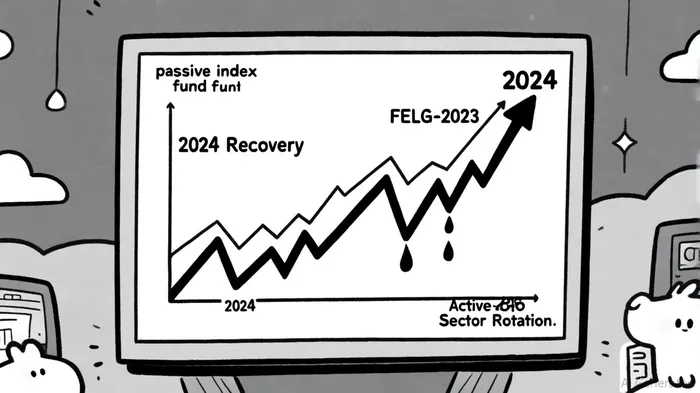
Critics of FELG often cite its underperformance against benchmarks. Yet, risk-adjusted returns tell a more complex story. In 2024, FELG demonstrated relative strength amid market volatility, outperforming its benchmark in shorter time frames, according to mlq.ai coverage. This resilience may stem from its active rebalancing, which reduces exposure to overvalued sectors during downturns. While its liquidity and expense ratio remain less favorable than passive alternatives (as reported on mlq.ai), the fund's ability to adapt to macroeconomic shifts-such as the AI-driven tech boom-could justify its higher costs for investors with a medium-term horizon.
The Cost Conundrum
FELG's higher expense ratio is a legitimate concern. Passive funds, with their lower fees, remain more attractive for long-term, buy-and-hold strategies. However, active management's value lies in its potential to mitigate downside risk and capture alpha in volatile environments. As stated by Fidelity's analysis and summarized on mlq.ai, FELG's concentration risk and turnover are offset by its capacity to pivot quickly in response to market signals. For investors prioritizing flexibility over fee savings, this trade-off may be worth considering.
Conclusion: A Niche but Viable Strategy
FELG is not a panacea for the active management conundrum, but it embodies the strategic value of active ETFs in a growth-centric market. Its underperformance against benchmarks does not negate its role as a tool for investors seeking to navigate sectoral shifts and capitalize on emerging trends. While passive strategies remain dominant, FELG's dynamic approach offers a compelling alternative for those willing to accept higher costs in exchange for active risk management and tailored exposure.





Comentarios
Aún no hay comentarios