
The 2026 Social Security COLA: A Mirage in the Desert of Rising Costs
The 2026 Social Security Cost-of-Living Adjustment (COLA) of 2.8%, announced in December 2025, marks a historic increase in the context of recent years. Yet, this adjustment, calculated using the Consumer Price Index for Urban Wage Earners and Clerical Workers (CPI-W), offers a fragile shield against the inflationary pressures disproportionately borne by retirees. For those relying on fixed incomes, the gap between the COLA and the true cost of living is widening, demanding a reevaluation of financial strategies in a policy-driven economy.
The Misalignment of Metrics: CPI-W vs. Retiree Realities
The CPI-W, the metric underpinning COLA calculations, assigns housing and medical care an average weighting of 42% and 7%, respectively. In contrast, retirees allocate approximately 48% and 11% of their budgets to these categories according to analysis. This discrepancy is not trivial. For instance, during the third quarter of 2025, housing inflation averaged 3.9%, while medical care inflation reached 3.6%- both exceeding the 2.8% COLA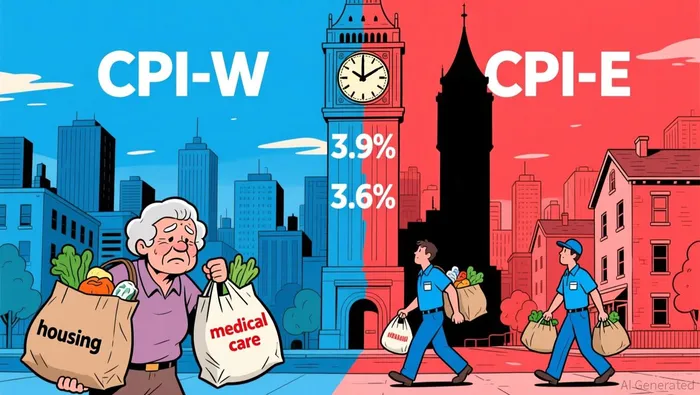 . The experimental CPI-E, which better reflects retiree spending patterns, would have yielded a 3.1% COLA in 2025, translating to an additional $60 monthly benefit instead of the $56 increase under CPI-W. Over time, this misalignment erodes purchasing power: retirees who retired in 2024 could lose over $12,000 in 25 years due to the CPI-W's understatement of inflation according to a senior advisory report.
Trump-Era Tariffs: A Double-Edged Sword
The 2026 COLA's modest increase was partly a response to inflationary pressures exacerbated by Trump-era tariffs. Since April 2025, tariffs on imported goods-including prescription drugs- have pushed CPI-W inflation from 2.1% to 2.9%. While these policies aim to bolster domestic manufacturing, their unintended consequences are stark. For retirees, tariffs on drugs from countries like India and China risk shortages and higher out-of-pocket costs. The Journal of the American Medical Association estimates that tariffs could affect 400 drug products from Canada alone according to a health policy analysis. Even as some pharmaceutical companies secure exemptions by lowering prices (e.g., Ozempic's monthly cost dropping from $1,000 to $350 via the TrumpRx platform), the broader landscape remains volatile.
Strategic Planning in a High-Inflation Environment
Given these challenges, retirees and investors must adopt proactive strategies to preserve purchasing power:
- Diversify Income Streams: Beyond Social Security, consider annuities or part-time work to offset gaps in COLA coverage. Longevity annuities, which provide guaranteed income in later years, can hedge against life expectancy risks.
- Invest in Inflation-Linked Assets: Treasury Inflation-Protected Securities (TIPS) and real estate investment trusts (REITs) offer protection against rising prices. REITs, in particular, align with retirees' exposure to housing inflation.
3. Optimize Healthcare Spending: High-deductible health plans paired with health savings accounts (HSAs) can reduce tax liabilities while building a buffer for medical expenses.
4. Advocate for Policy Reform: The CPI-E's experimental status highlights the need for legislative action. Advocacy for a more accurate inflation metric could yield fairer COLAs in the future.
Conclusion
The 2026 COLA, while a welcome increase, is a temporary reprieve in a landscape of structural imbalances. Retirees face a dual challenge: inflation in critical spending categories outpaces the COLA, and policy-driven measures like tariffs introduce new uncertainties. Strategic financial planning-rooted in diversification, inflation-linked investments, and proactive healthcare management-is no longer optional but essential. As the economy navigates these crosscurrents, those who act now will be best positioned to weather the storms ahead.







Comentarios
Aún no hay comentarios