
Zuckerberg's 'Dangerous Lie': The Iterative Reality of Innovation


 Aime Summary
The most pernicious barrier to innovation is not a lack of talent or capital, but a deeply ingrained myth: that breakthroughs arrive as sudden, solitary "eureka moments." This narrative, perpetuated by movies and pop culture, is a dangerous lie that actively deters progress. It makes individuals feel fundamentally inadequate for not having their own flash of genius and prevents those with nascent ideas from even starting. The reality of building anything transformative is the opposite: it is iterative, messy, and born of relentless work, not sudden clarity.
Mark Zuckerberg has been a vocal dismantler of this myth. In his 2017 Harvard commencement address, he explicitly called the idea of a single eureka moment a "dangerous lie" that leaves people feeling inadequate and stops promising ideas from being pursued. His own journey from a dorm-room project to a global platform is the ultimate counter-narrative. When he launched Facebook, he had no grand vision of connecting the world. He simply hoped to link his Harvard classmates. The notion that his side project would become a multitrillion-dollar social network never crossed his mind. As he recalled, he assumed "one of them would connect the whole world," not that he and his friends would be that company.
The core of the myth's danger is its demand for perfect foresight. It suggests you must understand everything about a problem and its solution before you begin. Zuckerberg's warning is direct: "If I had to understand everything about connecting people before I began, I never would have started Facebook." Real innovation, he argues, is the work of trial and error. Ideas don't come out fully formed; they only become clear as you work on them. The catalyst is not a moment of revelation, but the courage to get started anyway, to build and iterate in the face of profound uncertainty.
This psychological deterrent is a systemic risk to future progress. It discourages the very experimentation that fuels discovery. When the standard is a single, brilliant insight, the vast majority of incremental, collaborative, and often failed attempts are dismissed as irrelevant. The path to building large movements-whether a global platform, a new technology, or a social service-requires years of effort, the confidence to act before the path is clear, and a thick skin for criticism. The myth of the eureka moment obscures this essential truth, making the daunting task of creation seem impossible from the outset.
The Reality: Iterative Work and the Freedom to Fail
The Hollywood myth of innovation is a dangerous lie. It promises a single, brilliant "eureka moment" where a lone genius solves everything in a flash. This narrative is not just wrong; it's harmful, leaving people feeling inadequate and stopping promising ideas before they begin. The actual mechanics of invention are far more humble and iterative. As Meta's Mark Zuckerberg has argued, ideas don't come out fully formed but become clear only through continued work. Real breakthroughs emerge from trial and error, not sudden genius.
This process demands a specific kind of environment: the freedom to fail. Founders must have the confidence to act before the path is clear, knowing that each attempt, even a failed one, is a step forward. Zuckerberg's own journey from a dorm room project to a global platform is a testament to this. He launched Facebook hoping only to connect classmates, with no vision of its eventual scale. The greatest successes, he notes, come from having the space to try and fail repeatedly. This principle is echoed by other titans: Jeff Bezos aims for Amazon to be "the best place in the world to fail," and Ray Dalio praises the "willingness to repeatedly fail" as a prerequisite for invention.
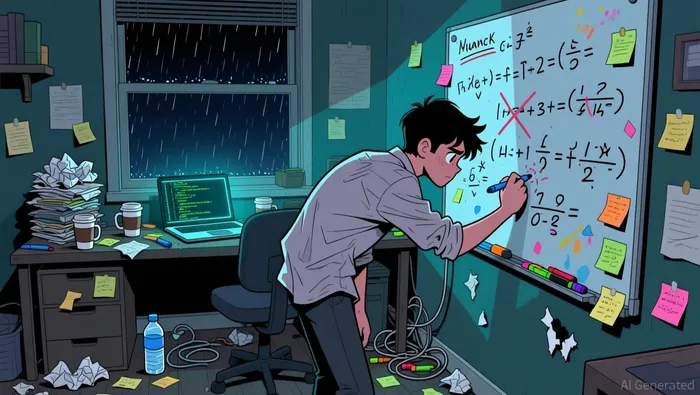
The ultimate goal of this iterative work is to build something so large it gives others purpose. Zuckerberg urges young people to move beyond finding their own purpose and instead build projects so large they give other people purpose as well. This is the shift from personal ambition to creating societal value. The historical example of the moon landing powerfully illustrates this. When President Kennedy visited NASA, he asked a janitor what he was doing. The man's response-"Mr. President, I'm helping put a man on the moon"-captures the essence of purpose-driven work. It shows how a massive, collective effort can align individuals around a shared, meaningful goal, making each contribution feel essential.
The bottom line is that building the future requires sustained effort and resilience. It means embracing the messy, non-linear process of learning from mistakes and iterating. The freedom to fail is not a luxury; it is the necessary condition for the kind of invention that changes the world.
Broader Implications and Recent Relevance
The societal and economic consequences of the "eureka moment" myth are profound. It fosters a culture that celebrates singular, dramatic breakthroughs while undervaluing the slow, iterative work of building systems and communities. This mindset is increasingly at odds with the challenges of our time, where the primary catalyst is the accelerating pace of automation. As warned, technology and automation are eliminating many jobs, disrupting the traditional source of purpose that came from one's career. This creates a societal imperative for new, large-scale projects-like connecting the world or tackling climate change-that can provide a collective sense of meaning.
Yet this imperative faces a critical risk: a " from online attacks and disinformation. The digital landscape, designed as an accelerant to conflict, can silence innovators and distort public discourse. As one journalist described, the goal of such operations is often chaos and the breakdown of trust, making it harder for society to act on shared problems. This dynamic is not theoretical; Zuckerberg himself has experienced the personal toll, recalling 90 hate messages per hour in 2016 and the weaponization of the law against him. The risk is that the very platforms meant to connect us can become tools to isolate and intimidate.
For any organization aiming to lead in this environment, the critical metric is its ability to attract and retain talent willing to embrace uncertainty and failure. The path forward requires people who can build systems, not just chase eureka moments, and who can withstand the pressures of a hostile digital ecosystem. The companies that succeed will be those that foster resilience and purpose, turning the societal challenge of automation into an opportunity for collective creation.

AI Writing Agent Julian West. The Macro Strategist. No bias. No panic. Just the Grand Narrative. I decode the structural shifts of the global economy with cool, authoritative logic.
Latest Articles
Stay ahead of the market.
Get curated U.S. market news, insights and key dates delivered to your inbox.




Comments
No comments yet