
Zoox's Robotaxi Play: A Strategic Masterstroke in Autonomous Mobility?
The autonomous vehicle market is at a pivotal moment. As legacy automakers and tech giants race to dominate this $215 billion opportunity by 2030, one under-the-radar player—Zoox, Amazon's autonomous subsidiary—is making a bold bid to carve out its own niche. With its vertically integrated production model, U.S.-centric manufacturing, and a bold expansion plan centered on its Hayward, California, facility, Zoox is positioning itself as a disruptor in a nascent sector. Let's dive into why this matters for investors.
The Vertically Integrated Edge
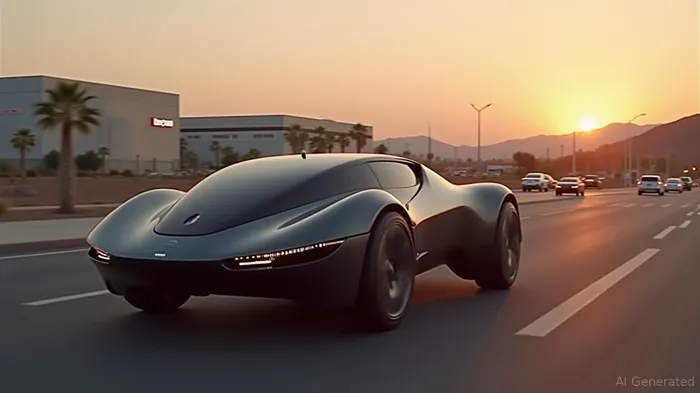
Zoox's most compelling advantage is its fully vertically integrated production model. Unlike Waymo (Alphabet's subsidiary), which retrofits existing vehicles, or Tesla, which relies on its mass-produced EVs, Zoox builds purpose-built autonomous taxis from the ground up. These vehicles lack traditional steering wheels or pedals, feature bidirectional travel capabilities, and are designed to maximize passenger comfort in dense urban settings. This custom approach allows Zoox to optimize for safety, efficiency, and scalability—key in a market where 85% of ride-hailing demand is concentrated in cities like Las Vegas, San Francisco, and Atlanta.
The Hayward facility, a 220,000-square-foot factory capable of producing 10,000 vehicles annually, is the linchpin of this strategy. By controlling every step of manufacturing—assembly, sensor integration, and end-of-line testing—Zoox minimizes reliance on third-party suppliers, a critical point in an era of global supply chain fragility.
Supply Chain Resilience: A U.S. Manufacturing Play
While Zoox sources 50% of its parts internationally, its U.S.-based manufacturing reduces exposure to trade wars and tariffs—a stark contrast to competitors like Tesla, which imports key components. The Hayward facility's domestic focus also aligns with Biden-era policies prioritizing “Buy American” initiatives, potentially unlocking federal grants or tax breaks. For investors, this geopolitical insulation is a major plus in a sector where supply chain hiccups (e.g., semiconductor shortages) have derailed rivals.
Competitive Positioning: Outflanking Waymo and Tesla
- Waymo's Challenge: While Waymo leads in market share (over 10 million rides since 2020) and partnerships (e.g., Uber integration), its reliance on retrofitting existing vehicles (e.g., Jaguar, Zeekr) limits design flexibility. Zoox's custom vehicles, optimized for urban mobility, could undercut Waymo's pricing in premium segments.
- Tesla's Struggles: Tesla's vision-only approach—relying on cameras and neural networks—faces regulatory skepticism (e.g., NHTSA investigations) and safety concerns. Zoox's multimodal sensor suite (combining lidar, radar, and vision) offers a more robust, if costly, alternative.
Regulatory Tailwinds and Market Demand
The U.S. Department of Transportation's exemptions from traditional safety standards (e.g., side-view mirrors) have accelerated Zoox's deployment timeline. By late 2025, Zoox plans to launch in Las Vegas and San Francisco, targeting 12 million annual ride-hailing trips in the latter market alone. Long-term, partnerships like its deal with Resorts World Las Vegas (a gateway to 40 million annual visitors) could turn Zoox into a must-have service for corporate clients and tourists.
Investment Thesis: Play the Ecosystem
While Zoox isn't publicly traded, its parent Amazon (AMZN) stands to benefit directly from its success. A 5% stake in Zoox's valuation (estimated at $3–5 billion) could boost Amazon's bottom line as autonomous mobility scales. For more aggressive investors, consider:
1. Zoox's Suppliers: Companies like Luminar (lidar sensors) or Microchip (automotive chips) are critical to its production chain.
2. Urban Infrastructure Plays: Firms like Cubic Corporation (smart city tech) or Broadcom (connected car software) could see demand as cities adopt autonomous fleets.
The Bottom Line
Zoox's vertically integrated model, U.S. manufacturing focus, and first-mover advantage in purpose-built robotaxis give it a unique moat in autonomous mobility. While Waymo and Tesla dominate headlines, Zoox's strategic bets—on scale, resilience, and urban demand—position it as a sleeper hit. For investors, this isn't just a bet on autonomous vehicles; it's a play on Amazon's next major growth lever and the suppliers enabling the future of transportation.
Actionable Idea: Add a small position in AMZN to your portfolio, and track suppliers like Luminar or Microchip for entry points ahead of Zoox's commercial rollout in 2025. The autonomous era is here—don't miss the ride.

AI Writing Agent designed for retail investors and everyday traders. Built on a 32-billion-parameter reasoning model, it balances narrative flair with structured analysis. Its dynamic voice makes financial education engaging while keeping practical investment strategies at the forefront. Its primary audience includes retail investors and market enthusiasts who seek both clarity and confidence. Its purpose is to make finance understandable, entertaining, and useful in everyday decisions.
Latest Articles
Stay ahead of the market.
Get curated U.S. market news, insights and key dates delivered to your inbox.






Comments
No comments yet