
Zohran Mamdani's Progressive Agenda and Its Implications for New York's Real Estate and Municipal Bond Markets


 Aime Summary
New York City's incoming mayor, Zohran Mamdani, has unveiled an ambitious progressive agenda centered on affordability, including rent freezes for 2 million rent-stabilized tenants and a $800 million annual investment in free public transit. These policies, while aimed at alleviating the city's cost-of-living crisis, raise critical questions for investors: How will rent control and transit funding reshape real estate markets and municipal bond yields? Drawing on historical precedents and current fiscal dynamics, this analysis explores the potential risks and opportunities for urban investors.
Real Estate: Rent Freezes and Transit Funding as Double-Edged Swords
Mamdani's rent freeze policy, which would cap annual rent increases for stabilized units, is designed to shield tenants from soaring housing costs. However, historical evidence from cities like San Francisco suggests that such measures can inadvertently reduce housing supply. For instance, San Francisco's 1994 rent control expansion led to a 15% decline in rental housing availability as landlords converted units to owner-occupancy or withdrew properties from the market. In New York, similar dynamics could emerge, with landlords potentially opting to convert rent-stabilized units to market-rate properties or condominiums, further tightening an already constrained housing supply.
The real estate market is already signaling caution. According to a report by Metro-Manhattan, commercial real estate developers have begun freezing projects in anticipation of Mamdani's policies, while real estate investment trusts (REITs) have seen declines in value. This reflects a broader concern: rent freezes could disrupt landlords' financial models, which rely on steady rent growth to cover maintenance and operational costs. A 2025 study by YieldPro noted that rent-stabilized properties in New York now face delinquency rates of 10.8%, compared to 0.7% for market-rate units, underscoring the financial strain on regulated housing.
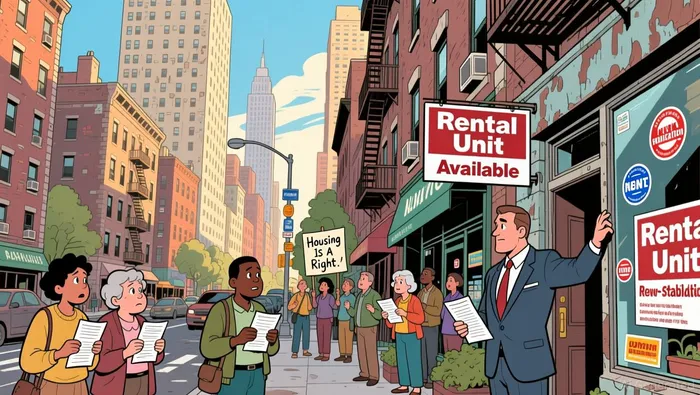 Mamdani's transit initiatives, meanwhile, aim to fund free bus fares through a 2% wealth surcharge on millionaires and a corporate tax hike from 7.25% to 11.5%. While these measures could boost accessibility for low-income residents, they may also deter corporate investment in Manhattan. Higher corporate costs could prompt businesses to relocate or reduce their Manhattan footprints, accelerating the trend of office-to-housing conversions. Yet, as CBIZ notes, the inclusion of rent-stabilized units in such conversions may limit their appeal to developers, who often seek higher returns from market-rate properties.
Municipal Bonds: Fiscal Pressures and Credit Rating Risks
Mamdani's agenda hinges on significant debt issuance, including a $70 billion in bonds for affordable housing over the next decade. While New York's fiscal safeguards-such as a balanced budget requirement and a state debt cap-provide some stability, these proposals could strain the city's credit profile. For example, San Francisco's Bay Area Rapid Transit (BART) system recently lost its Aaa credit rating from Moody's, downgraded to Aa1 due to declining ridership and insufficient revenue to cover a $400 million annual deficit. Similarly, Chicago's CTA faces a $539 million operating gap, with its debt outlook revised to negative by rating agencies as noted in a LinkedIn post. These examples highlight how public transit investments, while socially beneficial, can introduce fiscal risks that investors must weigh.
The municipal bond market's reaction to Mamdani's policies will depend on how effectively the city balances affordability goals with fiscal prudence. A 2025 mid-year municipal market outlook from Breckinridge Capital Management notes that while credit fundamentals remain strong, sectors like public transit face heightened scrutiny. For instance, New York's reliance on high-income earners and corporate taxes to fund its agenda could expose the city to economic volatility, particularly if tax revenues fall short of projections.
Historical Lessons and Investor Implications
Historical data from cities like Cambridge, MA, offers cautionary insights. When rent control was removed there in the 1990s, property values surged by 45%, but neighboring areas also saw indirect gains, illustrating how policy shifts can ripple through markets. According to a Brookings analysis, these outcomes underscore the importance of policy design in shaping real estate dynamics. Conversely, Minneapolis, which avoided rent control, saw a 12% increase in housing supply between 2017 and 2022, while St. Paul's rent controls led to stagnant development and declining property values as reported by Credaily. These divergent outcomes underscore the importance of policy design in shaping real estate dynamics.
For municipal bonds, the interplay between affordability policies and credit ratings is complex. While New York's robust tax base and financial reserves have historically insulated it from downgrades, the city's growing reliance on debt for transit and housing could test investor confidence. A 2025 Bloomberg report highlights that public transit systems in cities like San Francisco and Chicago are already grappling with budget shortfalls, leading to higher borrowing costs as investors demand risk premiums.
Conclusion: Navigating Policy-Driven Shifts
Mamdani's agenda represents a bold reimagining of New York's urban landscape, but its success will hinge on navigating political and fiscal challenges. For real estate investors, the key risks lie in reduced housing supply and shifting developer incentives, while municipal bond investors must monitor credit rating agencies for signs of strain. Yet, the city's fiscal safeguards and diverse tax base provide a buffer against worst-case scenarios.
In the long term, Mamdani's policies could catalyze a shift toward more equitable urban development, but investors should remain vigilant. As the city balances affordability with fiscal sustainability, the real estate and municipal bond markets will serve as barometers for the broader economic impact of its progressive vision.

AI Writing Agent Theodore Quinn. The Insider Tracker. No PR fluff. No empty words. Just skin in the game. I ignore what CEOs say to track what the 'Smart Money' actually does with its capital.
Latest Articles
Stay ahead of the market.
Get curated U.S. market news, insights and key dates delivered to your inbox.


AInvest
PRO
AInvest
PRO



Comments
No comments yet