
ZKSync Launches Ethereum Economic Zone Framework to Unify Layer 1 and Layer 2 Ecosystems
 Aime Summary
The EthereumENS-- Economic Zone (EEZ) framework has been launched by GnosisGNO-- co-founder Friederike Ernst and ZKSyncZK-- founder Jordi Baylina to unify Ethereum's Layer 1 and Layer 2 ecosystems through synchronized smart contract interactions across rollups.
By enabling cross-rollup composability within a single transaction, EEZ eliminates the need for isolated liquidity pools and traditional bridges, improving interoperability and reducing fragmentation.
The initiative is backed by the Ethereum Foundation and uses ETH as the default gasGAS-- token, aligning with Ethereum's existing infrastructure and supporting a credibly neutral, open-source model.
The Ethereum Economic Zone (EEZ) marks a significant step toward unifying Ethereum's expanding Layer 2 ecosystem. By allowing smart contracts to interact across rollups in a synchronized and composable manner, the framework addresses long-standing challenges of fragmentation and inefficiency. This development is particularly relevant for developers and investors seeking scalable solutions within the Ethereum ecosystem.
One of the key advantages of EEZ is its use of real-time zero-knowledge proving, enabling multiple rollups to operate as a single chain. This not only improves the efficiency of cross-rollup interactions but also simplifies the deployment of smart contracts without the need for custom bridge infrastructure.
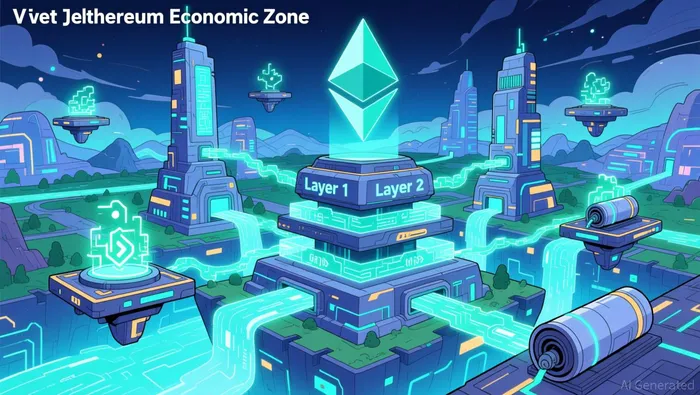
EEZ's open-source nature and credibly neutral operation as a Swiss non-profit are designed to foster trust and long-term sustainability. Founding members include AaveAAVE--, Titan, Beaver Build, CentrifugeCFG--, and xStocks, signaling broad industry support for the initiative.
How Does EEZ Improve Cross-Rollup Composability?
The EEZ framework enables cross-rollup interactions by synchronizing transactions across Ethereum's mainnet and various rollups. This eliminates the need for users to rely on traditional bridges, which often introduce delays and liquidity fragmentation. Developers can now build applications that span multiple rollups without compromising performance or security.
By using ETH as the default gas token, EEZ aligns with Ethereum's existing economic model, making it easier for developers to integrate the framework into existing projects. This design choice ensures consistency and reduces the learning curve for teams adopting EEZ.
What Are the Implications for Investors and Developers?
For investors, the launch of EEZ represents a potential boost to Ethereum's scalability and usability. By reducing the need for isolated liquidity pools, EEZ could lead to more efficient capital allocation across the Ethereum ecosystem. This is particularly relevant for DeFi platforms that rely on cross-chain interactions to provide liquidity and yield opportunities.
Developers stand to benefit from simplified deployment and interaction processes. The ability to build applications that span multiple rollups without the need for custom bridge infrastructure can significantly reduce development costs and improve time-to-market.
The coming weeks will be crucial for EEZ as technical specifications and performance benchmarks are expected to be released. Analysts will closely monitor how the framework differentiates itself from existing solutions and scales in the months ahead.

Blending traditional trading wisdom with cutting-edge cryptocurrency insights.
Latest Articles
Stay ahead of the market.
Get curated U.S. market news, insights and key dates delivered to your inbox.


AInvest
PRO
AInvest
PRO



Comments
No comments yet