
ZKsync Challenges Canton's Trust Model, Advances Tokenized Deposit Infrastructure
 Aime Summary
ZKsync founder Alex Gluchowski has publicly criticized Canton's trust-based model for institutional finance, arguing it lacks cryptographic verification and exposes the system to systemic risk if operators are compromised according to MEXC reporting.
In response to Canton's concerns about ZK proofs, Gluchowski emphasized that complex, mission-critical systems such as aviation and medical devices rely on redundancy and containment, rather than perfect systems as detailed in MEXC coverage.
ZKsync has partnered with BitGo to develop a tokenized deposit infrastructure that allows banks to tokenize fiat deposits on blockchain networks, providing real-time settlements and compliance with regulatory standards without relying on stablecoins according to Bitget reports.
ZKsync founder Alex Gluchowski has pushed back against Canton's recent critique of ZK proofs, arguing that the model lacks essential cryptographic safeguards. Canton's model, which relies on trusted operators to segregate data between participants, does not include a cryptographic verification layer. If the operator keys are compromised, the manipulated state can propagate silently through the network without detection as MEXC reported.
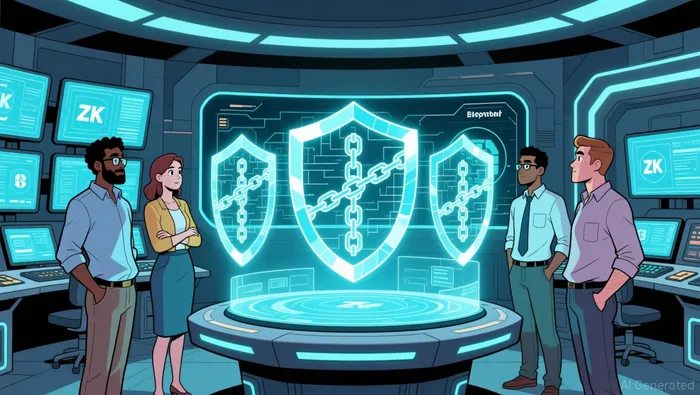
Prividium, ZKsync's solution, contrasts this by deploying three independent layers of defense: institutional node operations within regulated environments, ZK proofs as a cryptographic check, and containment through separate chains. This design limits the spread of breaches to individual institutions, preventing cascading failures according to TradingView analysis.
The collaboration with BitGo aims to bridge traditional and blockchain-based finance. Using ZKsync's Layer 2 scaling technology, banks can tokenize fiat deposits while maintaining compliance with regulatory frameworks as MEXC noted. The system enables 24/7 settlements and automated fund movements without disrupting existing banking infrastructure. This infrastructure is currently in testing and is expected to expand later in the year.
Canton's founders have raised concerns with institutional buyers and regulators about ZK proofs' complexity and potential for undetected bugs in mission-critical financial systems according to MEXC reporting. ZK researcher Alex has countered by highlighting Canton's reliance on DAML, a proprietary smart contract language that lacks the extensive scrutiny of Ethereum's EVM, which has withstood over a decade of adversarial testing as reported by MEXC.
What risks does Canton's trust model introduce for institutional finance?
Canton's model relies on the assumption that trusted operators will not be compromised. However, if those operators are breached, there is no cryptographic verification to catch the manipulation. This can lead to silent data propagation across networks, increasing the risk of cascading failures according to MEXC analysis.
How does ZKsync's Prividium model mitigate systemic risk compared to Canton's architecture?
Prividium employs a layered defense system that includes institutional node operations, ZK proofs for cryptographic verification, and chain-level containment. Each chain is tied to a single institution, so any breach is limited to that instance. If a ZKP bug is found, it cannot spread to other chains, unlike Canton's model according to TradingView reporting.
What are the benefits of ZKsyncZK-- and BitGo's tokenized deposit infrastructure for banks?
ZKsync and BitGo have developed a ready-to-use infrastructure for banks to tokenize fiat deposits on-chain, enabling real-time settlements and programmable transactions. This system avoids the risks associated with stablecoins and maintains compliance with existing regulatory standards. The collaboration aims to streamline adoption by reducing the need for banks to build complex blockchain systems from scratch as Bitget reported.
The system is currently being tested with regulated financial institutions and is expected to expand to broader deployment later in 2026 according to MEXC updates. This initiative aligns with broader trends in tokenized finance and institutional-grade blockchain adoption.

Blending traditional trading wisdom with cutting-edge cryptocurrency insights.
Latest Articles
Stay ahead of the market.
Get curated U.S. market news, insights and key dates delivered to your inbox.


AInvest
PRO
AInvest
PRO



Comments
No comments yet