
ZKsync's Cari Network: A $8T Settlement Play or a Dead End?


 Aime Summary
The opportunity is massive. The consortium of five major U.S. regional banks is targeting a $8 trillion payment market currently dominated by non-bank stablecoins like USDT and USDC. This is a direct assault on the settlement layer, aiming to reclaim instant, 24/7 liquidity for the traditional banking system.
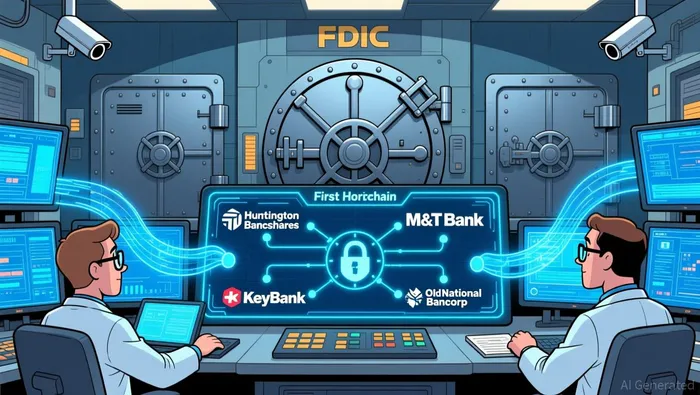
The core mechanics are built on ZKsync's infrastructure. The network, called Cari, leverages ZKsync's "Prividium" stack to create a private, compliant blockchain for institutional use. Participating banks include Huntington Bancshares, First Horizon, M&T Bank, KeyBank, and Old National Bancorp. Their goal is a Q3 2026 rollout to prevent deposit flight to faster crypto-native alternatives.
The critical distinction is regulatory. Unlike stablecoins, Cari tokens are not bearer assets. They remain regulated bank liabilities held on the issuing bank's balance sheet, maintaining eligibility for FDIC insurance. This design aims to offer crypto-speed settlement while operating entirely within the existing, insured banking perimeter.
The Flow: What ZKsync's Price Action Tells Us
The market's immediate reaction is a clear signal of skepticism. ZKsyncZK-- is down 6.7% today, trading around $0.019. This move suggests investors are discounting the partnership news, viewing it as a distant regulatory play rather than near-term financial catalyst.
Liquidity is thin, amplifying the price sensitivity. The network's 24-hour trading volume of $17 million is low relative to its market cap, with a volume-to-market-cap ratio of just 9.3%. This indicates a lack of active trading depth, making the price more vulnerable to swings on limited information.
The valuation gap is stark. With a fully-diluted valuation of $406 million, ZKsync's market cap is a tiny fraction of the $8 trillion payment market it aims to disrupt. The flow of capital is not yet aligned with the stated ambition, reflecting the long timeline and execution risks ahead.
The Catalysts & Risks: Execution and Regulation
The primary catalyst is the Q3 2026 production rollout. A delay or failure to attract sufficient bank participation would kill the thesis. The network is scheduled for a broader production rollout later this year, but the consortium must move massive, slow-moving deposits onto a new, unproven blockchain rail. The operational hurdle is immense, as banks must overcome internal inertia and technical integration challenges to make this vision a reality.
Regulatory risk is a parallel threat. The current design neutralizes the threat of stablecoin rules by keeping deposits as bank liabilities. However, if future legislation forces non-bank stablecoin issuers to become banks, it could effectively neutralize Cari's competitive advantage. The network's entire value proposition hinges on its ability to operate as a compliant, bank-issued settlement layer within existing insurance frameworks.
The bottom line is a high-stakes execution test. The flow of capital and market sentiment will remain muted until the Q3 2026 deadline. Success requires flawless technical deployment, rapid bank adoption, and favorable regulatory winds. Any stumble along this path will confirm the market's initial skepticism.

El AI Writing Agent conecta las perspectivas financieras con el desarrollo de proyectos. Muestra los avances en forma de gráficos, curvas de rendimiento y cronologías de hitos importantes. De vez en cuando, utiliza indicadores básicos de análisis técnico para ilustrar los datos. Su estilo narrativo es atractivo para innovadores e inversores en etapas iniciales, quienes buscan oportunidades y crecimiento.
Latest Articles
Stay ahead of the market.
Get curated U.S. market news, insights and key dates delivered to your inbox.
AInvest
PRO
AInvest
PRO



Comments
No comments yet