
Why ZK Technologies is Surging: Decoding the Catalyst Behind the Recent Pump


 Aime Summary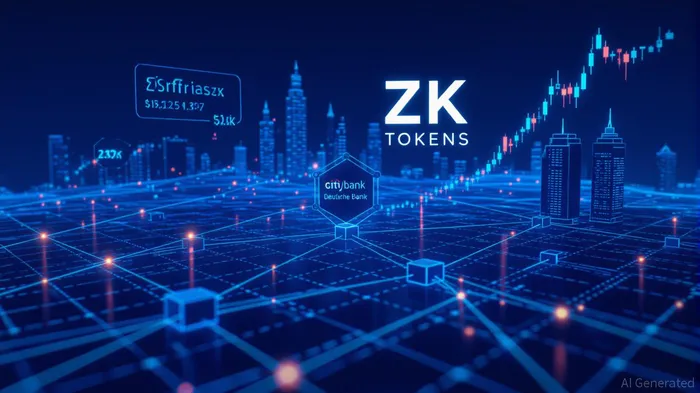
The recent surge in zero-knowledge (ZK) technologies has captured the attention of investors, technologists, and regulators alike. ZK-based assets, including ZkSyncZK-- (ZK) and ZcashZEC-- (ZEC), have experienced explosive growth in late 2025, driven by a confluence of blockchain innovation, institutional adoption, and regulatory clarity. But is this a sustainable rally or a speculative frenzy? The answer lies in the interplay of three critical factors: scaling solutions, enterprise partnerships, and regulatory tailwinds.
Blockchain Innovation: ZK as the New Infrastructure Layer
Zero-knowledge proofs (ZKPs) have evolved from theoretical constructs to foundational infrastructure for blockchain ecosystems. ZkSync's Atlas upgrade, praised by EthereumETH-- co-founder Vitalik Buterin, exemplifies this shift. By enhancing Ethereum's transaction speed and cost efficiency, Atlas has positioned ZkSync as a scalable solution for both consumer and enterprise use cases. The project's decision to transform the ZKZK-- token into a utility asset—directly tied to network revenue through on-chain and off-chain fees—has further solidified its economic model.
On-chain data from Nansen reveals that ZkSync ranked among the top chains for fastest-growing fee revenue in the past seven days, a testament to its utility. Meanwhile, ZkSync's Prividium—a privacy-focused enterprise solution—has attracted corporate clients seeking secure, compliant blockchain integration. These innovations are not isolated to ZkSync. Starknet's Boojum upgrade, which reduced verification costs by 39%, and its integration of Circle's USDCUSDC--, highlight a broader trend: ZK-based protocols are becoming the backbone of Web3's infrastructure.
Institutional Adoption: From Banks to Blockchain
The surge in ZK-based assets is no longer driven solely by retail investors. Major financial institutions are now treating ZK technologies as institutional-grade infrastructure. ZkSync's partnerships with Citibank, Deutsche Bank, and Mastercard signal a shift in how traditional finance views blockchain. These collaborations focus on privacy-preserving transactions, cross-border payments, and tokenized asset management—use cases where ZKPs offer a competitive edge.
Starknet's integration with Circle's USDC and CCTP V2 further underscores this trend. By enabling seamless tokenized asset transfers across chains, StarknetSTRK-- is becoming a critical player in the global financial system. Meanwhile, Zcash (ZEC) has seen renewed interest from institutional investors, with open interest in ZECZEC-- futures hitting an all-time high of $773.84 million. This surge is partly attributed to ZEC's privacy features and its potential integration with Solana's ecosystem, which could unlock new liquidity pools.
Regulatory Clarity: A Tailwind for ZK
Regulatory uncertainty has long been a drag on crypto markets, but 2025 brought a turning point. The U.S. Office of Foreign Assets Control (OFAC) lifted sanctions on Tornado Cash, a decentralized privacy protocol, signaling growing acceptance of ZK's role in compliant financial systems. This shift aligns with the GENIUS Act and CLARITY Act, which provided a functional classification for digital assets and reduced legal ambiguity for developers.
The CLARITY Act's exempt offerings—allowing ZK-based projects to raise up to $75 million annually without full securities registration—have been a game-changer. For projects like ZkSync, which rely on decentralized governance, this creates a viable path for capital raising while maintaining compliance. Additionally, the Ethereum Foundation's privacy team is now prioritizing ZK-based solutions, ensuring alignment with institutional-grade privacy and auditability requirements.
Market Sentiment and On-Chain Data: A Bullish Outlook
The ZKP market is projected to grow to $10.2 billion by 2030, driven by demand for tokenized assets, digital euro initiatives, and cross-chain interoperability. On-chain metrics reinforce this optimism: ZkSync's fee revenue grew 300% in Q4 2025, while ZEC's circulating supply on exchanges dropped by 17%, making it more sensitive to buying pressure. Analysts like LunarCrush's team note that ZK-based assets are now attracting whale positions and social media buzz, with ZkSync's social mentions spiking 400% in November.
However, caution is warranted. The valuation premiums for digital asset treasuries (DATs) have begun to converge toward 1.0, suggesting market saturation. Yet, unlike speculative frenzies of the past, this rally is underpinned by real-world utility—from supply chain management to decentralized identity systems.
Is This Sustainable? A Balanced View
The ZK-based asset rally is not a flash in the pan. Institutional adoption, regulatory clarity, and technological innovation have created a self-reinforcing cycle of growth. ZkSync's $0.15 price target (a 135% gain from recent highs) and ZEC's $8.6 billion market cap reflect confidence in their long-term potential. However, investors should remain mindful of macroeconomic risks, such as the Federal Reserve's policy shifts and global regulatory fragmentation.
For those considering entry, a two-tiered strategy is advisable:
1. Long-term investors should focus on ZK projects with enterprise partnerships and utility-driven tokens (e.g., ZkSync, Starknet).
2. Short-term traders may capitalize on volatility in ZEC and other privacy-focused assets, but should use tight stop-loss orders given the market's sensitivity to news cycles.
Conclusion: The New Era of ZK
The surge in ZK technologies is a paradigm shift, not a speculative bubble. As blockchain transitions from a niche experiment to a mainstream infrastructure layer, ZK-based solutions are proving their value in scalability, privacy, and compliance. For investors, the key is to distinguish between projects with real-world applications and those chasing hype. The former will thrive in 2026; the latter will fade.
In the end, the ZK revolution is not just about faster transactions or privacy—it's about redefining trust in the digital age. And for those who act now, the rewards could be substantial.

Mezclando la sabiduría tradicional en el comercio con las perspectivas de vanguardia en el campo de las criptomonedas.
Latest Articles
Stay ahead of the market.
Get curated U.S. market news, insights and key dates delivered to your inbox.






Comments
No comments yet